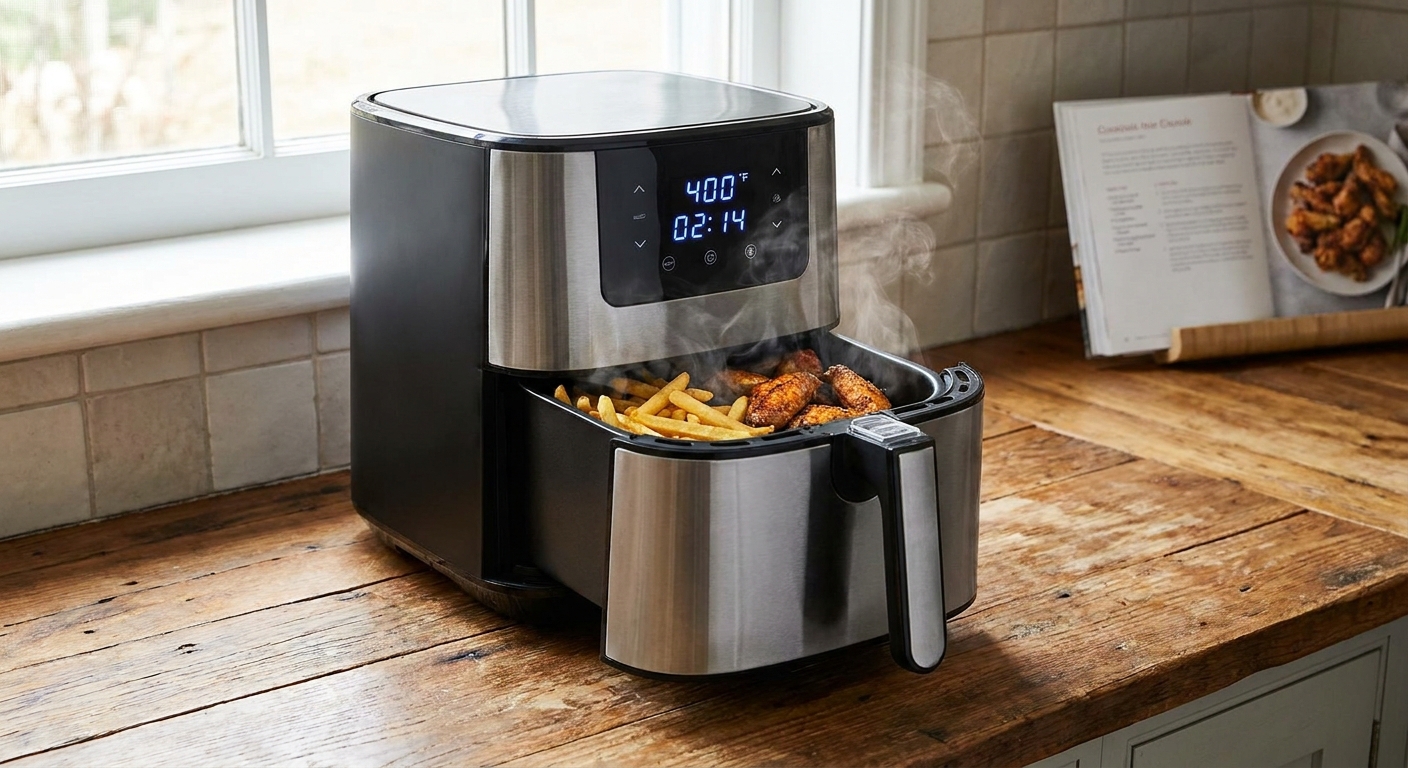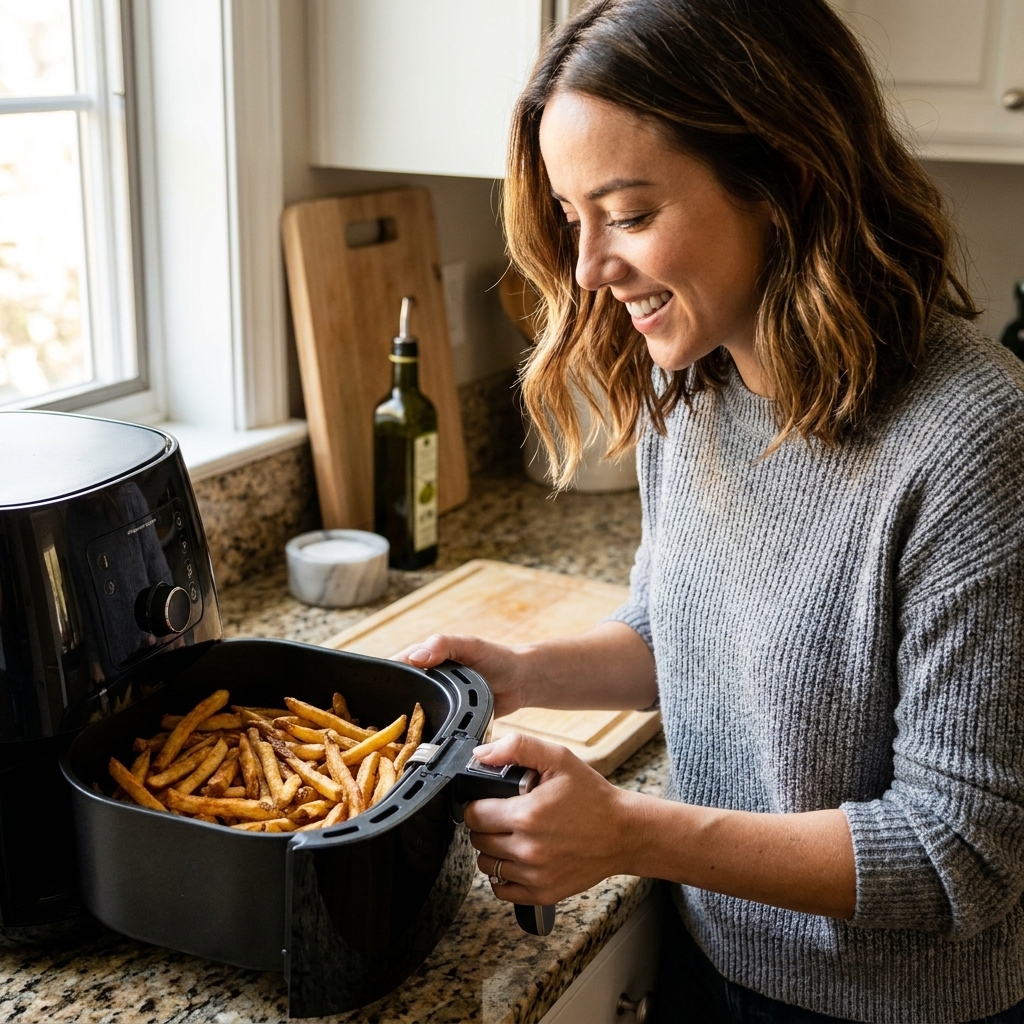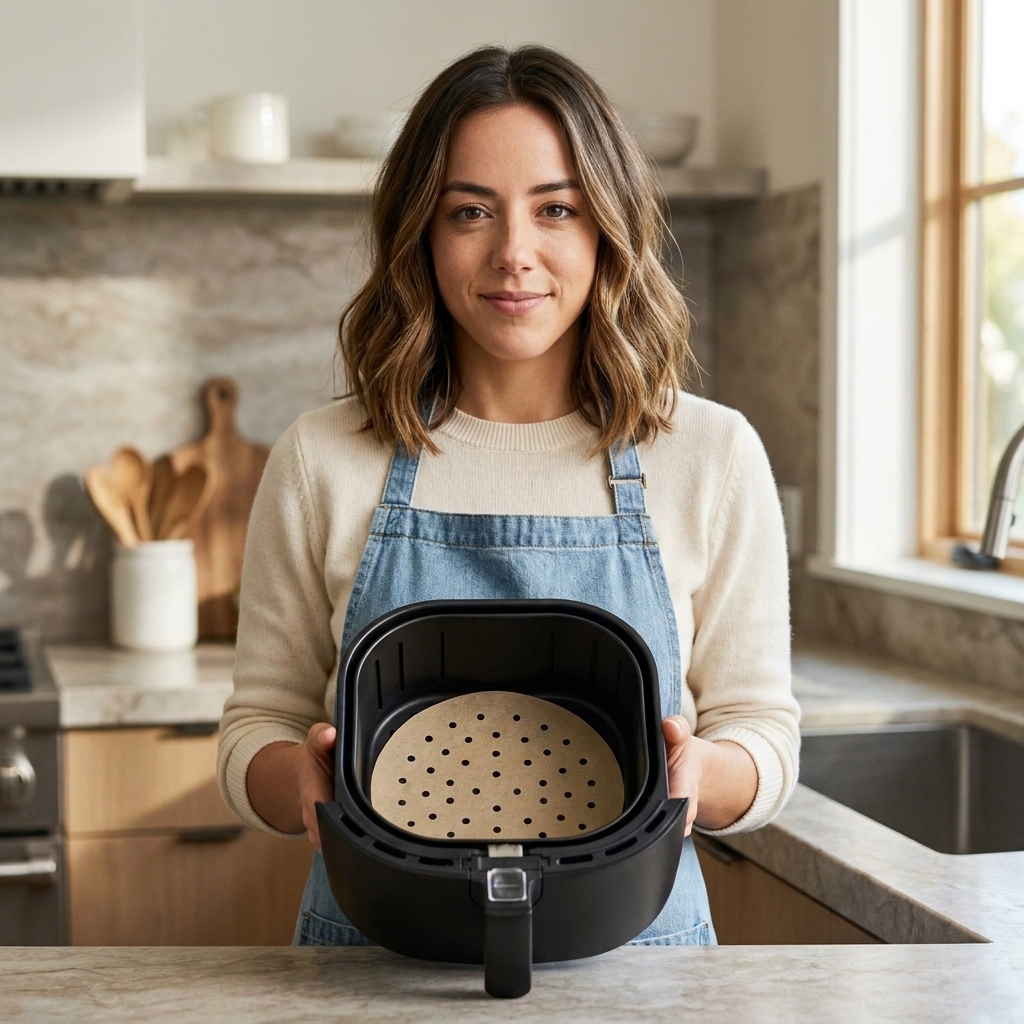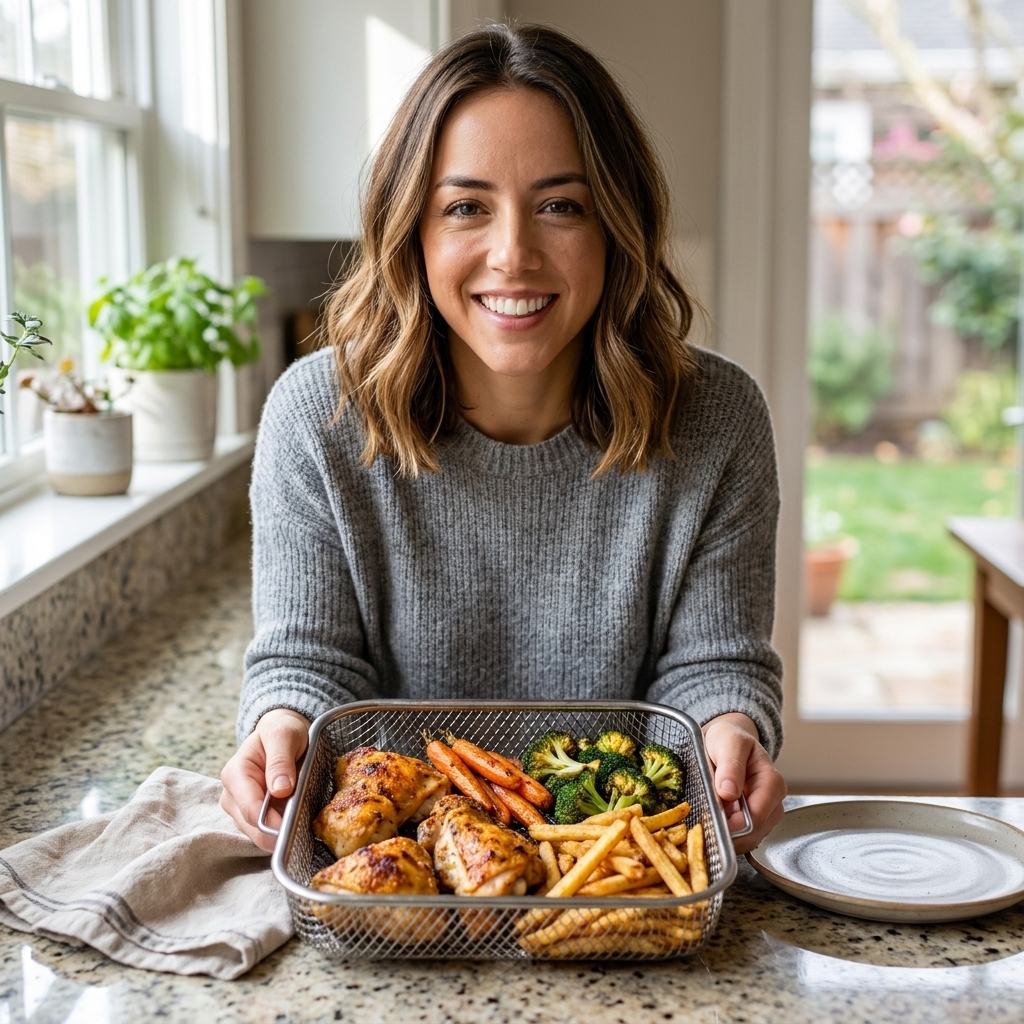

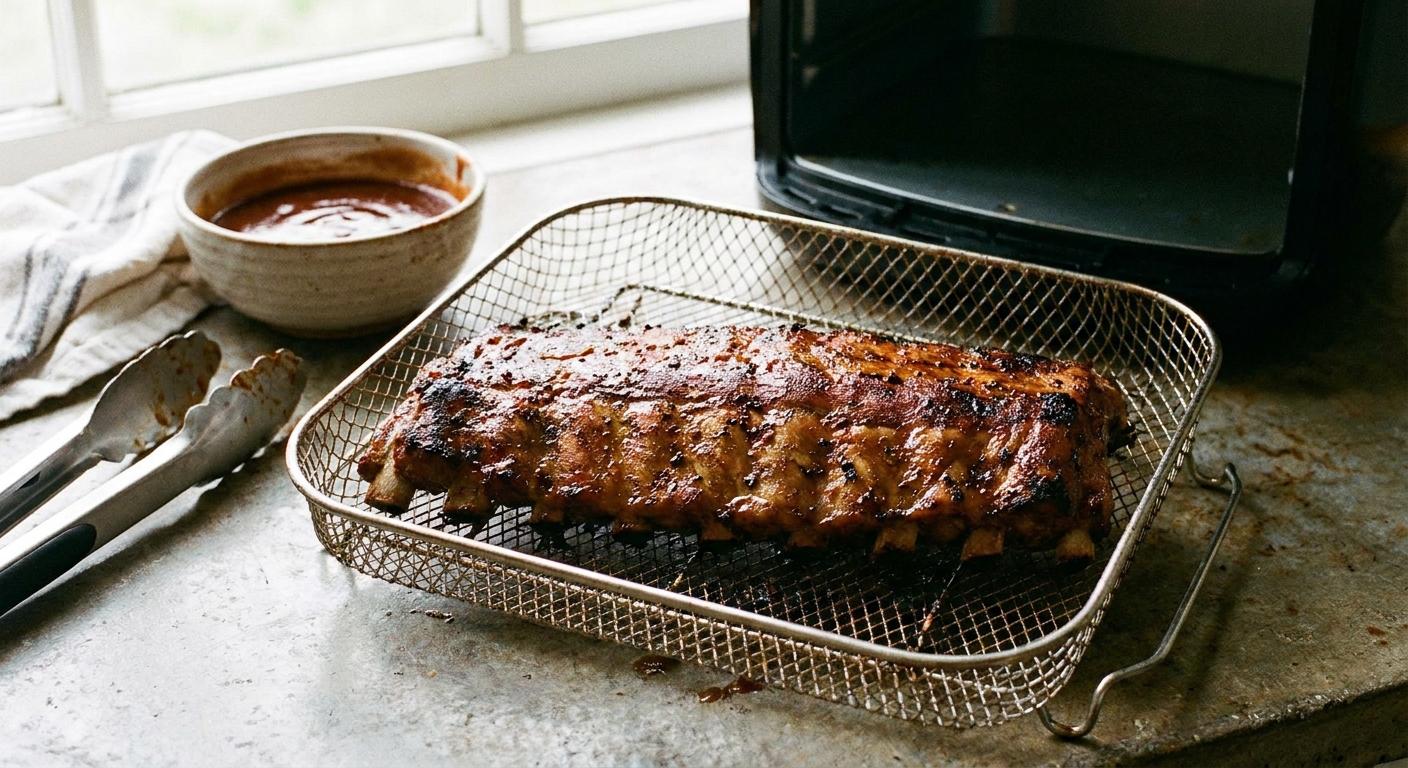
I grew up in the Midwest where ribs meant a smoker that ran all day, and a kitchen that always had something bubbling away. These days, as a busy mom with an air fryer addiction, I want ribs that are tender enough to bite cleanly but still have that convection-style crisp, roasty edge. The trick is choosing a rack that actually fits your basket, cooking low enough to tenderize, and saucing at the end so it caramelizes instead of turning bitter.
Quick answer: time, temp, flips
- Temperature: 300°F
- Total time: about 50 to 70 minutes (air fryers vary a lot by wattage, how crowded the basket is, and whether the ribs started cold)
- Flip schedule: 25 minutes meat side down, then 20 minutes meat side up, then sauce and finish 5 to 8 minutes
- Internal temperature for tenderness: often best around 190°F to 203°F in the thickest meaty area (I usually aim for 195°F to 203°F), not touching bone
- Rest: 10 minutes, tented with foil
My goal: tender, not dried out. 300°F gives the fat and connective tissue time to render, then the last minutes with sauce give you that sticky finish.
One important note: the clock gets you close, but your thermometer and a tenderness check win every time. If your ribs are not tender after the second flip, keep cooking in short bursts.
Basket fit: choosing a rack that works
Baby back ribs are curved and tall, which is great on a grill and annoying in a basket air fryer. For best airflow and browning, you want the ribs in one layer with a little breathing room around the edges.
What to buy or how to cut
- Look for a smaller rack (often 1.5 to 2.5 lb) if you have a 4 to 6 qt basket.
- Plan to cut the rack in half (or into thirds) so each piece sits flatter in the basket.
- Trim obvious thick surface fat if there is a heavy cap. Too much fat can cause smoking and greasy spots.
- Avoid stuffing it in a tight circle: ribs pressed hard against the basket wall cook unevenly and can dry at the high-contact spots.
If you are between sizes, go smaller. A rack that fits comfortably will cook faster, brown more evenly, and need less babysitting.
Membrane removal
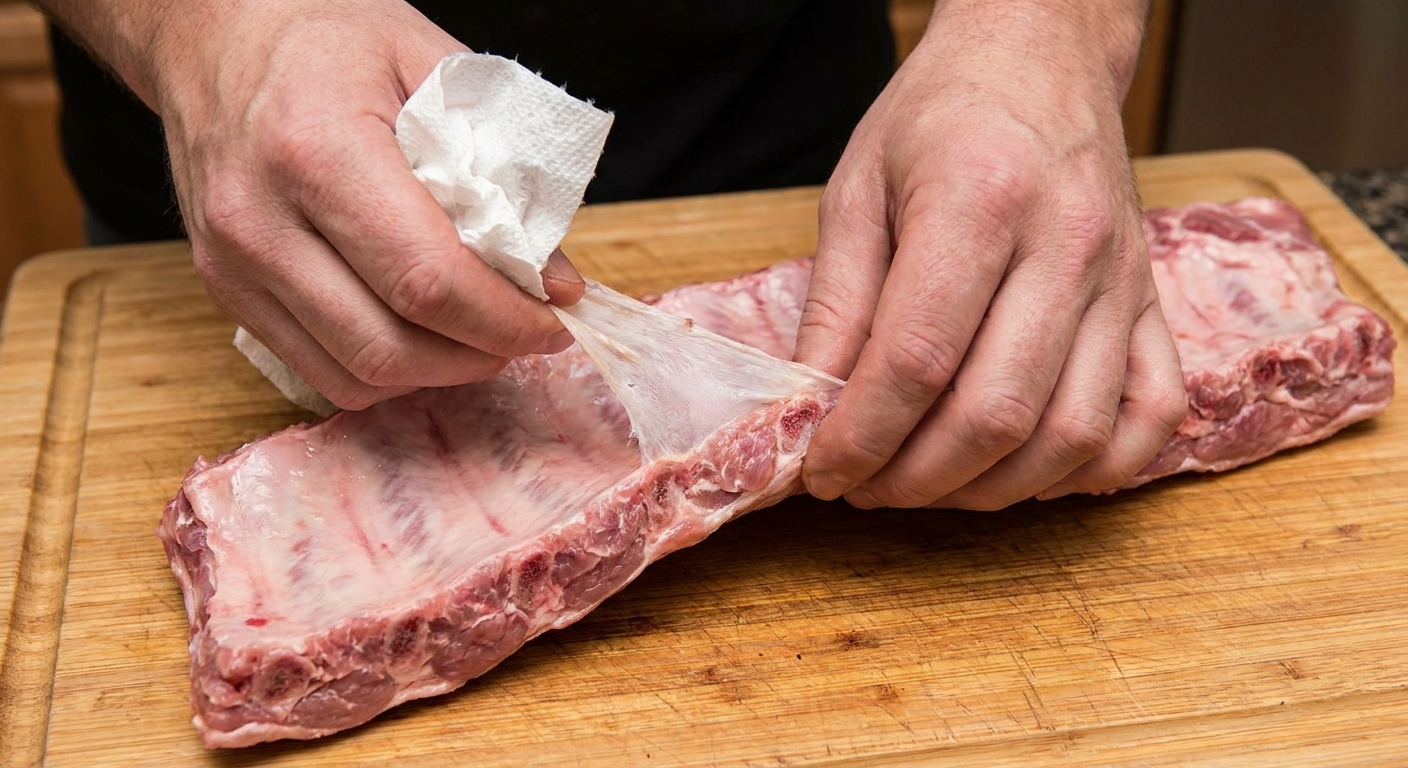
That papery layer on the bone side can turn leathery, and convection heat makes it even more noticeable. Removing it helps seasoning stick and makes the bite cleaner.
How to remove it
- Flip ribs bones up.
- Slide a butter knife under the membrane over a middle bone to loosen a corner.
- Grab with a paper towel (better grip) and pull slowly across the rack.
Simple dry rub
In an air fryer, sugars can go from caramelized to scorched faster than you think, especially at the edges. I use a rub that is savory first, sweet second, then I bring the sweetness in with barbecue sauce at the end.
Easy dry rub for 1 rack (about 2 lb)
- 1 1/2 tsp kosher salt
- 1 tsp paprika
- 1 tsp garlic powder
- 1 tsp onion powder
- 1/2 tsp black pepper
- 1/2 tsp chili powder (optional, for a little warmth)
- 1 to 2 tsp brown sugar (optional, keep it light)
How to apply: Pat the ribs dry, lightly oil (about 1 teaspoon neutral oil for the whole rack), then rub generously on both sides.
Step-by-step: air fryer baby back ribs
1) Preheat
Preheat your air fryer to 300°F for 3 to 5 minutes. This helps the exterior start rendering instead of steaming.
2) Set up to reduce smoke
If your air fryer tends to smoke with fatty foods, add 1 to 2 tablespoons of water to the bottom drawer or drip pan (not the basket). It helps keep drippings from scorching. Also make sure the basket is not packed tight.
3) First cook: meat side down
Place ribs in the basket meat side down. Cook 25 minutes at 300°F.
I have found starting meat side down can help buffer the meat from the strongest airflow and browning in many basket models, but if your air fryer browns more from the top, do not stress. The flip schedule still works.
4) Flip: meat side up
Flip carefully (tongs plus a spatula is my favorite combo). Cook 20 minutes at 300°F.
5) Check tenderness and temperature
Start checking at the 45 minute mark total. You are looking for:
- Internal temp: often best around 190°F to 203°F in the thickest meaty area, not touching bone
- Tender feel: tongs can bend the slab slightly and the surface looks rendered, not tight and shiny
If they are only at 175°F to 185°F and still feel tight, keep cooking in 5 to 8 minute bursts at 300°F until you hit that tender zone. This is where the “50 to 70 minutes” range comes from.
6) Sauce at the end
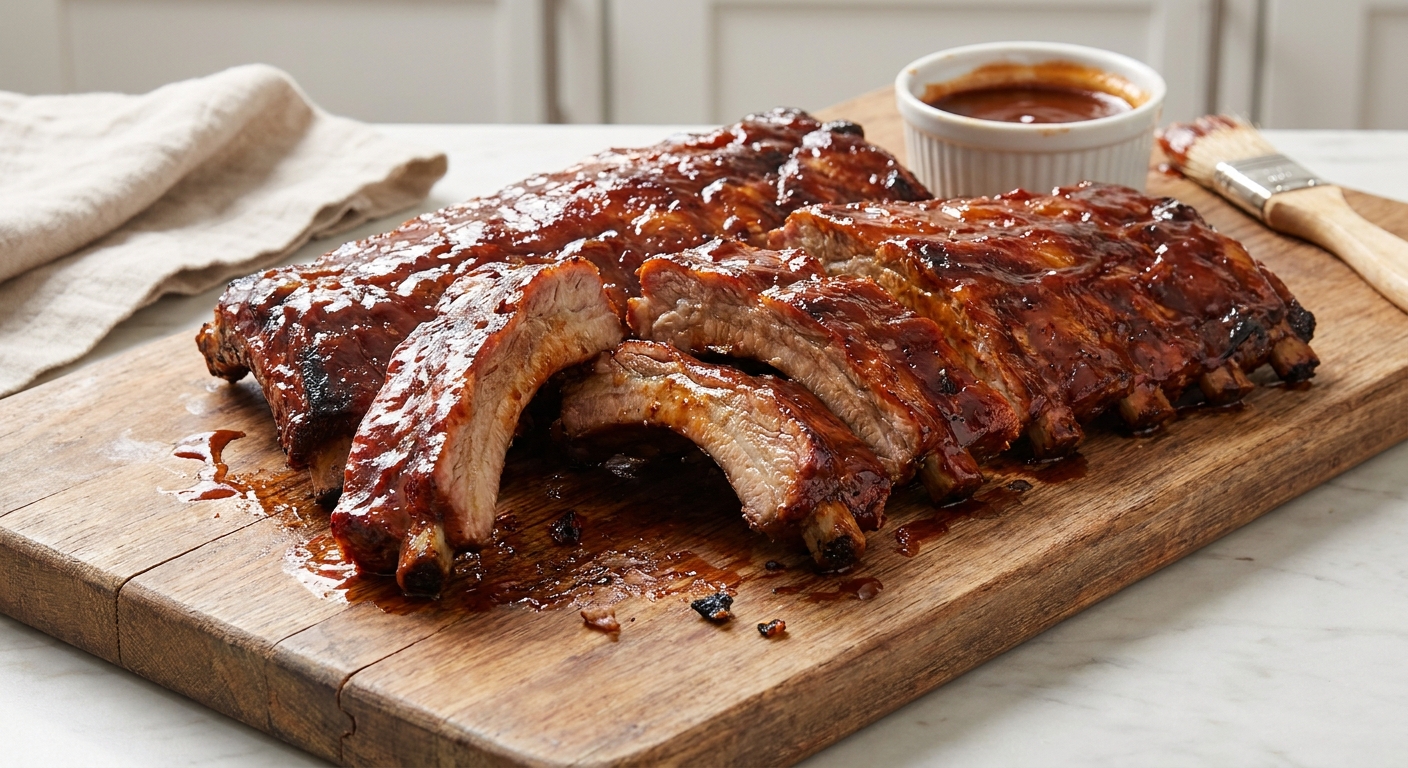
Brush a thin layer of barbecue sauce on the ribs and cook 5 to 8 minutes at 300°F. This is enough time to set and caramelize without burning.
If you love extra-sticky ribs, add a second thin brush of sauce for the last 2 minutes. Thin layers win in the air fryer.
7) Rest
Rest 10 minutes, loosely tented with foil. This helps the juices settle so you do not lose them all on the cutting board.
Why stacking steams ribs
I get it. You want to cook two racks at once. But when ribs overlap or are stacked, you block airflow. That trapped moisture has nowhere to go, so instead of roasting, the ribs steam. Steamed ribs can still cook through, but they tend to be:
- Less browned
- Softer on the outside
- Uneven, with pale spots where pieces touch
If you must cook more than one rack, do it in batches, or use a larger air fryer or air fryer oven style where you can lay ribs flatter with more space.
Doneness cheat sheet
- 145°F: the minimum safe temperature for pork, but ribs will be chewy. Safe, not tender.
- 170°F to 185°F: cooked, still tighter and a bit tough.
- 190°F to 203°F: where ribs often turn tender as collagen breaks down (I usually like 195°F to 203°F).
The most common air fryer rib disappointment is pulling too early because they look browned. Color is not tenderness. Temperature plus feel is the win.
Store and reheat
How to store
Cool leftovers, then refrigerate in an airtight container for up to 3 to 4 days.
How to reheat in the air fryer
Reheat at 300°F until warmed through, usually 5 to 10 minutes depending on thickness. If you are using sauce, add it in the last 1 to 2 minutes so it does not scorch.
FAQ
Do I need to wrap ribs in foil?
Not usually. Foil wrapping can make them very tender but it also softens the exterior. At 300°F, you can get tender ribs without wrapping as long as you cook to the right internal temperature and tenderness. If your ribs are getting too dark before they tenderize, you can loosely tent with foil for the middle portion, then uncover to finish.
Can I use mustard as a binder?
Yes. A thin smear of yellow mustard helps the rub stick and the mustard flavor does not really come through after cooking.
Why did my sauce burn?
Most barbecue sauces contain sugar. In a fast-moving air fryer, sugar can scorch quickly. Sauce only in the last 5 to 8 minutes at 300°F, keep the layer thin, and avoid cooking ribs at higher temps once sauced.
What if my rack is extra thick?
Expect the full cook to be closer to 65 to 70 minutes, sometimes more. Cut into smaller sections so air can circulate, and rely on the thermometer and the bend test. Thickness matters more than weight.
Any quick food safety tips?
Use separate utensils and cutting boards for raw pork, wash hands well, and clean the basket and drawer thoroughly after cooking. When you check temperature, probe the thickest meaty area without touching bone for the most accurate read.