
If you have ever been feeling very proud of yourself for making weeknight chicken in the air fryer and suddenly your kitchen looks like a tiny fog machine went off, welcome. I have been there. Early in my air fryer era, I once set off the smoke detector with a batch of “healthy” wings that were basically a grease waterfall. The good news is that most air fryer smoke is fixable in minutes and it usually does not mean your air fryer is broken.
This guide will help you tell the difference between normal, light smoke and the kind of harsh burning smell that means you should pause the cook. Then we will walk through the usual culprits and the fastest fixes.
First: Is it light smoke or a burning smell?
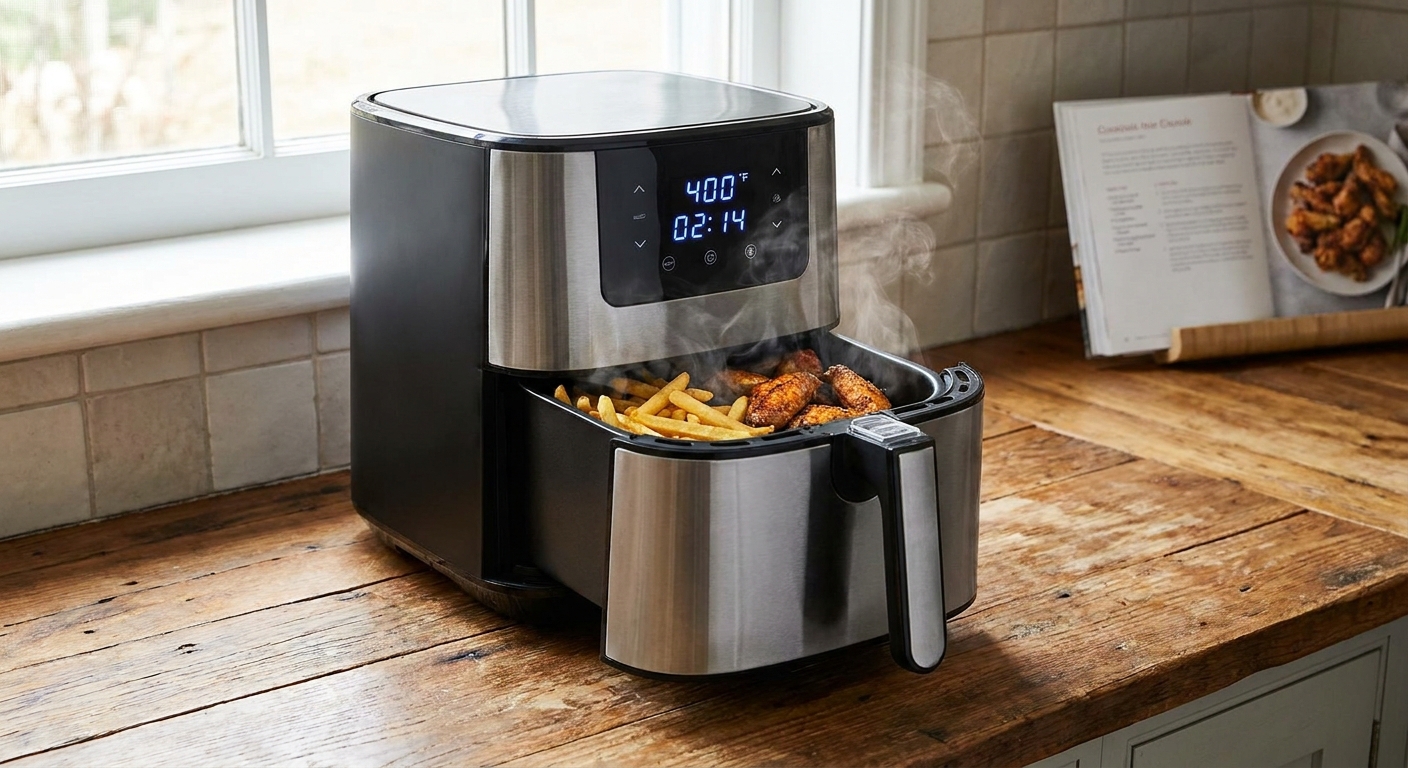
Light smoke (usually manageable)
Light smoke is often thin and wispy and tends to happen with fatty foods or when extra oil hits hot surfaces. You might notice it when cooking:
- Bacon, sausage, burgers, chicken thighs with skin
- Wings or drumsticks with lots of rendered fat
- Frozen convenience foods that shed crumbs or excess breading
If the food smells like itself (just more intense), you can usually keep cooking after you make a quick adjustment.
Dark smoke or harsh burning smell (pause the cook)
If you see darker smoke or smell anything sharp, plasticky, or like something is actively burning, stop and investigate. Unplug the air fryer, let it cool a bit, and check for:
- Grease or crumbs smoking near the heating element area
- Charred bits stuck under the basket or on the bottom plate
- Parchment paper or lightweight liners lifted into the heater
A true burning smell is your air fryer telling you, “Not right now.”
The most common reasons air fryers smoke
1) Too much oil (or oil in the wrong place)
Air fryers need surprisingly little oil. When excess oil pools, it can drip and hit hot metal surfaces, which creates smoke fast. And if you spray oil directly into a preheated basket, the mist can drift upward and burn off, especially in basket models where the heating element sits at the top.
What it looks like: Smoke starts early in cooking, especially at higher temps, and you may see shiny oil collecting in the bottom.
2) Your oil is smoking at high heat
Different oils start to smoke at different temperatures, and many air fryer recipes run 375°F to 400°F. Some oils (including extra virgin olive oil, depending on the brand and how refined it is) can smoke sooner than more heat-stable options.
If smoke is a repeat problem, try a more heat-tolerant oil such as avocado oil, refined canola, peanut oil, or refined olive oil, and use a lighter amount.
What it looks like: Smoke shows up mostly at high temps, even when the food itself is not super fatty.
3) Fatty foods are rendering and pooling grease
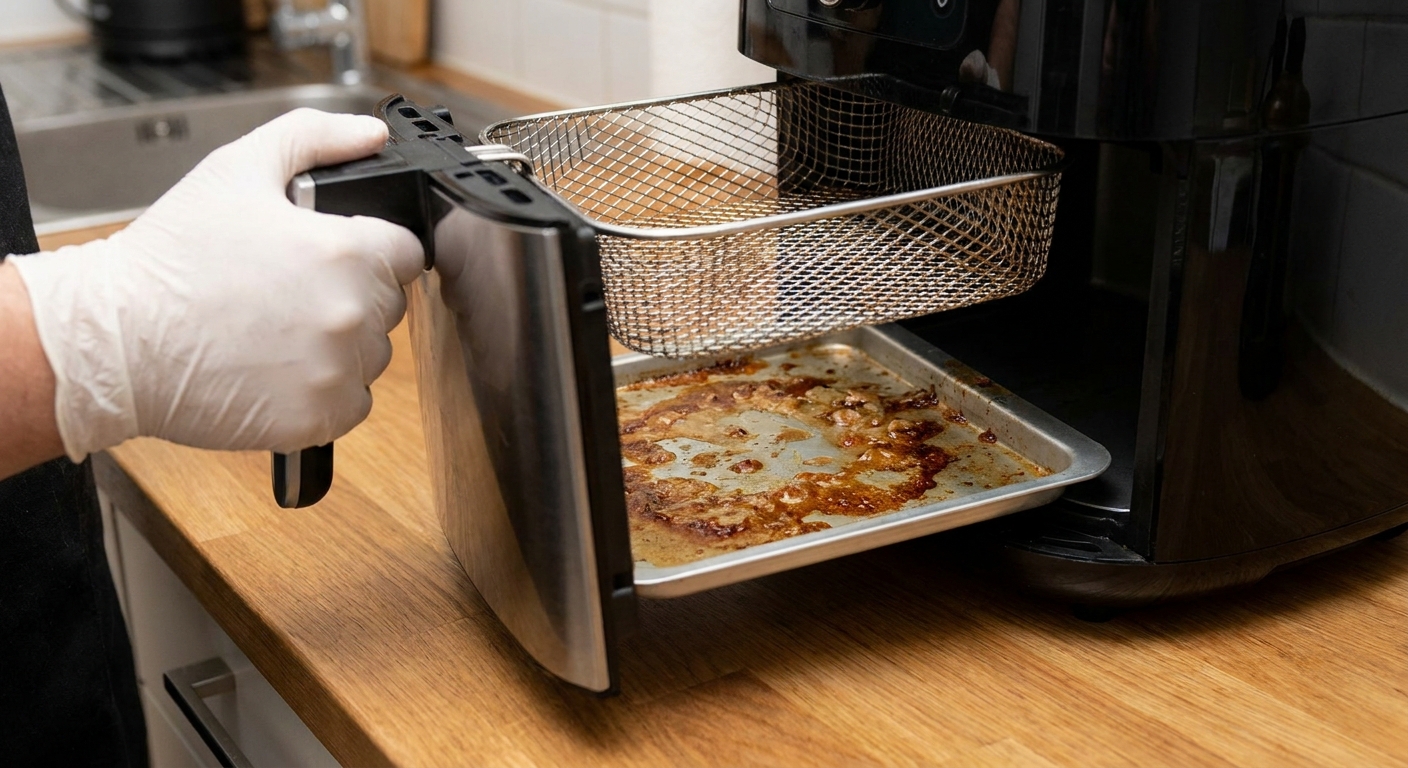
This is the classic bacon and wings situation. As fat renders, it drips into the bottom of the drawer or drip area. That hot fat can smoke, especially if it builds up during longer cooks or multiple batches.
What it looks like: Smoke increases as cooking continues and grease accumulates.
4) Crumbs and bits near hot surfaces
Burnt crumbs are tiny but powerful. Leftover breading, seasoning, or cheese from a previous batch can get blown around by the fan, then land on hot areas and burn.
What it looks like: A burnt-toast smell, sometimes with little dark specks you notice when you pull the basket out.
5) Grease film above the basket
This one hides in plain sight. Over time, a thin film of grease can build up on the upper interior, including the area around any heating-element guard. When it heats up, it can smoke even if the basket and tray look clean.
What it looks like: Smoke with foods that normally do not smoke, plus a stale, greasy smell that hits as soon as the unit gets hot.
6) Overcrowding (yes, it can contribute to smoke)
Overcrowding makes food steam instead of crisp, which often leads to more dripping, more splatter, and more loose breading. All of that ends up as smoky residue. Crowding also pushes food closer to the top, where splatter can reach hotter areas.
What it looks like: Smoke plus uneven browning and a lot of soggy spots.
How to stop air fryer smoke fast
Step 1: Pause and reduce the smoke source
- Turn off the air fryer. Many models pause automatically when the basket is removed, but not all do, so use the power button to be safe.
- Crack the basket open to slow the heat and airflow if your model allows it. Use oven mitts since the handle and drawer can get hot.
- If you see pooling grease, do not rush it. If your design allows safe pouring, carefully pour grease into a heat-safe container once it is not violently hot. Avoid pouring hot grease into glass, and keep it away from sink water to prevent splatter.
- Blot excess surface grease on very fatty foods with a paper towel, especially bacon or skin-on chicken.
Step 2: Lower the temperature for the rest of the cook
If you were at 400°F, dropping to 360°F to 375°F often keeps things cooking and crisping without pushing oil into smoke territory. You might need to add a couple minutes, but dinner stays on track.
Step 3: Use less oil next time (and apply it smarter)
My go-to is 1 to 2 teaspoons of oil per pound of food as a starting point, tossed in a bowl. You want a thin sheen, not drips. Breaded foods and veggies can vary, so adjust based on what you are cooking.
- Toss food with oil in a bowl instead of spraying inside the basket.
- If you love a spray, spray the food, not the air fryer interior.
Step 4: Pat food dry before seasoning
Moisture does not create smoke by itself, but it can cause more popping and splatter. That splatter turns into greasy residue that can smoke later, or it can drip and smoke during the cook. Patting dry also helps seasoning stick.
This matters a lot for:
- Raw chicken and fish
- Tofu
- Frozen foods with ice crystals
- Washed vegetables
Step 5: Empty the drip area between greasy batches
If you are doing multiple batches of wings, burgers, or bacon, pause between batches and carefully dump accumulated grease once it is safe to handle. Built-up grease is a repeat-offender for smoke.
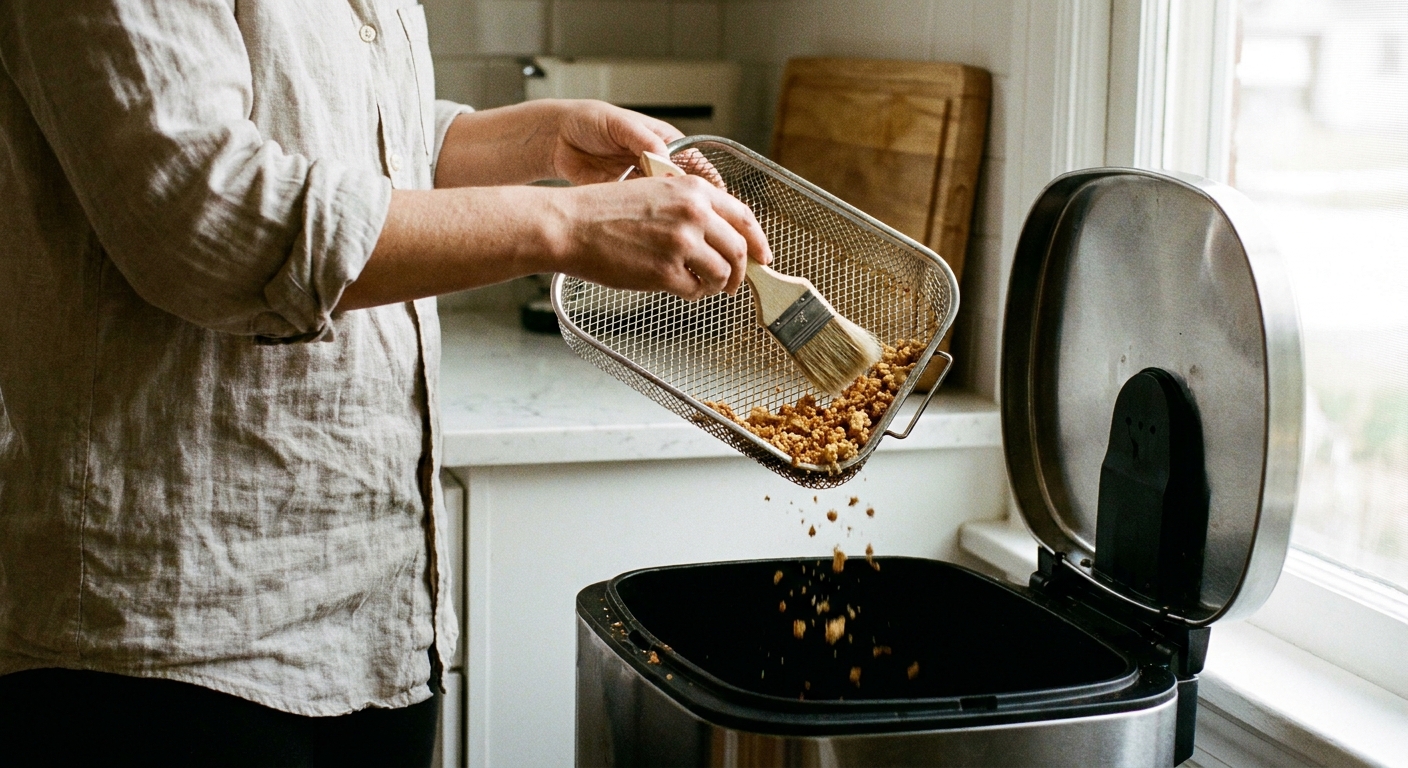
Step 6: Remove loose crumbs, but only after cooling
Crumbs near hot parts can burn, but you do not want to reach into a hot air fryer to scrape around. Let the basket and bottom plate cool, then:
- Shake crumbs into the trash
- Wipe with a damp cloth
- Wash removable parts with warm soapy water
Safety note: Avoid metal utensils that can scratch nonstick surfaces and create more sticking and burning later.
Prevention tricks I use all the time
Add a little water for very fatty foods (when appropriate)
For super fatty items like bacon or very juicy sausages, adding 1 to 2 tablespoons of water to the bottom drawer or drip area (not on the food) can reduce smoking by cooling the drippings. This works best in basket-style air fryers where drippings collect below the cooking surface.
Two quick expectations: it can add a little steam (so bacon may be slightly less crisp), and it is only a good idea if your manual says it is safe for your model.
Use parchment correctly
Perforated parchment liners can help with cleanup, but they must be weighed down by food. Loose parchment can lift into the heating element and scorch.
- Only use parchment with food on top
- Trim it so it fits inside the basket without touching the sides
- Never preheat with parchment alone
Clean the top area occasionally
If your air fryer is starting to smoke “randomly,” look up inside once it is fully cool. If you see a tacky film or splatter on the upper interior, wipe it down with a soft damp cloth or a non-abrasive sponge. Do not disassemble anything and do not soak the main unit, just clean what you can safely reach.
Cook in a single layer when you can
Air fryers crisp by moving hot air around the food. A single layer reduces splatter, helps crumbs stay put, and gives grease a cleaner path to drip away from the hottest areas.
Quick troubleshooting by scenario
My air fryer smokes when cooking bacon
- Lower temp to 350°F to 370°F
- Cook in smaller batches
- Carefully empty grease between batches once safe
- Add a tablespoon of water to the drip area if your model allows it
My air fryer smokes with frozen breaded foods
- Shake off loose crumbs before cooking
- Do not add extra oil unless the package is very dry
- Clean out burnt crumbs after the unit cools
My air fryer smokes even with vegetables
- Use less oil and toss in a bowl
- Pat vegetables dry after washing
- Check for old grease or crumbs stuck under the crisper plate
- Look for grease film on the upper interior once cooled
It smells like burning plastic
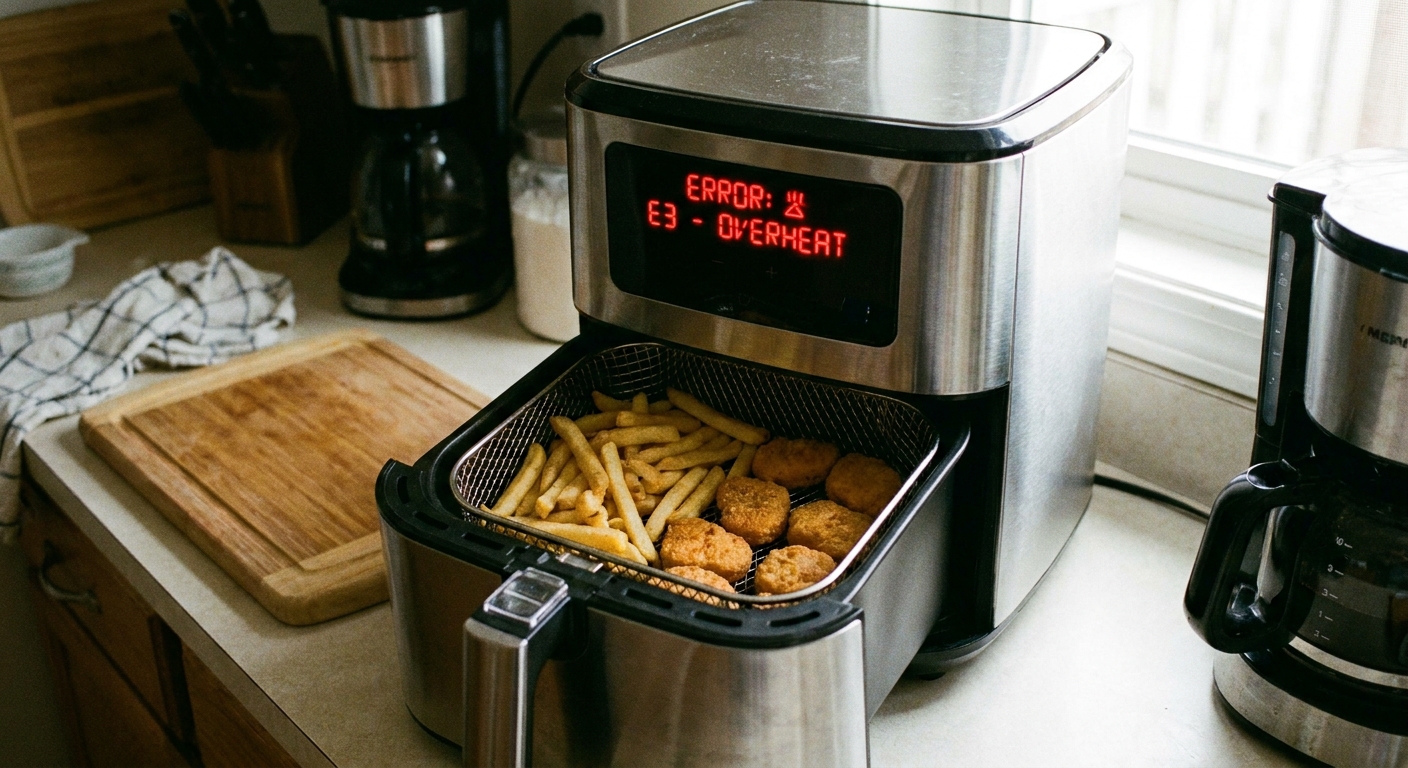
Stop the cook. Unplug and let it cool. If the air fryer is new, a mild “new appliance” smell can happen in the first couple uses. If your manufacturer recommends it, do an initial empty run in a well-ventilated kitchen to burn off manufacturing residue.
But burning plastic is not something to ignore. Look for any packaging material you missed, a liner touching the heater, or residue near the heating area. If the smell persists after cleaning and a short test run with nothing inside, contact the manufacturer.
When smoke means you should stop and clean
If you have tried lowering the temp and reducing oil and you still get smoke, it is usually time for a real clean. I am not talking about perfection, just the spots that cause smoking:
- Bottom drawer or drip area (grease film is a smoke magnet)
- Crisper plate or rack where crumbs collect
- Any visible splatter on the interior walls
- Upper interior around the heating-element guard (once fully cool)
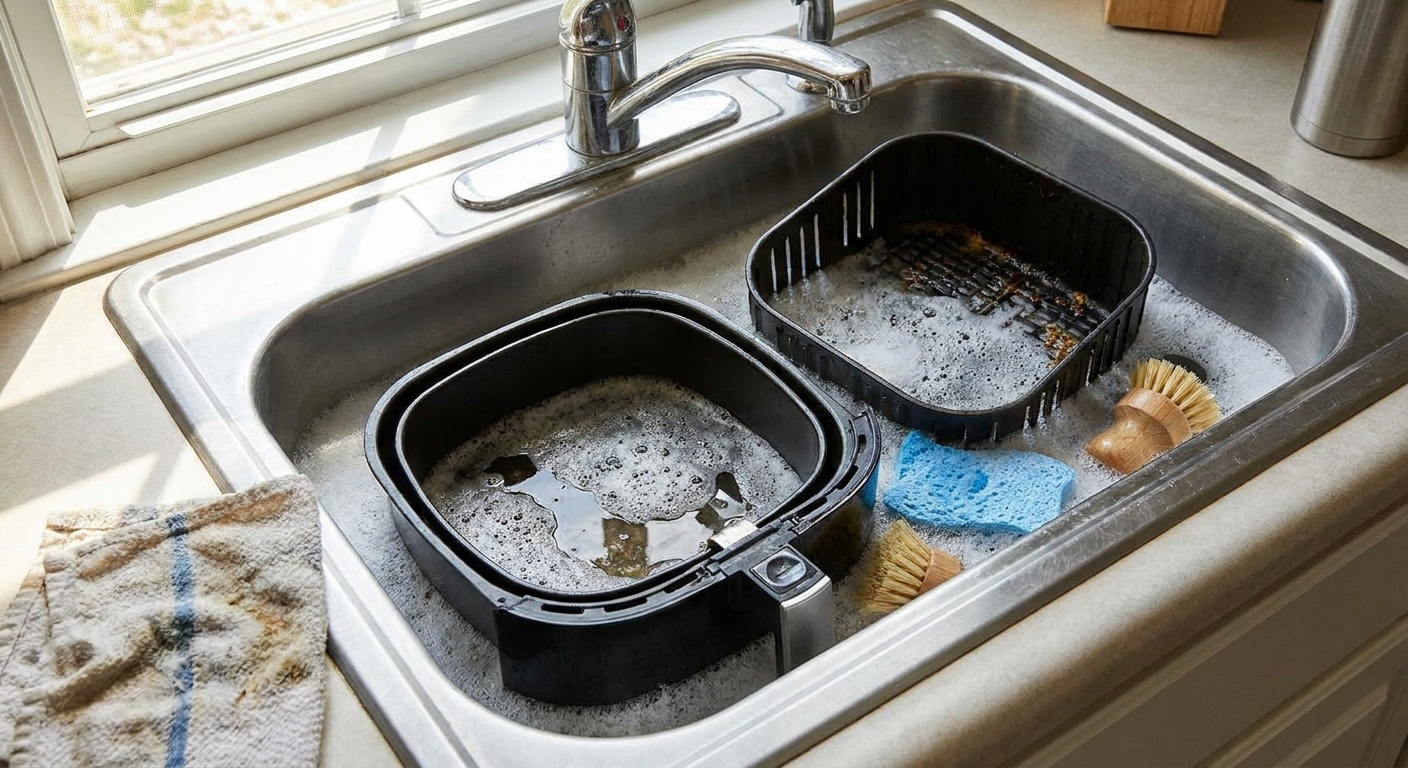
Let everything cool completely first, then wash removable parts with warm soapy water. For stuck-on grease, a short soak does wonders.
FAQ
Is it normal for an air fryer to smoke?
Occasional light smoke can be normal, especially with fatty foods. Persistent smoke or a burning smell is a signal to pause, check for grease buildup, and clean out crumbs.
What oil is least likely to smoke in an air fryer?
Generally, oils with higher smoke points behave better at 375°F to 400°F. If you are seeing smoke often, try avocado oil, refined canola, peanut oil, or refined olive oil, and use a lighter amount.
Can I put foil in my air fryer to catch grease?
Foil can block airflow and shift around. If you use it, keep it snug, keep it below the food (never loose near the heater), and do not cover the entire basket surface. Many people do better with simply emptying the drip area and cleaning more often after fatty cooks.
Why does my air fryer smoke only at 400°F?
That temperature is where many oils and drippings start to smoke. Dropping to 360°F to 375°F often fixes the problem with only a small increase in cook time.
My bottom-line rule
If it is a little wisp of smoke and your food smells delicious, you are probably dealing with oil or fat and can fix it quickly. If it smells harsh or burnt, pause the cook and check for crumbs, pooled grease, liners too close to the heating element, or a greasy film up top. A two-minute reset now beats a smoked-out kitchen and dinner that tastes like yesterday’s breading.