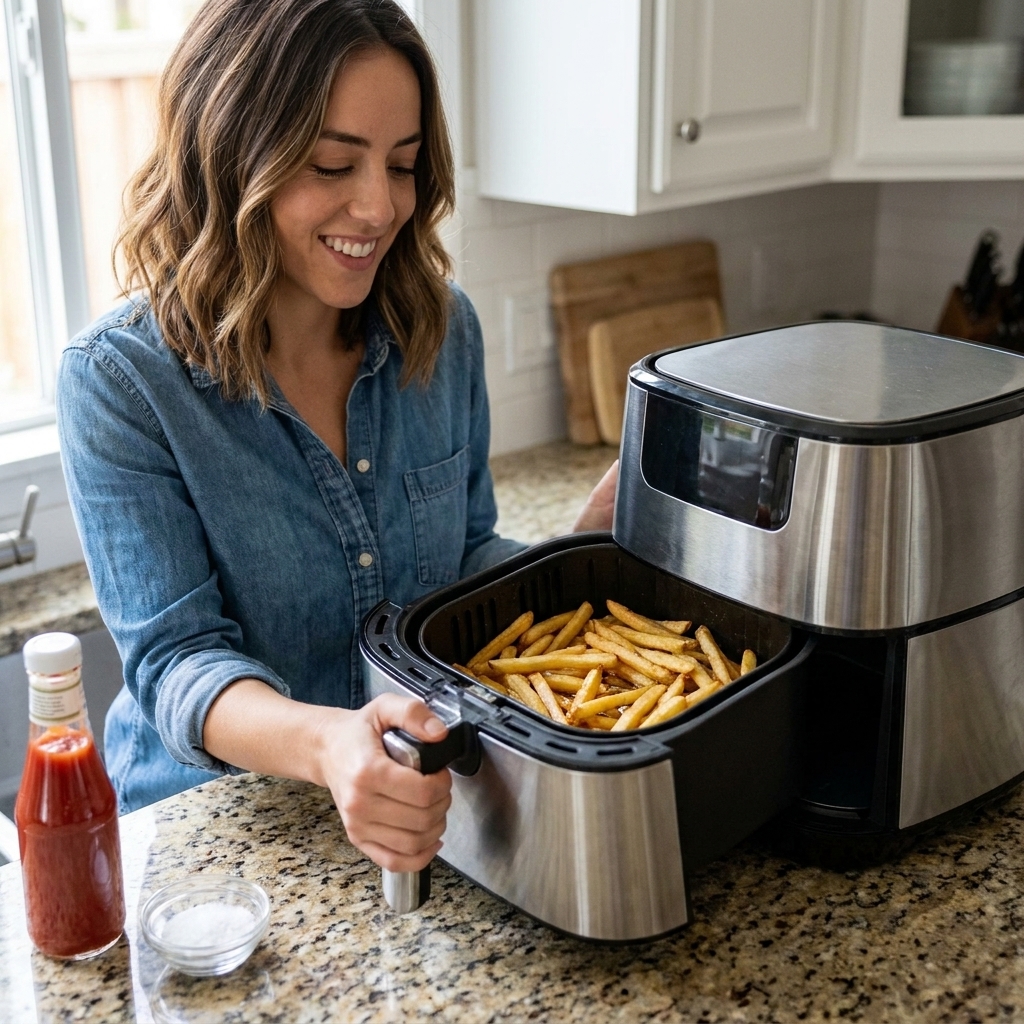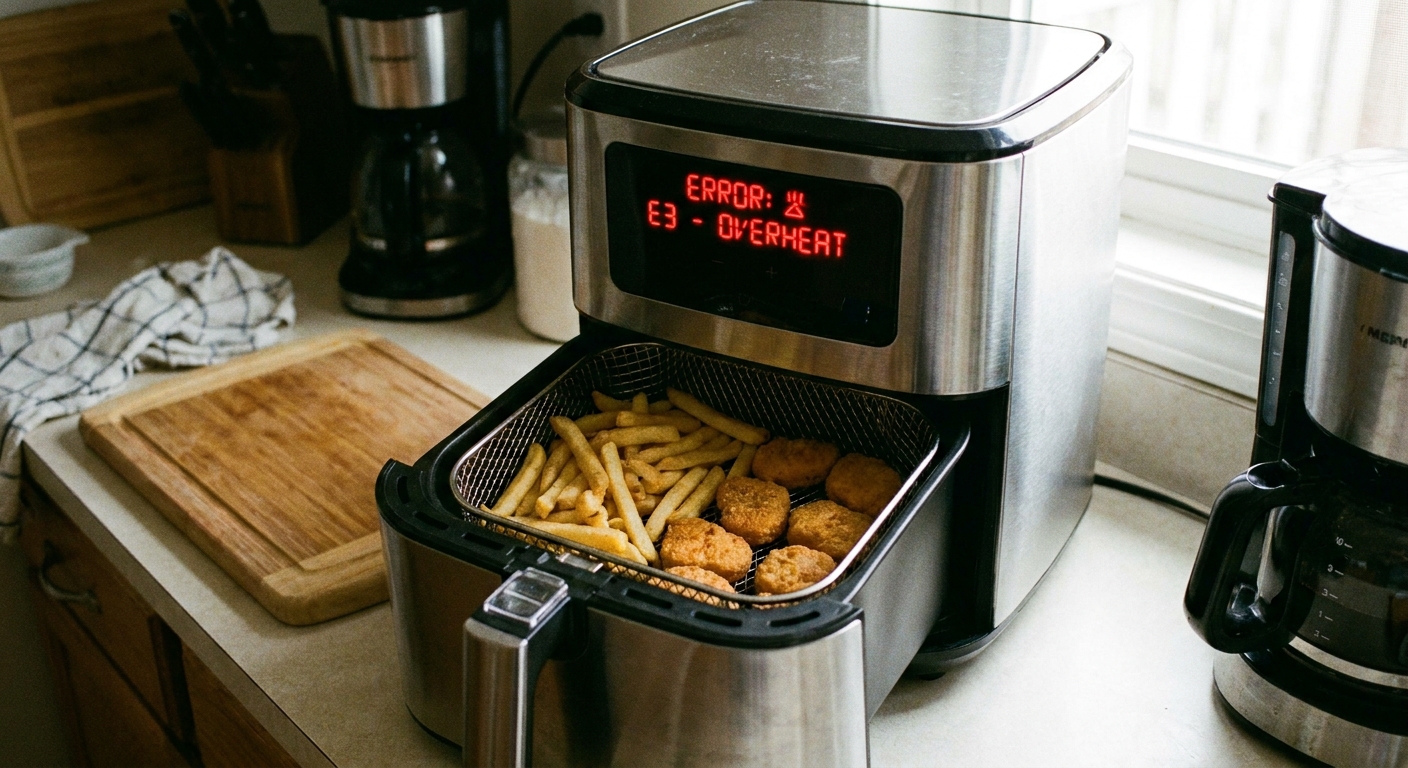

I learned this the hard way: an air fryer basket can look “clean” but still feel tacky and start sticking if you treat it like a cast-iron skillet or, worse, attack it with an abrasive sponge. (Midwest deep-fry kid habits die hard.) The good news is you do not need anything fancy to keep your basket nonstick. You just need the right order: cool down, soak, wash gently, and dry fully.
Most baskets are coated with some version of nonstick (often PTFE or ceramic). The basics below work for both, but always check your manual for any model-specific do’s and don’ts, like whether the basket is dishwasher-safe or if the manufacturer warns against flipping the base.
Below is my busy-mom routine that keeps the coating happy, knocks out grease, and prevents that smoky “old fries” smell from hanging around.
First, know what ruins nonstick
The nonstick coating on most air fryer baskets is tough, but it is not invincible. Damage usually comes from abrasion (scratching) or harsh chemicals, not from normal cooking.
Avoid these scratchy tools
- Steel wool or metal scouring pads
- Chainmail scrubbers (great for cast iron, terrible for nonstick)
- Abrasive “heavy duty” scrub sponges that feel gritty
- Stiff-bristle brushes meant for grills
- Metal utensils used to pry off melted cheese or stuck batter
Be cautious with these cleaners
- Oven cleaner or heavy degreasers not labeled for nonstick surfaces
- Chlorine bleach on coated parts (it can discolor and wear finishes over time, and some manufacturers specifically warn against it, so check your manual)
- Powdered abrasives that rely on grit to scrub
Safe basics that work: warm water, mild dish soap, a soft sponge or microfiber cloth, and a soft nylon dish brush for the holes and corners.
The 5-minute wipe after cooking
This is the difference between “quick rinse” and “why is my basket permanently brown.” If you do this while the grease is still fresh, your weekly deep clean becomes optional most weeks.
Step-by-step
- Unplug and cool down. Let the basket and drawer cool until they are warm, not hot. It is safer for your hands, and it also helps avoid warping or stress from sudden temperature changes.
- Dump crumbs and blot excess grease. Use a paper towel or a disposable napkin to blot puddled grease from the drawer. This keeps it from redepositing as a sticky film.
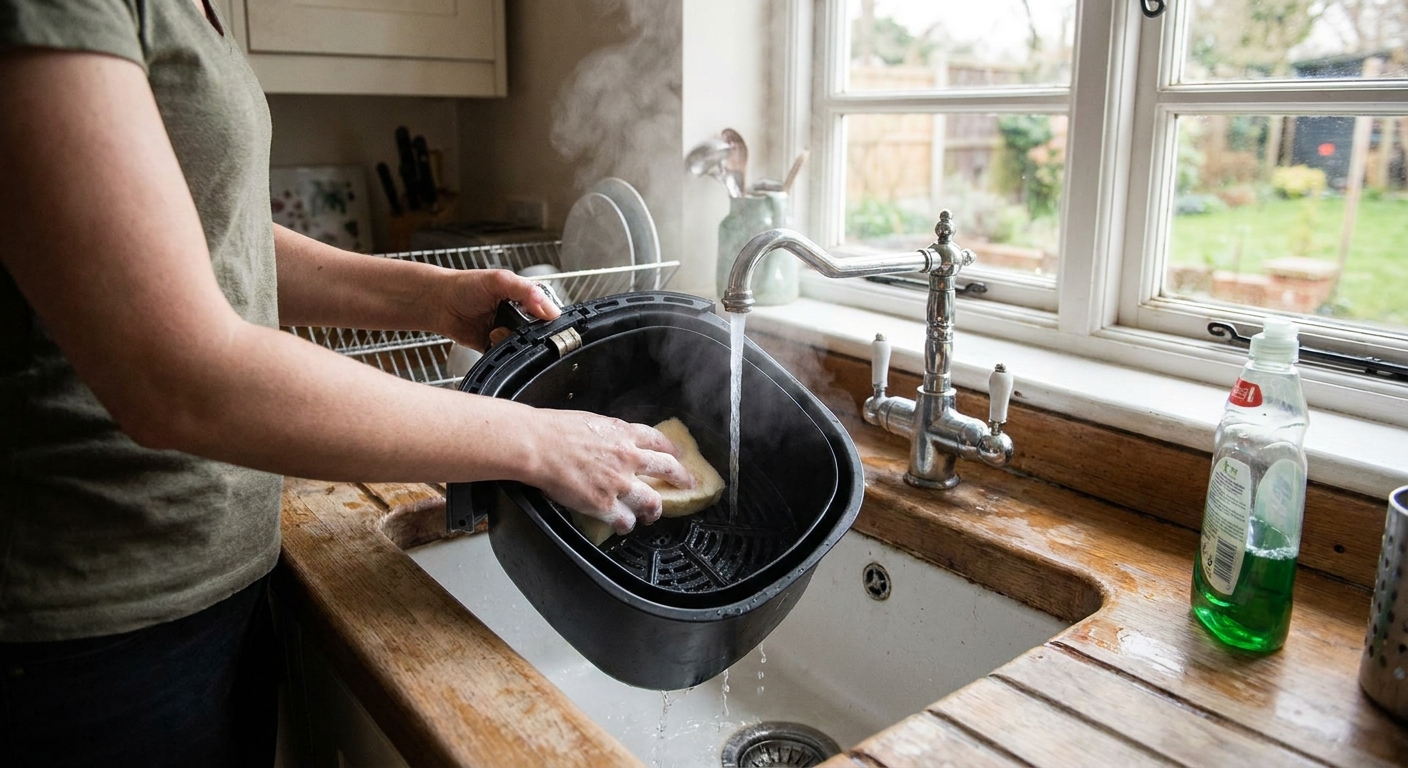
- Quick wash with mild soap. A soft sponge with a drop of dish soap is enough for most meals.
- Rinse and dry right away. Dry with a towel, then air-dry a minute or two before reassembling. Trapped moisture can lead to lingering odor.
My shortcut: If dinner was something “clean” like plain chicken thighs or frozen fries, I still do the blot and a soapy wipe. If I skip it, the next cook bakes that grease into a varnish.
Weekly deep clean
If you air fry anything with cheese, sugary sauce, breading, or wet batter, plan on a deeper clean about once a week or whenever you feel tackiness on the coating.
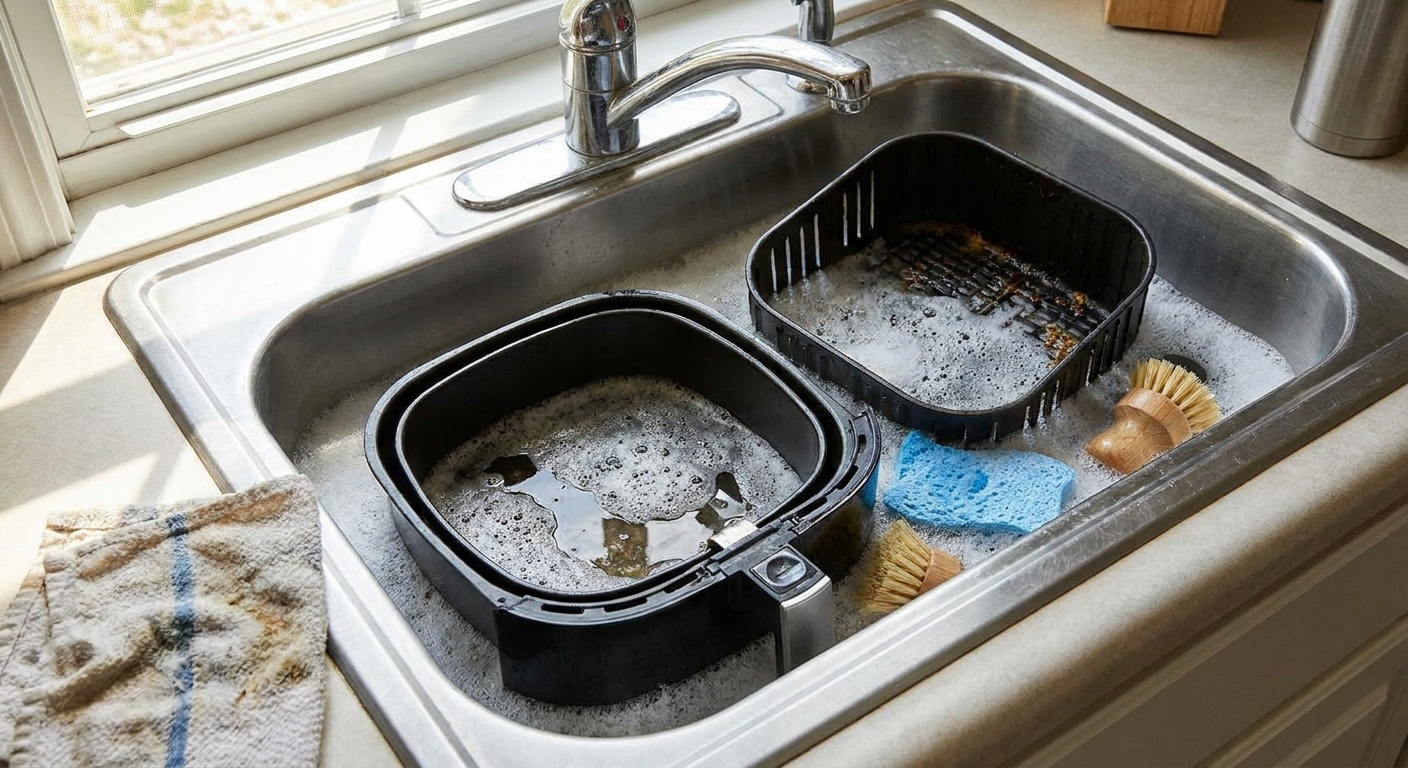
1) Cool down, then soak the basket and drawer
Fill your sink or a large basin with warm water and a squirt of mild dish soap. Submerge the basket and drawer only (the removable parts) and let them soak for 10 to 20 minutes.
- Why this works: soaking rehydrates baked-on starches and loosens fats so you do not have to scrub hard.
- How warm? Think “comfortable hot bath,” not boiling. Very hot water is unnecessary and can be rough on some finishes over time.
2) Gently scrub in the right order
- Soft sponge for flat surfaces. Wipe the bottom, sides, and any smooth ledges where grease clings.
- Soft nylon brush for the grate holes. Use light pressure and let the bristles do the work.
- Use a wooden or silicone utensil for stubborn bits. If a blob of cheese will not budge, nudge it with a silicone spatula edge or a wooden chopstick instead of scraping with metal.
Do not forget the hidden spots: If your basket has a removable crisper plate or grate, pull it out and wash it separately. Also check the underside, rim, and the little lip where grease loves to pool.
3) Rinse well and dry fully
Leftover soap can leave a film that feels grabby or sticky. Rinse well, then towel-dry and air-dry.
Optional boost: baking soda paste
If the basket looks clean but still feels sticky, make a paste with baking soda and a little water. Rub it lightly with a soft cloth, then rinse well. Baking soda is mildly abrasive, so keep the pressure gentle and use it occasionally, not daily.
Cleaning the heating element area
The base is the part with the fan, electronics, and heating element. This is where people get into trouble by trying to wash it like a pan.
Safety rule: Do not submerge the base, do not run it under water, and do not spray cleaner directly into it. Keep moisture away from vents, the fan area, and controls.
What to do instead
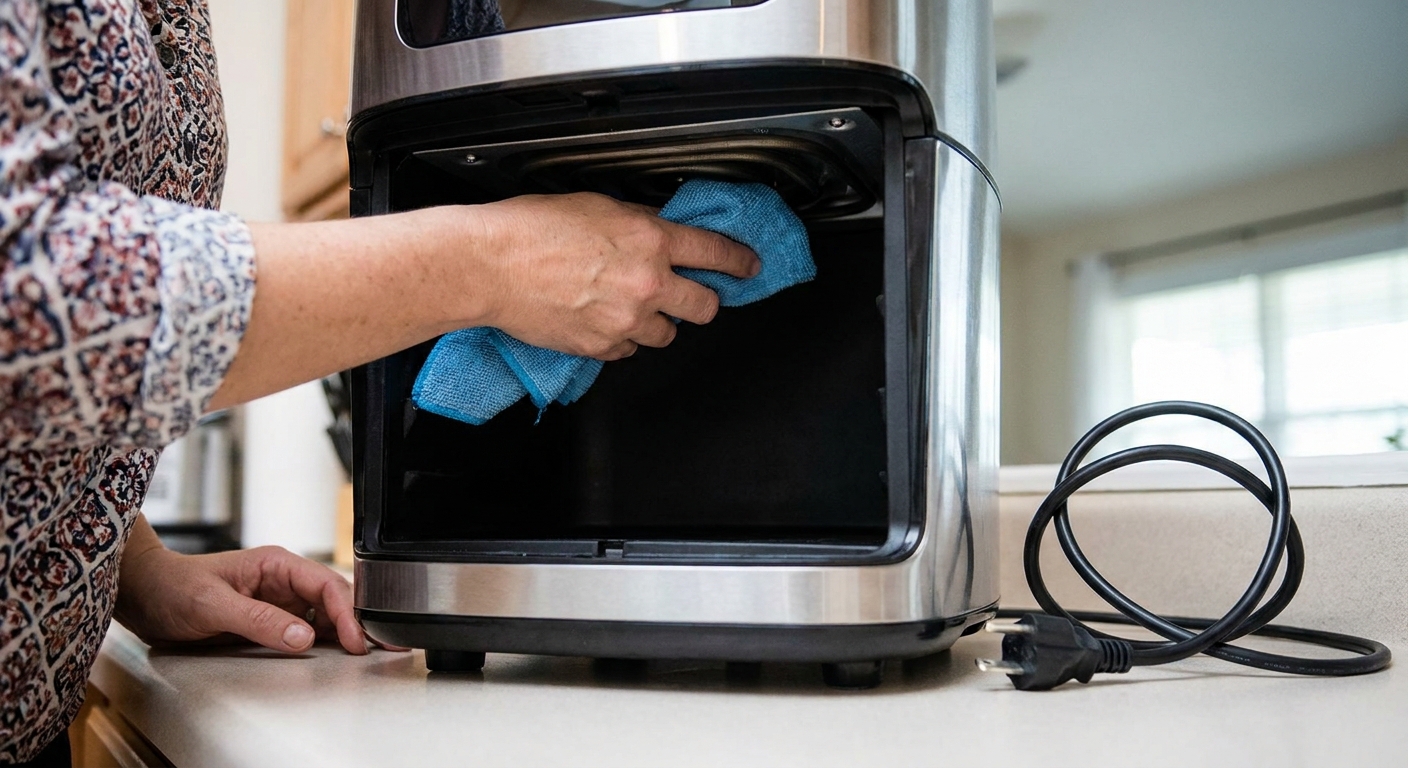
- Unplug and cool completely. Give it at least 30 minutes after cooking.
- Access the top safely. If your manual allows it, you can tip the unit to see the heating element better. If your manufacturer discourages flipping the base, leave it upright and work from above with minimal moisture.
- Use a barely damp microfiber cloth with a drop of dish soap. Wipe the interior ceiling and around the coil. Keep moisture controlled.
- Use a soft toothbrush or small nylon brush for crevices and the guard area. Again, gentle pressure.
- Wipe again with a clean damp cloth to remove soap residue.
- Dry thoroughly. Finish with a dry cloth and let the unit sit out for at least an hour before plugging back in.
For greasy splatter that will not lift: Add a little more dish soap to your cloth and hold it on the spot for 30 to 60 seconds like a mini soak. That pause matters.
Stuck-on cheese and batter
Melted cheese is basically kitchen glue. Wet batter is worse. If you go at either one aggressively, you will scratch your coating and still feel annoyed. Here is what works without brute force.
For melted cheese
- Soak first. Ten minutes in warm soapy water is usually enough.
- Lift, do not scrape. Use a silicone spatula edge to lift softened cheese from the coating.
- Repeat if needed. A second short soak beats ten minutes of scrubbing.
For baked-on batter or breading paste
- Soak longer, up to 20 minutes.
- Use a soft brush in circles. Light pressure, lots of passes.
- Spot-treat with baking soda paste if the residue is stubborn.
Future you tip: If you are cooking something drippy (think mozzarella sticks, battered fish, saucy wings), a perforated parchment liner can reduce mess. Just make sure it is weighted down by food so it cannot lift into the heating element.
Dishwasher or hand wash?
Some air fryer baskets are labeled dishwasher-safe. Even then, I still prefer hand washing most of the time.
- Hand washing is gentler. Dishwashers use harsher detergents and high heat that can dull coatings over time.
- If you do use the dishwasher: follow your manual, place the basket and drawer on the top rack if possible, and avoid crowded loads where metal pans can bang into the coating.
Signs you need a deep clean
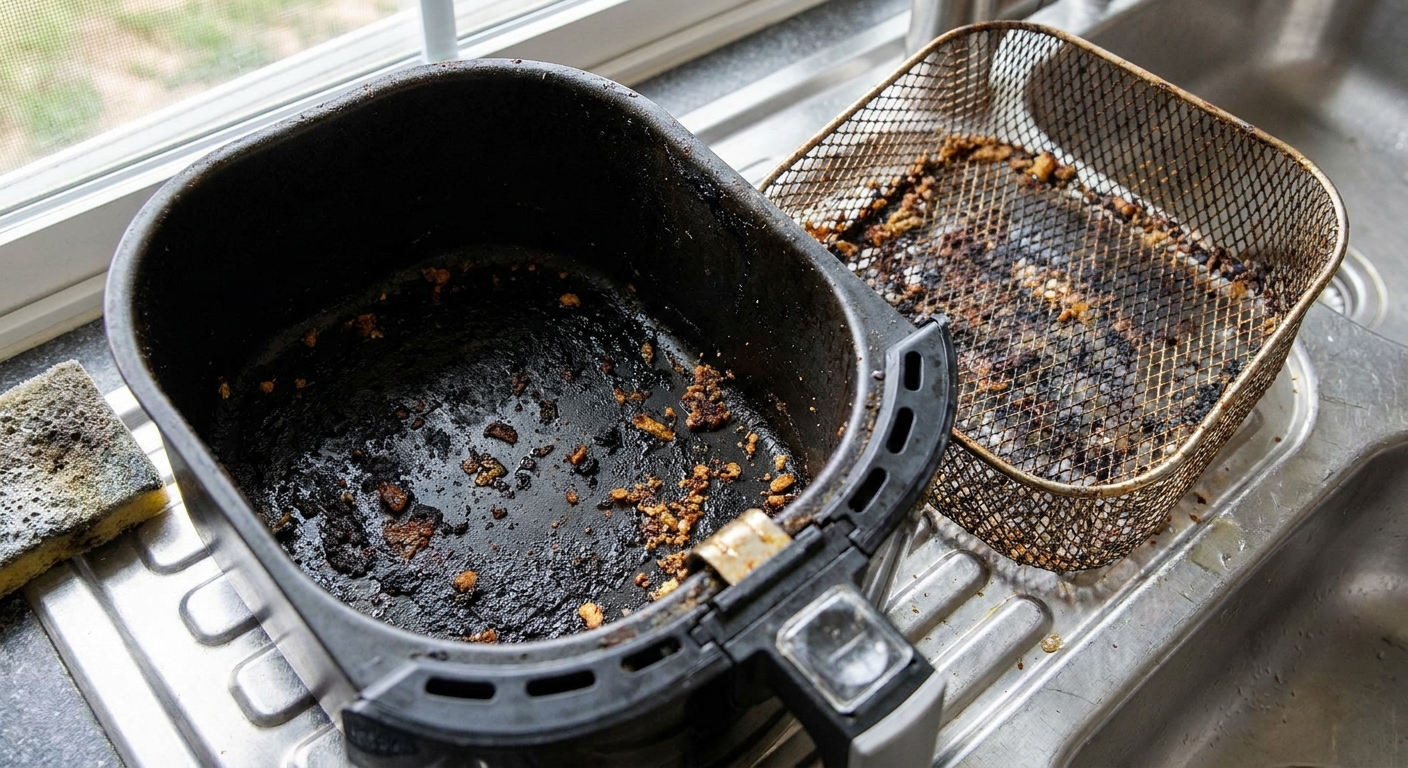
- Tacky or sticky feel when you run your fingers over the surface (once cool)
- Food starts sticking when it did not before
- More smoke than usual during cooking
- A stale, greasy smell when the unit is cold
That sticky feel is usually polymerized grease. It is basically a thin layer of “seasoning” you do not want on nonstick. A soak plus gentle soap usually fixes it.
Troubleshooting
“My basket is discolored. Did I ruin it?”
Not necessarily. Cosmetic staining happens, especially with breaded foods and high-heat cooking. If the surface still feels smooth and food releases normally, you are fine. Focus on removing sticky residue, not making it look brand new.
“The coating is flaking.”
If you see peeling or flaking, stop using that basket and replace the part if your brand sells replacements. Flaking usually comes from abrasion or repeated harsh cleaning.
“It smells like old grease even after washing.”
Deep clean the basket and drawer, then wipe around the heating element area (unplugged, barely damp cloth). Also check the outside vents for dust and grease and wipe them with a dry or slightly damp cloth.
“Can I use vinegar?”
A small amount of diluted vinegar on a cloth can help cut odors and light grease, but it is not a magic degreaser. Dish soap is usually more effective for oily buildup. Never pour vinegar into the base.
My simple cleaning schedule
- After every cook: blot grease, quick soapy wash of basket and drawer, rinse, dry
- Weekly (or after messy foods): 10 to 20 minute soak, gentle scrub, check corners, underside, and the rim
- Monthly: wipe the interior top and around the heating element area, wipe exterior vents
If you take nothing else from this, take this: soaking beats scrubbing. Your nonstick coating will last longer, and you will spend less time rage-cleaning cheese cement out of tiny holes. Ask me how I know.