I love an air fryer because it is the one appliance that makes Tuesday-night chicken nuggets feel like a win. But when your air fryer suddenly shuts off or throws an error code, that “set it and forget it” magic disappears fast.
This guide is strictly about safe checks you can do without tools before you call manufacturer support. No disassembly. No electrical repairs. No guessing what a code “probably” means across brands. (Error codes can vary widely by brand and model, and I do not want you trusting a random internet list when your countertop appliance is literally heating on purpose.)
First, a quick safety reset
If your air fryer is beeping, flashing, or shutting off mid-cook, start here:
- Stop cooking and remove food if you smell burning plastic, see smoke, or notice unusual sparking.
- Unplug the air fryer and let it sit until it is fully cool (often at least 10 minutes). Some manuals specify a different reset time, so follow yours if it does.
- Move it to a clear, stable spot on a heat-safe, level surface (not under cabinets, not on a dish towel, not pressed against a backsplash).
- Plug directly into a wall outlet (skip power strips and extension cords for troubleshooting, since high-wattage countertop appliances are often meant to be direct-to-wall).
After it cools, you can try a basic test run with an empty, clean basket for 2 to 3 minutes just to see if it powers and heats normally. Stay nearby during this test. If anything seems unsafe, do not continue.
Look up the code the right way
The most helpful thing you can do is match the code to your exact model. Brands reuse letters and numbers across different lines, and the same-looking air fryer can have different electronics depending on the production year.
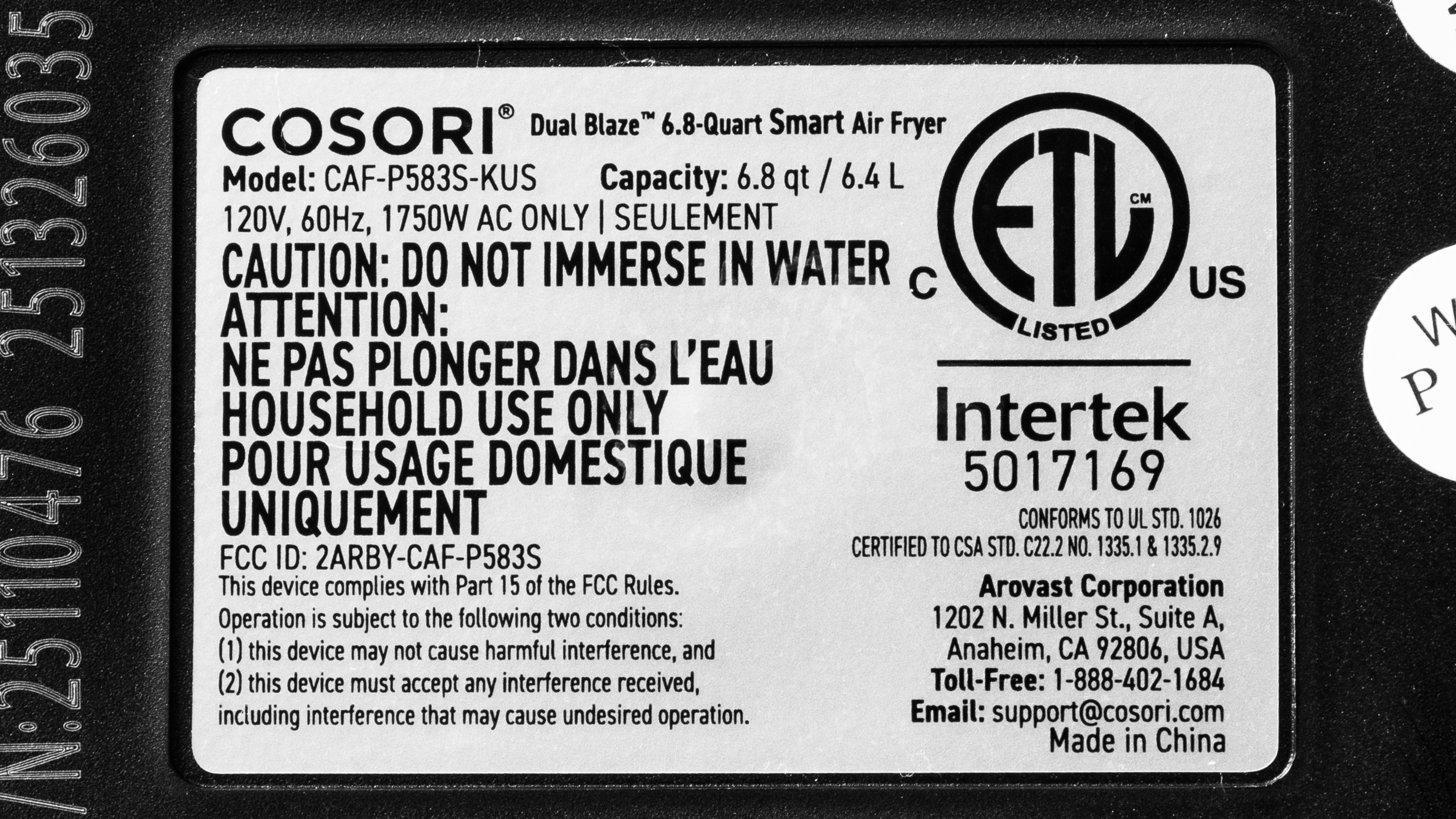
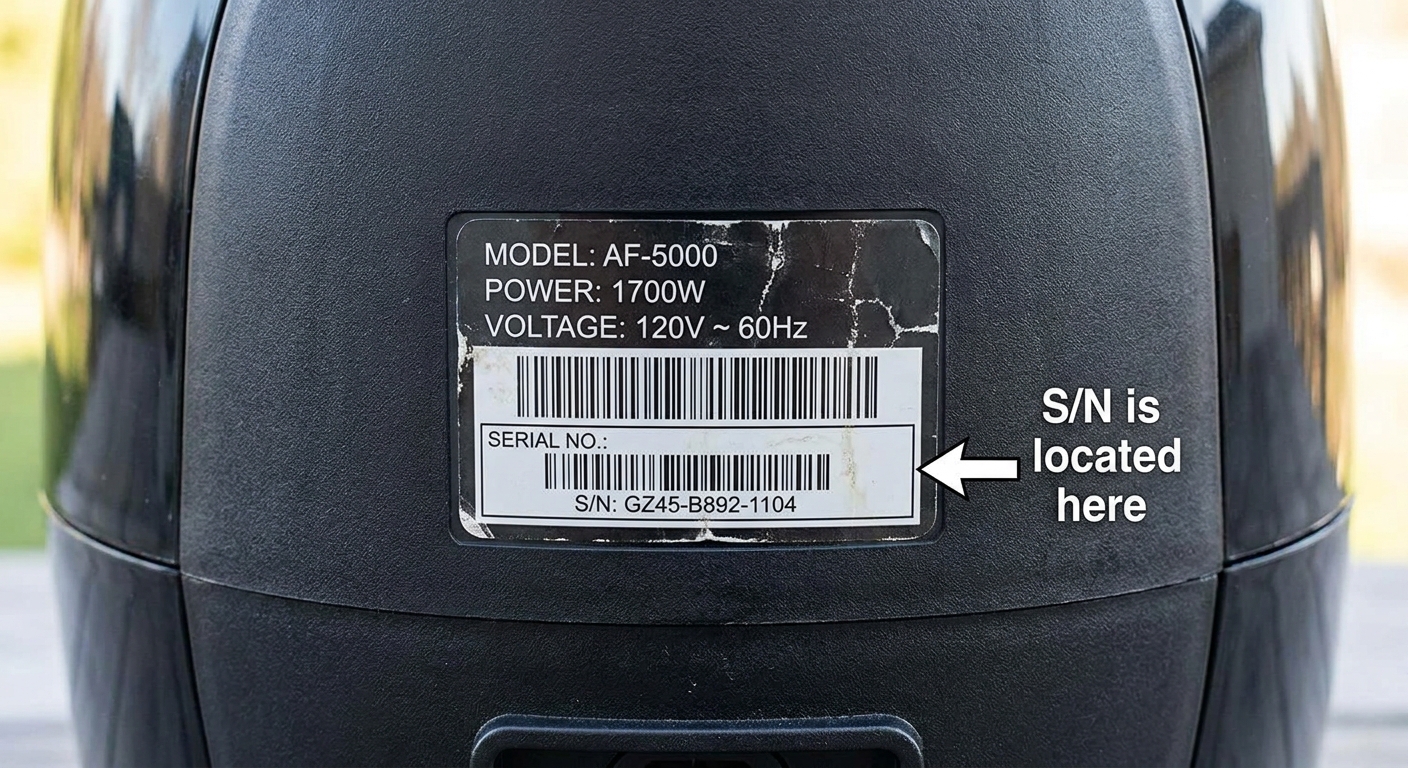
Where to find your model number
- Basket air fryers: Often on a sticker on the back or bottom of the main unit.
- Air fryer toaster ovens: Commonly on the back panel or inside the door frame area.
- Lids (multi-cookers with air fry lids): Sometimes on the lid rim or underside.
Where to find the official code list
- Your printed manual (often has an error code table).
- The manufacturer’s support page for your specific model number.
- The brand’s PDF manual download (search your model number plus “manual PDF” on the manufacturer site).
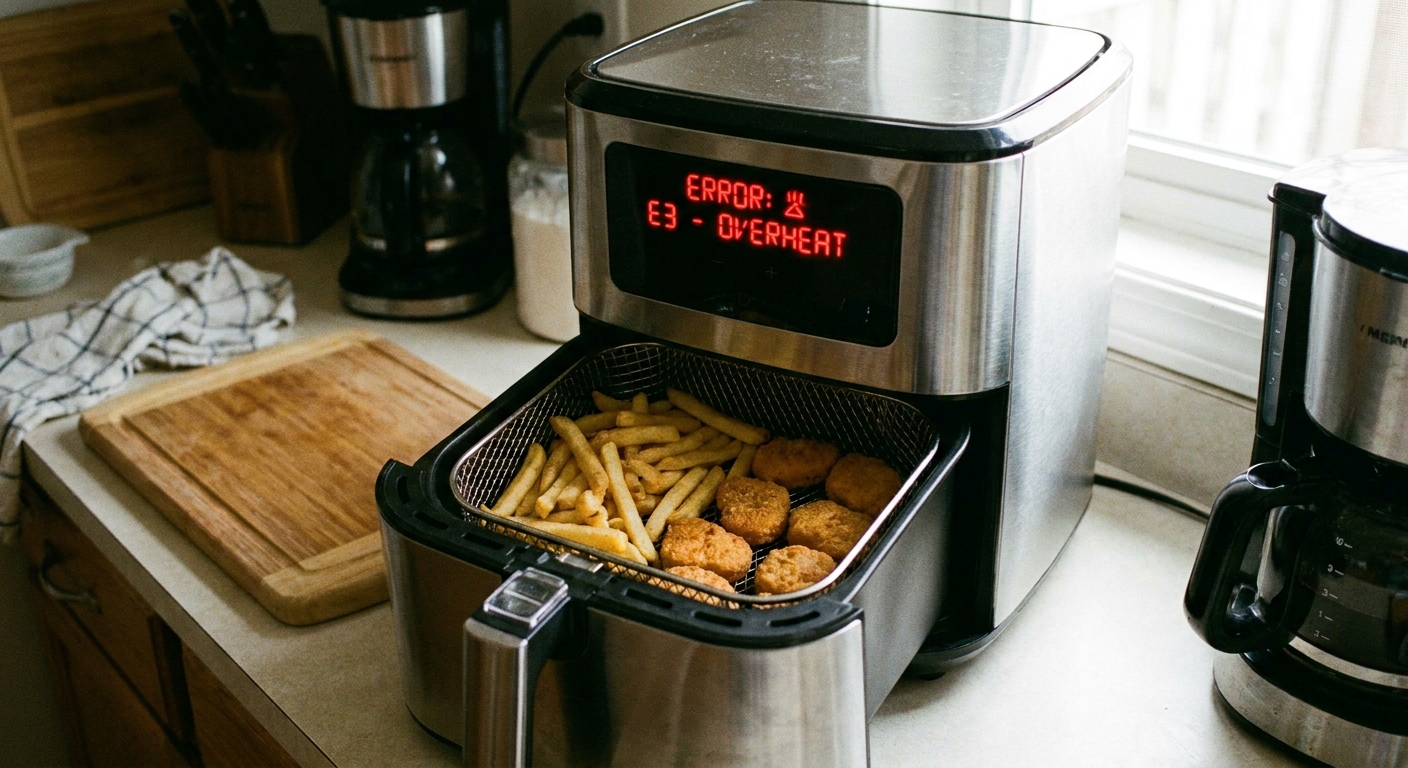
Tip from my recipe-testing brain: snap a quick photo of the display while the code is visible. Some codes disappear after a reboot, and support will ask what you saw.
Safe fixes for sudden shutoffs
Most mid-cook shutoffs come down to one of these: basket not registering as closed, overheating from poor airflow, an overload situation that blocks airflow, or a simple power issue. Here are the checks that do not require opening anything.
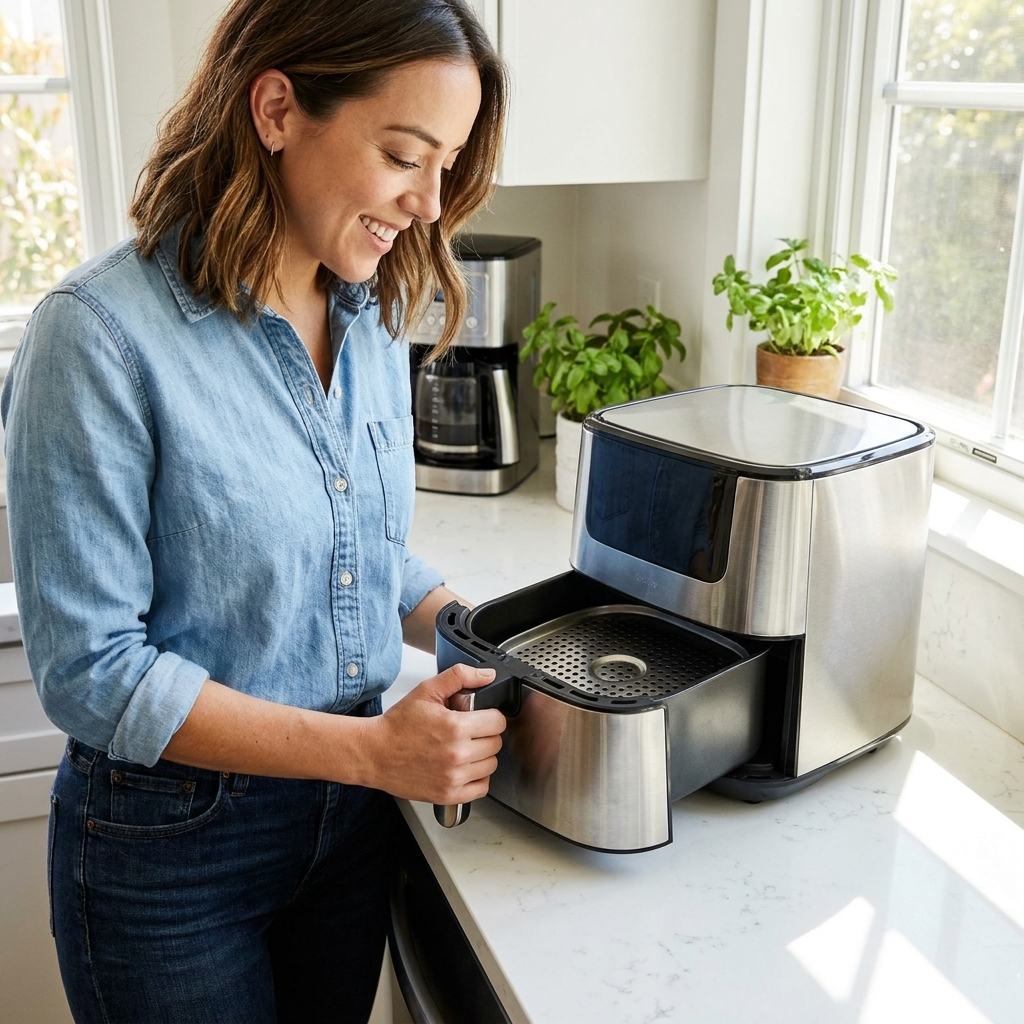
1) Reseat the basket and drawer
Air fryers have safety interlocks. If the basket is not fully seated, the unit can stop heating or shut off entirely.
- Remove the basket, then slide it back in firmly until it is fully flush.
- Check for crumbs on the rails or lip that could prevent a full close.
- Confirm the inner basket is properly nested inside the outer drawer (especially after washing).
- Make sure the drawer is not slightly ajar. Some models are picky about that last tiny click.
- Do not force it. If it suddenly feels “off track,” pull it out and try again.
This sounds almost too simple, but I have fixed more “broken” air fryers this way than I can count. A single curled fry wedged in the track can be the whole problem.
2) Check the interlock areas
Without taking anything apart, give the spots where the basket meets the body a quick once-over.
- Wipe the basket rim and drawer edges so grease or residue is not keeping it from seating correctly (unplug first, let it cool, then use a lightly damp cloth and dry it).
- Look for stuck-on gunk near the latch and contact points where the drawer slides in.
3) Give it real breathing room
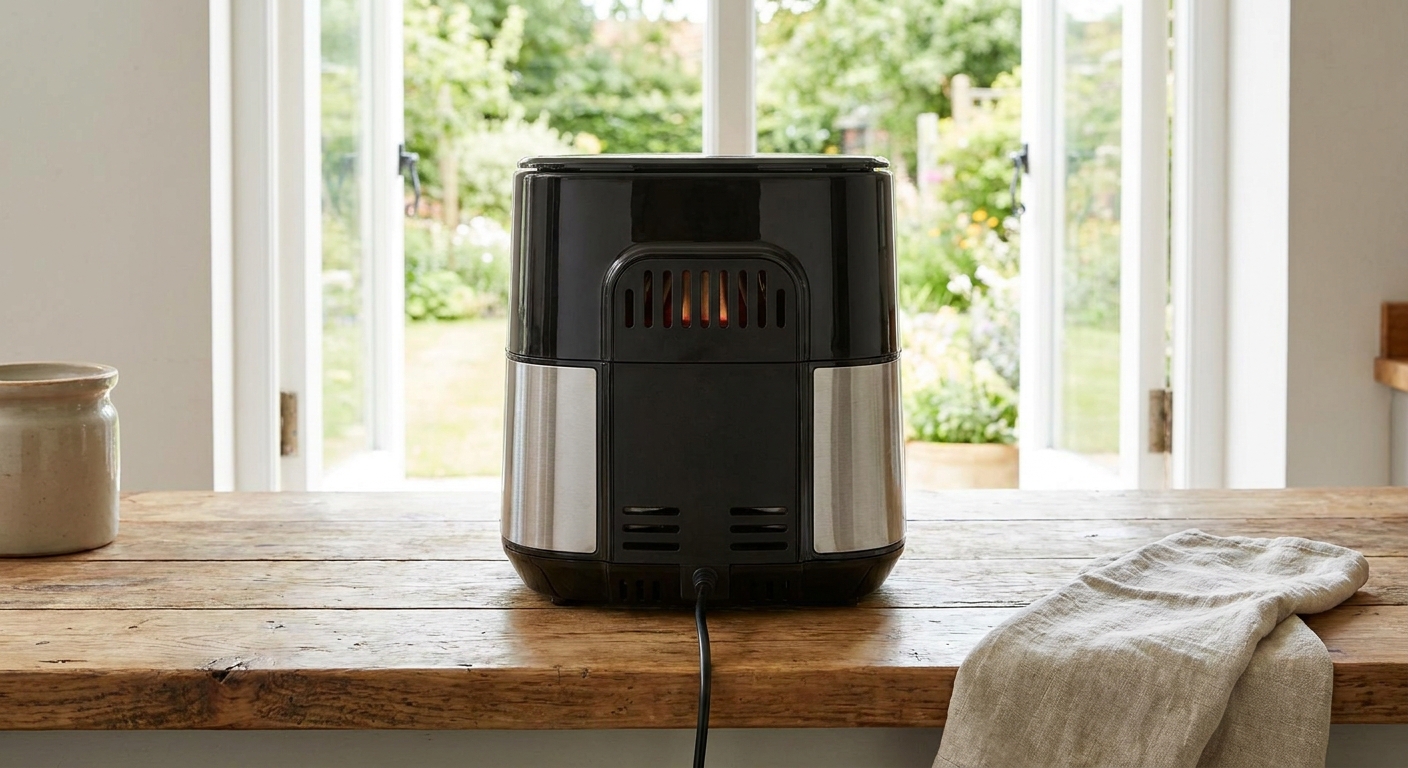
Air fryers move a lot of hot air. If heat cannot escape, the appliance can overheat and shut itself down to protect internal components.
- Leave at least several inches of space on all sides, especially behind the unit where vents usually live.
- Do not run it under low cabinets if the manual warns against it.
- Wipe away grease buildup around exterior vents (unplug first, use a dry or barely damp cloth).
Also check the surface underneath. Some models pull air from below, and a soft mat, towel, or cluttered counter can block airflow.
4) Watch for overheating patterns
If your air fryer shuts off and then works again after a cooling period, overheating is a prime suspect.
Clues you are dealing with overheating:
- It shuts off after running at high temp for a while (think 400°F for multiple batches).
- The outside feels unusually hot for your model.
- It restarts only after sitting unplugged and cooling down.
What to do safely:
- Let it cool fully before restarting.
- Cook in shorter batches with a 5-minute rest between rounds if you are doing multiple loads.
- Double-check that the basket and bottom pan are clean. Built-up grease can trap heat and also create smoke.
5) Reduce the load and fix airflow
Overloading is not just a crispiness issue. If food blocks airflow, heat can build up and trigger a safety shutoff.
- Do not pack food tightly against the sides or top of the basket.
- Avoid stacking wet, heavy items without airflow gaps.
- If you are using parchment or a liner, make sure it is weighted down by food and not flapping up into the heating area. Loose liners can disrupt airflow and create heat problems.
My weeknight rule: If you cannot see any space between pieces, you are probably asking for steam, not crisp. And sometimes you are also asking for a frustrated air fryer.
6) Rule out a power or outlet issue
Sudden shutoffs can come from inconsistent power, especially with appliances that draw a lot of wattage.
- Plug into a different wall outlet you trust.
- Avoid running the air fryer on the same circuit as another high-draw appliance (microwave, kettle, toaster oven).
- Skip extension cords and power strips while testing. Some are not rated for the load, and voltage drop can cause problems.
- If your kitchen outlet is GFCI-protected and it tripped, reset it only if everything is dry and safe to do so. If it keeps tripping, stop using the appliance and contact an electrician or the manufacturer, depending on the situation.
What error codes usually point to
I am intentionally not listing “E1 means X” style definitions, because those vary by brand and model. But in broad terms, manufacturer error codes commonly relate to:
- Temperature sensing (the unit cannot read temp correctly or thinks it is outside the safe range).
- Overheat protection (safety shutdown after heat builds up).
- Fan or airflow monitoring (on certain models that can detect abnormal fan behavior).
- Basket or door position (interlock not satisfied).
- Electrical or control board faults (not DIY territory).
Your next step is always the same: confirm the code in your manual for your exact model, then follow the manufacturer’s recommended cooling or reset steps. If the code keeps returning, assume it may be a sensor or control issue and treat continued use as a potential safety risk.
Stop-use signs
As a mom who has absolutely tried to salvage dinner after a kitchen fail, I get the temptation to power through. These are the moments to stop and keep safety first.
- Burning plastic smell that does not quickly fade after powering off.
- Visible smoke not clearly coming from food splatter or normal high-fat smoke.
- Sparking, popping, or crackling sounds from the unit (not normal sizzling from food).
- Melted, warped, or discolored plastic anywhere on the housing, plug, or cord.
- Damaged cord, loose plug blades, or the plug feels hot to the touch.
- Repeated shutoffs even after cooling, clearing vents, reducing load, and using a known-good outlet.
If any of the above happens, unplug the unit and do not use it until you have guidance from the manufacturer. If there is an active fire risk or you cannot safely unplug, treat it as an emergency and follow local safety guidance.
When to call support
Call or chat with the manufacturer when:
- The error code persists after you follow the manual’s model-specific steps.
- The unit shuts off repeatedly with normal loads and good ventilation.
- The display is blank or unresponsive, or buttons stop responding.
- The fan runs but there is no heat, or it heats unpredictably.
- You see any stop-use signs (burning smell, sparking, melting, cord issues).
Have this ready
- Model number and serial number (photo helps).
- The exact code or message shown (photo helps).
- What you were cooking, temp, time, and whether it was preheated.
- Rough age of the air fryer and proof of purchase if available.
Keep troubleshooting separate
If your air fryer is erroring out or shutting off, this is not the moment to adjust cook times or “just lower the temp and see.” Appliance problems are a safety topic first, a dinner topic second.
Once your unit is running normally again, then you can go back to the fun stuff: batch sizes, shaking schedules, and dialing in your crisp.
FAQ
My air fryer shut off mid-cook but turned back on later. Is it broken?
Not necessarily. If it restarts after cooling, overheating or restricted airflow is a common cause. Let it cool fully, clear vents, reduce the load, and try a short test run while you stay nearby. If it keeps happening, follow your manual’s guidance and contact support.
Do I need to unplug my air fryer to clear an error code?
Some models clear codes after a power cycle, others require specific steps listed in the manual. Unplugging until the unit is fully cool is a safe first move, but always confirm the correct procedure for your exact model.
Can I keep using it if it only shuts off when I cook at high temperature?
Treat that as a warning sign. First, improve ventilation, clean grease buildup, and avoid overloading so airflow is not blocked. If shutoffs continue even with normal airflow and batch size, stop using it and contact the manufacturer.
Is it safe to open the air fryer to check a fuse or loose wire?
No. For this guide, stick to external, no-tools checks only. Internal electrical troubleshooting and repairs should be handled by the manufacturer or a qualified professional, and many units are not designed for consumer servicing.