If you have ever tossed a tray of mixed vegetables into the air fryer and ended up with half-charred broccoli and half-crunchy carrots, you have already learned the golden rule: vegetables mostly cook by sturdiness, not by good intentions.
By “sturdiness,” I mean a mix of firmness, structure, and moisture. Hard, starchy roots take longer. Tender, high-moisture veggies cook fast and can go from “perfect” to “sad and limp” in a blink if you are not paying attention. Cut size, how crowded the basket is, and how wet your vegetables are matter just as much. This guide is how I plan weeknight sides so everything hits the table crisp-tender at the same time.
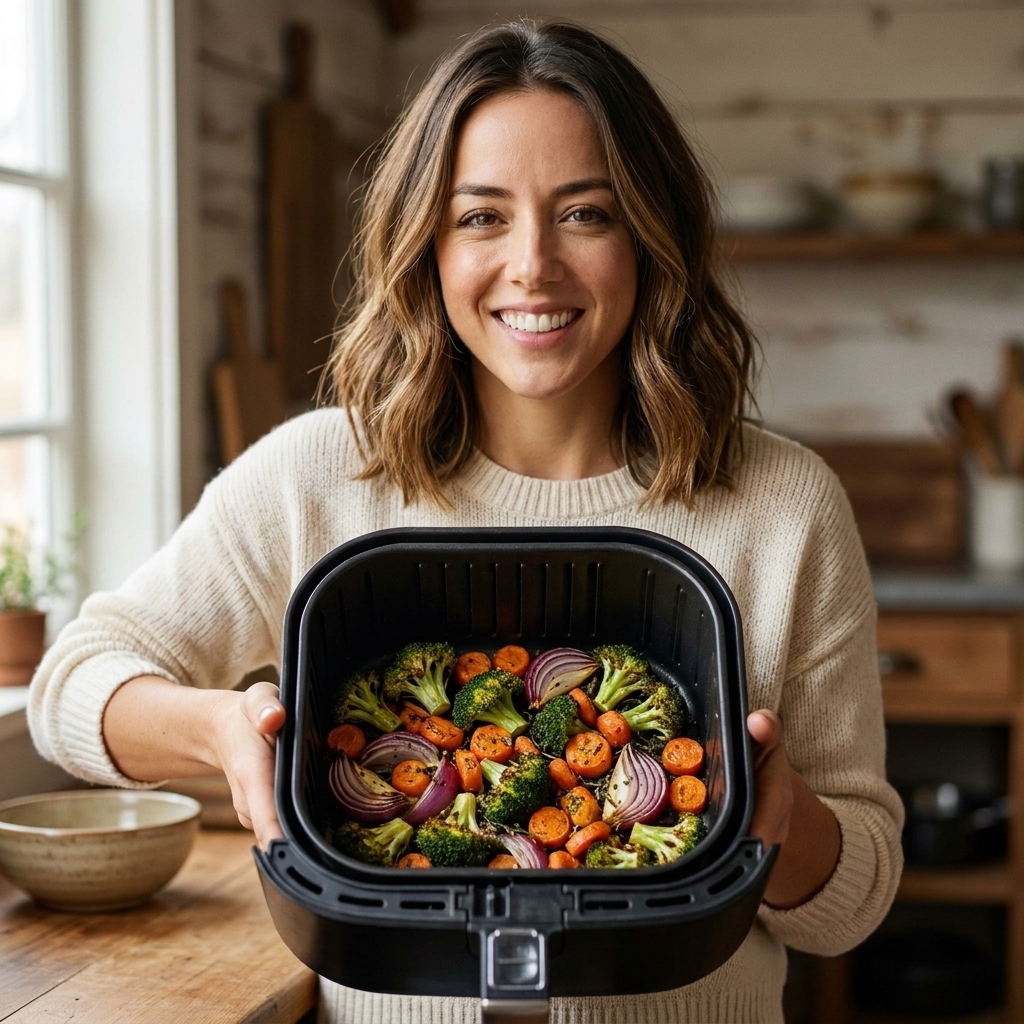
How to use the chart
- Preheat if you want real roasting. 3 to 5 minutes is enough for most air fryers.
- Cut size matters more than the brand of air fryer. The times below assume pieces are cut as noted.
- Single layer gets you crunch. A little overlap is fine, but if the basket is packed tight, expect more steaming than browning.
- Shake or toss about halfway through for even color. For longer cooks (hello, potatoes), plan on 2 to 3 shakes total.
- Start with the sturdiest veg first when mixing types. Add tender veg later so everything finishes together.
Quick temperature cheat sheet
Use temperature as your texture dial.
- 360°F: gentler, more tender, less risk of scorching (great for delicate veg and thicker pieces that need time).
- 380°F: my everyday “roast setting” for most vegetables.
- 400°F: maximum browning and crisp edges (best for roots and sturdy veg). Watch closely near the end.
Air fryer veggie time chart (by sturdiness)
Times are for a typical 5 to 7-quart basket-style air fryer, using 1 to 2 teaspoons oil per pound of vegetables. If you are cooking a larger batch, add a few minutes and shake more often.
Oven-style or tray air fryers: they often cook a little less aggressively than basket models. Use the same temperatures, but plan on adding a few minutes and rotating trays halfway through.
| Group | Vegetables | How to cut | Temp | Time | Shake/toss |
|---|---|---|---|---|---|
| Very sturdy (hard roots) | Potatoes, sweet potatoes, carrots, beets, parsnips, rutabaga, turnips | 1/2-inch cubes or sticks; carrots in 1/4 to 1/2-inch coins | 400°F | 16 to 24 min | 2 to 3 times |
| Sturdy (holds its shape) | Brussels sprouts, broccoli, cauliflower, green beans, asparagus (thick), fennel | Sprouts halved; florets 1.5 to 2 inches; beans trimmed | 380 to 400°F | Broccoli/cauliflower/sprouts: 8 to 14 min Green beans: 6 to 10 min Thick asparagus: 7 to 11 min | Once halfway |
| Medium (roast-friendly) | Bell peppers, onions, mushrooms (chunky), zucchini (thick), eggplant (thick), cabbage wedges | 1-inch chunks; zucchini in 1/2-inch half-moons; cabbage 1 to 1.5-inch wedges | 380°F | Peppers/onions/mushrooms: 10 to 16 min Thick zucchini/eggplant: 9 to 14 min Cabbage wedges: 12 to 18 min | Once halfway |
| Tender (high moisture) | Zucchini (thin), yellow squash, tomatoes (halved), mushrooms (sliced), snap peas | 1/4-inch slices or bite-size pieces | 360 to 380°F | 6 to 10 min | Once halfway |
| Slender and fast | Asparagus (thin), broccolini, sugar snap peas (thin) | Keep whole or in large pieces | 350 to 380°F | 3 to 8 min | Check often |
| Leafy (chips and crisping) | Kale chips | Torn into 2 to 3-inch pieces, very dry | 325 to 350°F | 3 to 6 min | Check often |
My honest mom note: Your “done” is when the thickest piece is fork-tender and the edges are browned. If it is browning fast but still crunchy inside, drop to 360°F and keep going. For potatoes, a quick poke with a fork is the whole test.
Timing strategy for mixed vegetables
If you want one basket with multiple veggies, treat it like a relay race.
Two-veg combo (easy)
- Start sturdy veg first at 400°F for 8 to 12 minutes.
- Add the quicker veg, toss, then cook 6 to 10 minutes more at 380 to 400°F.
Three-veg combo (still doable)
- Very sturdy roots: start 10 to 12 minutes at 400°F.
- Sturdy veg (broccoli, sprouts, cauliflower): add and cook 6 to 8 minutes.
- Tender veg (zucchini, mushrooms, peppers): add and cook 4 to 6 minutes.
If it sounds fussy, I promise it is less annoying than eating half-raw carrots next to mushy zucchini.
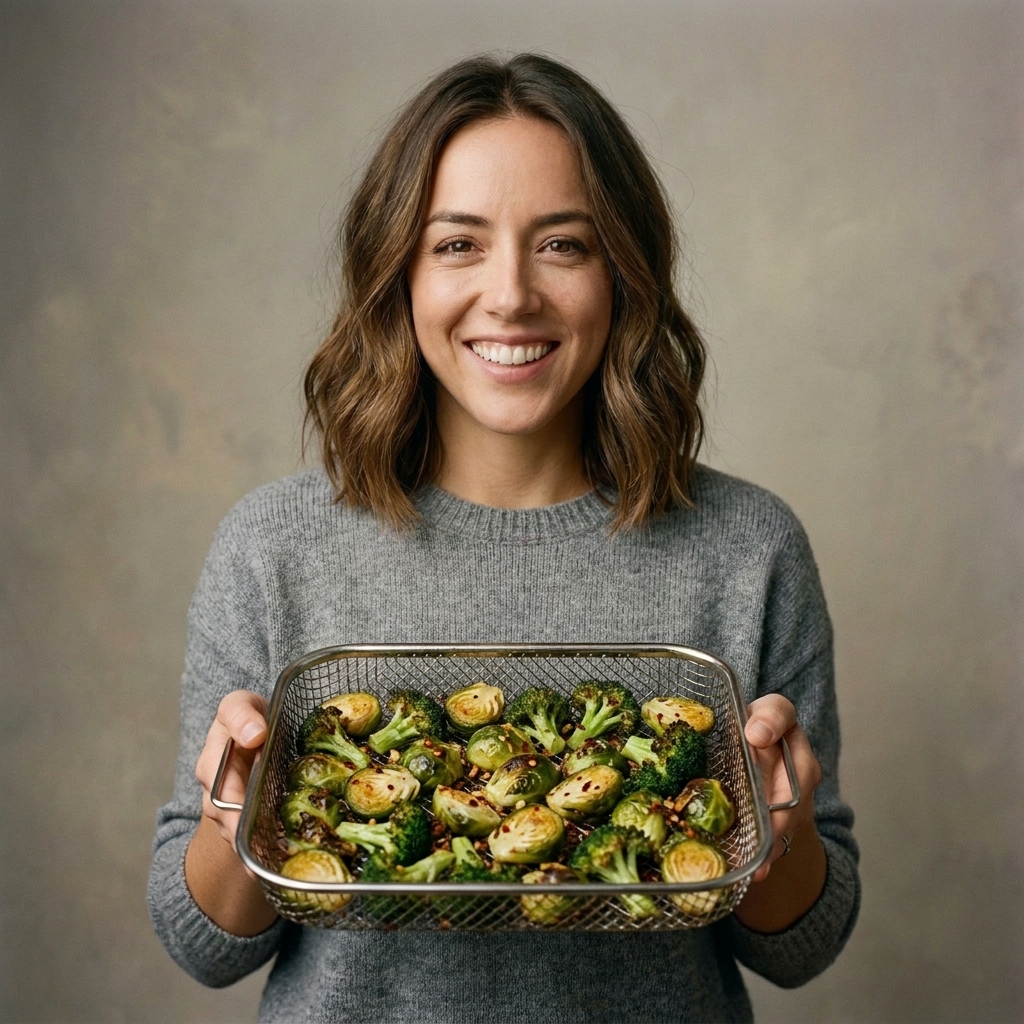
Prep rules for crisp veggies
1) Dry vegetables roast, wet vegetables steam
Pat washed vegetables dry. For mushrooms, I usually wipe them clean or rinse quickly and dry well. Water is the enemy of browning.
2) Use just enough oil
Too little oil can taste dry and dusty. Too much oil can drip and soften the outside. For most veggies, I use 1 to 2 teaspoons oil per pound, tossed thoroughly.
3) Seasoning timing matters
- Before cooking: salt, pepper, garlic powder, paprika, dried herbs.
- After cooking: delicate things like fresh garlic, lemon juice, balsamic glaze, Parmesan, fresh herbs.
4) Give sugar-prone veggies a little space
Sweet potatoes, carrots, and onions brown fast because of natural sugars. Spread them out more than you think you need, and shake the basket a couple extra times.
5) Watch the airflow stuff
- Leafy greens can fly: if you are making kale chips, keep pieces larger, use a light coating of oil, and check early and often.
- Parchment liners can block airflow: if you use one, make sure it is perforated and weighed down by food.
Why sturdiness works (so you can improvise)
Very sturdy vegetables
These are your roots and tubers. They need time for the center to soften. If you cut them too big, the outside will over-brown before the inside turns tender.
- Best cut: 1/2-inch pieces
- Best temp: 400°F
- Shortcut: Microwave diced potatoes or carrots for 2 to 3 minutes, then air fry for ultra-crisp outsides with less total time.
Sturdy vegetables
Brassicas and sturdy green veg roast beautifully because they can take higher heat without collapsing.
- Best temp: 380 to 400°F
- Watch out: small florets can dry out if cooked too long at 400°F.
Medium vegetables
These are “easy roasters” but they still have enough moisture that crowding can make them soft.
- Best temp: 380°F
- Pro move: For onions and peppers, cut them bigger than you would for a skillet so they do not shrivel.
Tender and fast vegetables
These are fast-cookers. They brown quickly, then soften quickly, then turn limp quickly. Stay nearby.
- Best temp: 360 to 380°F
- Pro move: Add at the end when cooking mixed baskets.
Common problems (and quick fixes)
My veggies are soggy
- Basket is overcrowded: cook in two batches.
- Veg was wet: dry it better next time.
- Temp too low for too long: bump to 380 to 400°F for the last 2 to 4 minutes.
The outside is dark but the inside is still hard
- Pieces are too big: cut smaller next time.
- Too hot: drop to 360°F and cook longer.
- Roots need a head start: start them first, then add other veggies later.
Seasoning burned
- Sugary spice blends burn fast: add them in the last 3 to 5 minutes or after cooking.
- Fresh garlic burns: add after cooking or use garlic powder before.
Some pieces are cooked, others are not
- Uneven cuts: aim for uniform size.
- Not tossing: shake halfway, and again near the end for roots.
My go-to roasted veggie formula
When I do not want to think, this is what I do:
- Temp: 380°F
- Oil: 1 to 2 teaspoons per pound
- Seasoning: 1/2 teaspoon kosher salt, pepper, garlic powder
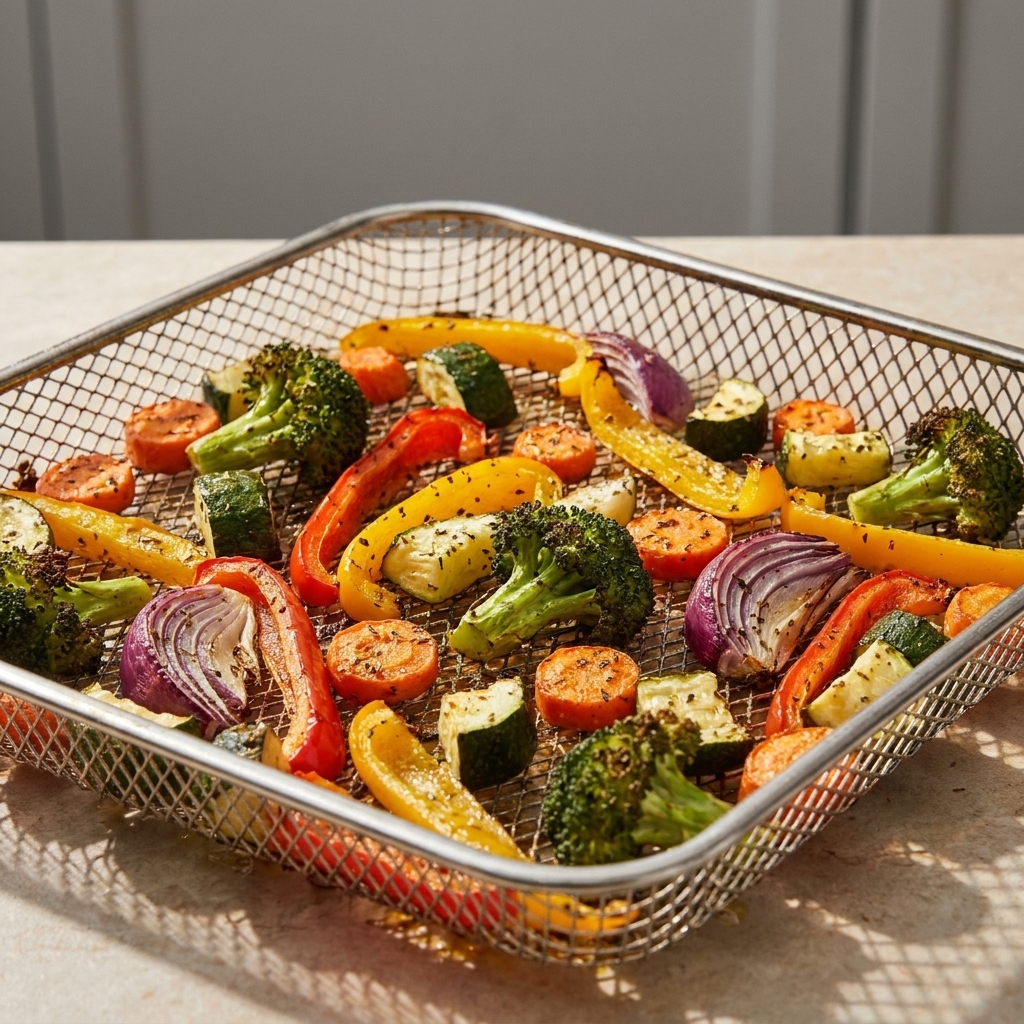
- Cook: until browned and fork-tender, shaking halfway
Then I finish with one “pop”: lemon zest, Parmesan, everything bagel seasoning, or a quick drizzle of balsamic.
FAQ
Do I need to preheat the air fryer for vegetables?
You do not have to, but I recommend it if you want roasted texture. Preheating helps the outside start browning immediately instead of slowly warming and steaming.
Can I air fry frozen vegetables using this chart?
Frozen vegetables usually need extra time, and they often brown less because they release water as they cook. Start at 380 to 400°F, shake often, and expect to add a few minutes. For better browning, cook until the moisture has mostly cooked off, then finish with 1 to 3 minutes at 400°F.
Why do my Brussels sprouts taste bitter in the air fryer?
They can go bitter if they over-brown or dry out. Try 380°F instead of 400°F, use enough oil to coat, and pull them as soon as they are tender with browned edges.
What is the best way to cook carrots so they are tender, not crunchy?
Cut them into 1/4-inch coins or skinny sticks, cook at 400°F, and plan for 16 to 20 minutes. Shake a couple times. If you are in a hurry, microwave the cut carrots for 2 minutes before air frying.
Print-friendly cheat chart
400°F: potatoes, sweet potatoes, carrots, beets (16 to 24 min)
380 to 400°F: broccoli, cauliflower, Brussels sprouts (8 to 14 min)
380 to 400°F: green beans (6 to 10 min)
380°F: peppers, onions, mushrooms (chunky), thick zucchini (9 to 16 min)
380°F: cabbage wedges (12 to 18 min)
360 to 380°F: thin zucchini, sliced mushrooms, tomatoes (6 to 10 min)
350 to 380°F: thin asparagus, broccolini, thin snap peas (3 to 8 min)
325 to 350°F: kale chips (3 to 6 min)
If you try a mixed basket tonight, start with the sturdiest veg, then add the tender ones later. Your future self will thank you while you are doing dishes that do not involve a vat of oil.