If your air fryer veggies keep coming out soft, watery, or weirdly steamed, you are not alone. I grew up in a “everything’s better deep-fried” Midwest household, and when I switched to air frying, my first batches of vegetables were a humbling little pile of limp broccoli and sweaty zucchini. The good news: mushy veggies are usually a process problem, not an air fryer problem. (Although yes, some models run cooler or move less air than others, so your exact timing may vary.)
Below are the most common culprits and the exact fixes I use in my own kitchen to get vegetables that are tender inside, crisp at the edges, and actually worth fighting your kids over.
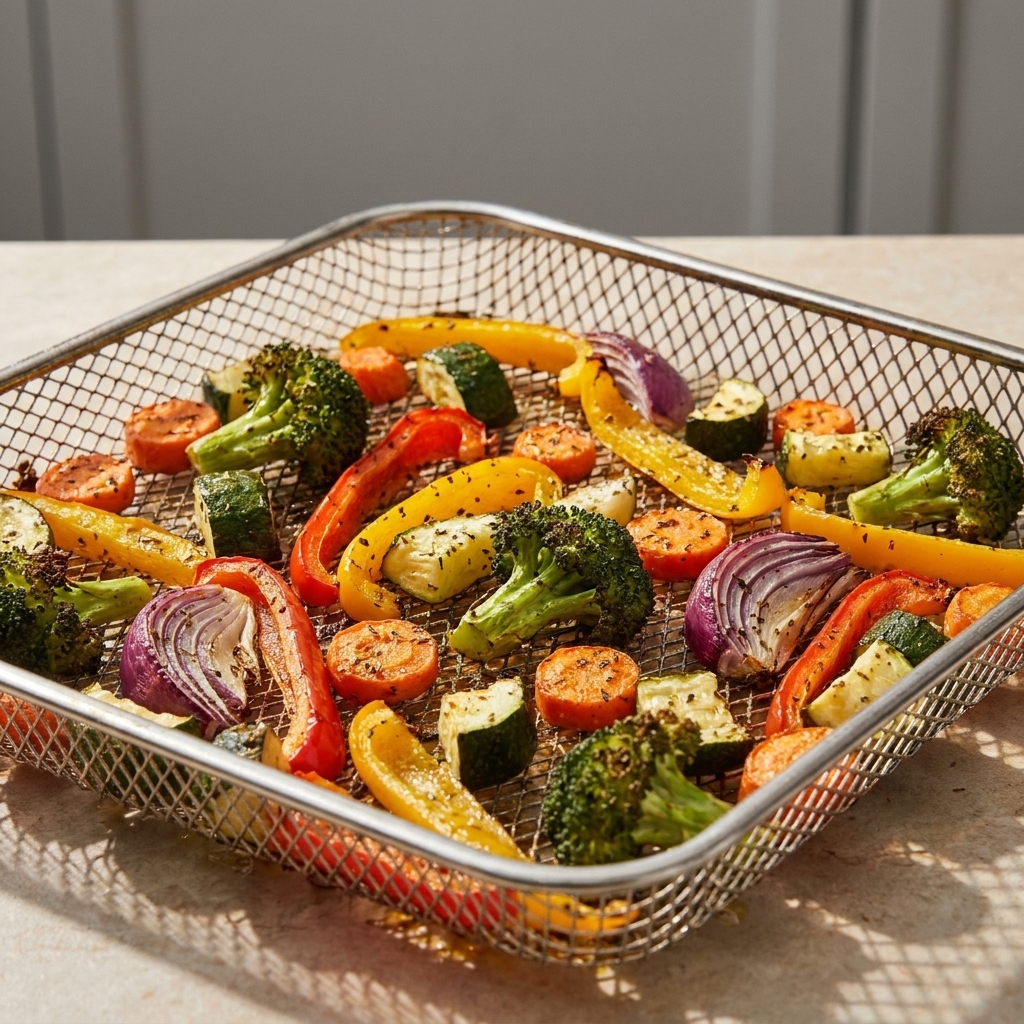
The #1 reason: your basket is overcrowded
Air fryers crisp because hot air circulates fast. When the basket is packed, that air cannot reach the food, moisture gets trapped, and your veggies steam instead of roast.
How to tell
- Veggies look pale and wet, not browned
- Water collects at the bottom of the basket
- Some pieces are underdone while others are soft
Exactly how to fix it
- Cook in a single layer with space between pieces. A little overlap is fine, a pile is not.
- Do two batches instead of one overloaded batch. It takes longer, but it is the difference between “meh” and “why is this so good?”
- If you are cooking for a crowd, use a rack accessory only if it still allows airflow around each piece. If it becomes a tight blanket of vegetables, you are back to steaming.
Too much moisture: the sneaky mush-maker
Vegetables naturally contain water. If they go into the air fryer wet, the air fryer has to evaporate that water before browning can happen. That is why you get soft textures and zero crisp.
Common moisture traps
- Washing and not drying (especially broccoli, cauliflower, Brussels sprouts)
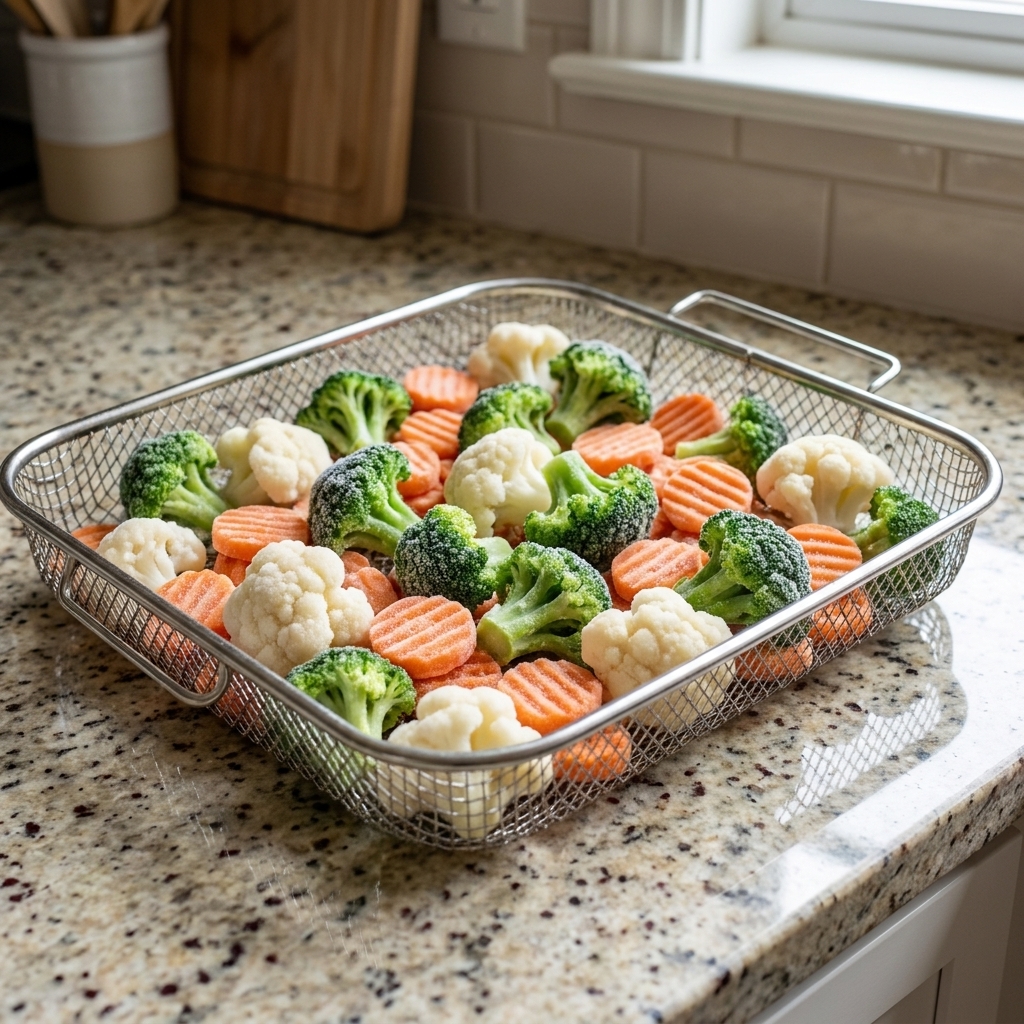
- Frozen vegetables that thaw and release water
- Salting too early, which pulls moisture to the surface
Exactly how to fix it
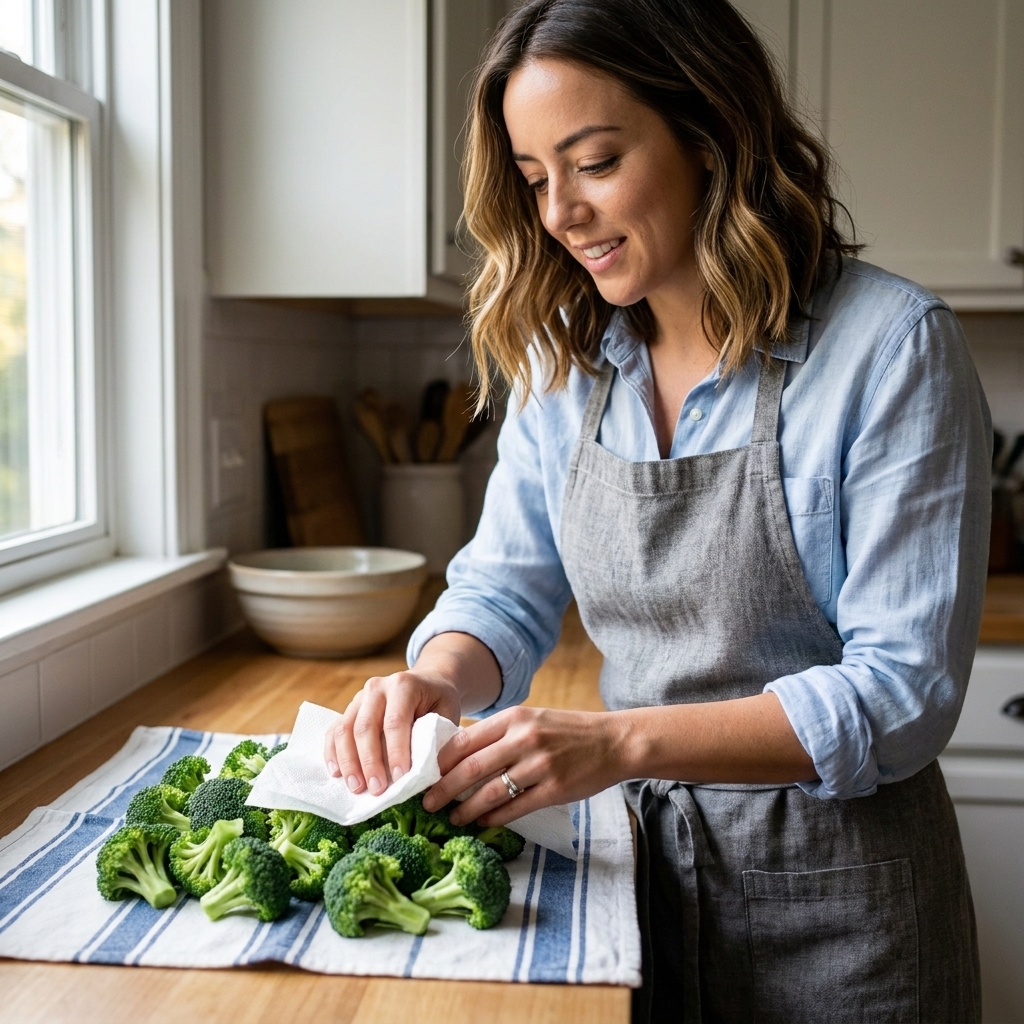
- Dry like you mean it: After washing, pat very dry with a towel. For broccoli and cauliflower, I like to let them sit on a towel for 5 minutes to air-dry too.
- For frozen veggies: Air fry straight from frozen. Do not thaw. Start hot and shake often. If they are very icy, give them 3 to 4 minutes plain first to “dry out,” then add oil and seasonings. Expect them to be a little less crisp than fresh, because ice equals extra steam.
- Salt at the end for peak crisp. If you love the flavor of early salting, keep it light, or use a salt-free seasoning blend during cooking and finish with salt after.
Your temperature is too low (or you skipped preheating)
Low heat means slow evaporation and slow browning. Translation: the veggies soften before they ever get a chance to crisp. And because air fryer temperatures can run a little hot or cool depending on the model, start checking a few minutes early the first time you try a new vegetable.
My go-to temperature rules
- Most vegetables crisp best at 380°F to 400°F.
- Watery vegetables (zucchini, mushrooms, eggplant) do best at 400°F with a lighter coating of oil.
- Dense vegetables (carrots, potatoes, sweet potatoes) can start at 380°F to cook through, then finish at 400°F to brown.
Preheat, but keep it practical
If your model has a preheat setting, use it. If it does not, run it empty at your cooking temperature for 3 minutes. Starting hot helps the outside set quickly, which reduces that steamed, mushy thing.
You used the wrong oil (or the wrong amount)
Oil is not just for flavor. It helps heat transfer, supports browning, and gives you those crisp, roasted edges. But too much oil can make veggies feel soggy and heavy, and some oils smoke more easily at higher temps.
What works best
- Avocado oil: my favorite for high heat and clean flavor
- Refined olive oil or a mild extra-virgin olive oil you like: great for everyday veggie batches
- Grapeseed oil: neutral and crisp-friendly
How much oil to use
- 1 to 2 teaspoons per pound of vegetables is usually enough.
- Use a spray bottle or toss in a bowl to coat lightly. You want a sheen, not a puddle.
A quick warning about aerosol sprays
Some store-bought aerosol cooking sprays can leave a sticky residue that is hard to remove and may shorten the life of certain nonstick coatings over time. If you spray, I recommend a refillable oil mister or tossing in a bowl instead.
Cut size matters more than you think
If your pieces are too small, they overcook before they brown nicely. If they are too large, the outside can soften while the inside slowly catches up. Either way, you end up with texture disappointment.
Fix it with consistent cuts
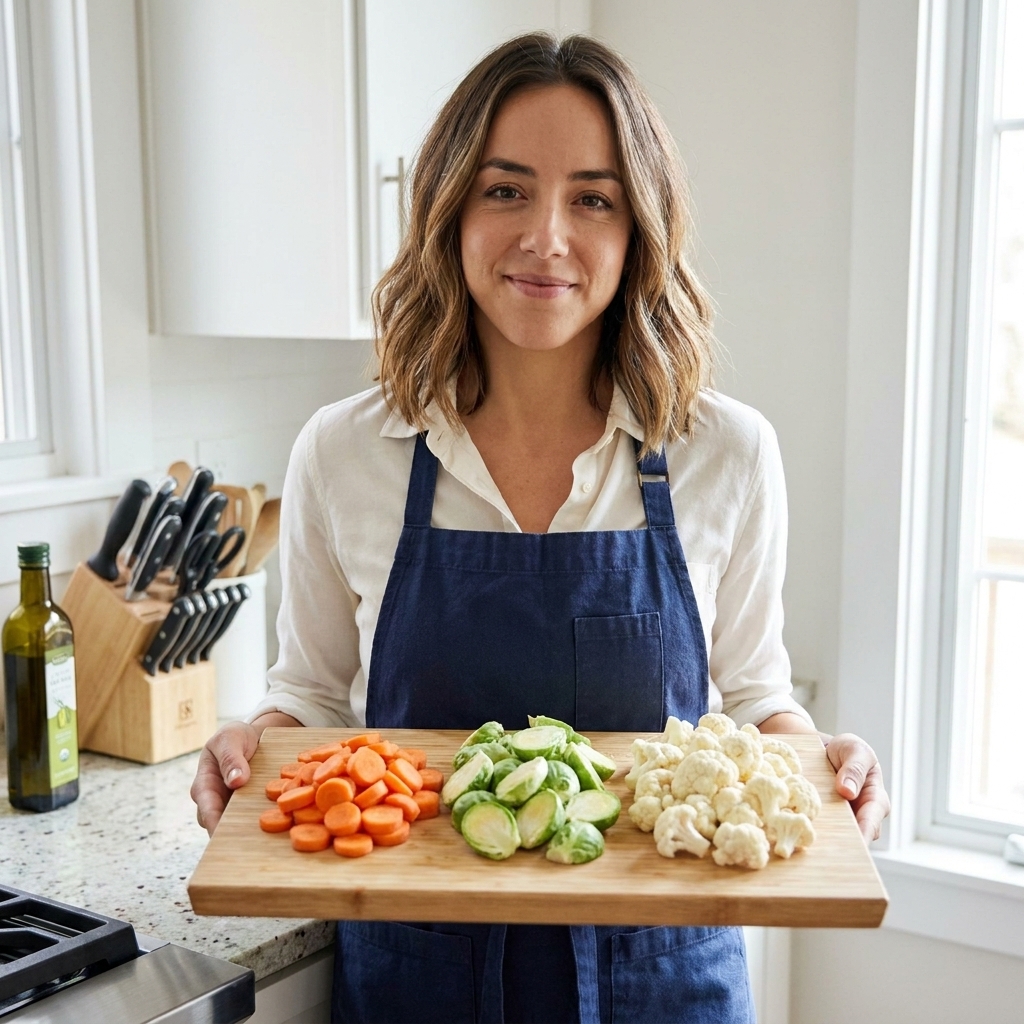
- Broccoli and cauliflower: medium florets, not tiny crumbs (think 1.5 inches)
- Carrots: thin coins or batons (about 1/4-inch thick)
- Brussels sprouts: halve them, and quarter the big ones so they cook evenly
- Zucchini: thicker half-moons (3/8-inch) instead of paper-thin slices
You didn’t shake or toss enough
Air fryers have hot spots. If you do not move the vegetables around, the bottom can trap moisture and soften while the top dries out.
Exactly how to fix it
- For most batches, shake the basket or toss with tongs once or twice during cooking. For longer cooks, I check and shake about every 3 to 5 minutes.
- For lighter veggies (like broccoli florets), a gentle shake is better than aggressive stirring, which can break them into tiny bits that overcook fast.
Some vegetables are naturally softer in the air fryer
I love an air fryer, but I also love the truth. Certain vegetables have high water content and a delicate structure, so they tend to go tender faster than they go crispy.
Vegetables that go mushy easily
- Zucchini and summer squash
- Mushrooms
- Eggplant
- Tomatoes (unless you are intentionally blistering them)
How to get better texture anyway
- Go hotter (400°F) and shorter on time.
- Cut thicker so they hold their shape.
- Use a light coating of oil and avoid sugary sauces during cooking.
- Consider a breading (parmesan, panko, or almond flour) for true crunch.
Quick cook times (fresh veggies)
Exact timing depends on your air fryer (basket vs oven-style, how strong the fan is, and how full your basket is). Use these as starting points, then adjust. I start checking early and pull them when the edges look browned and the thickest pieces are fork-tender.
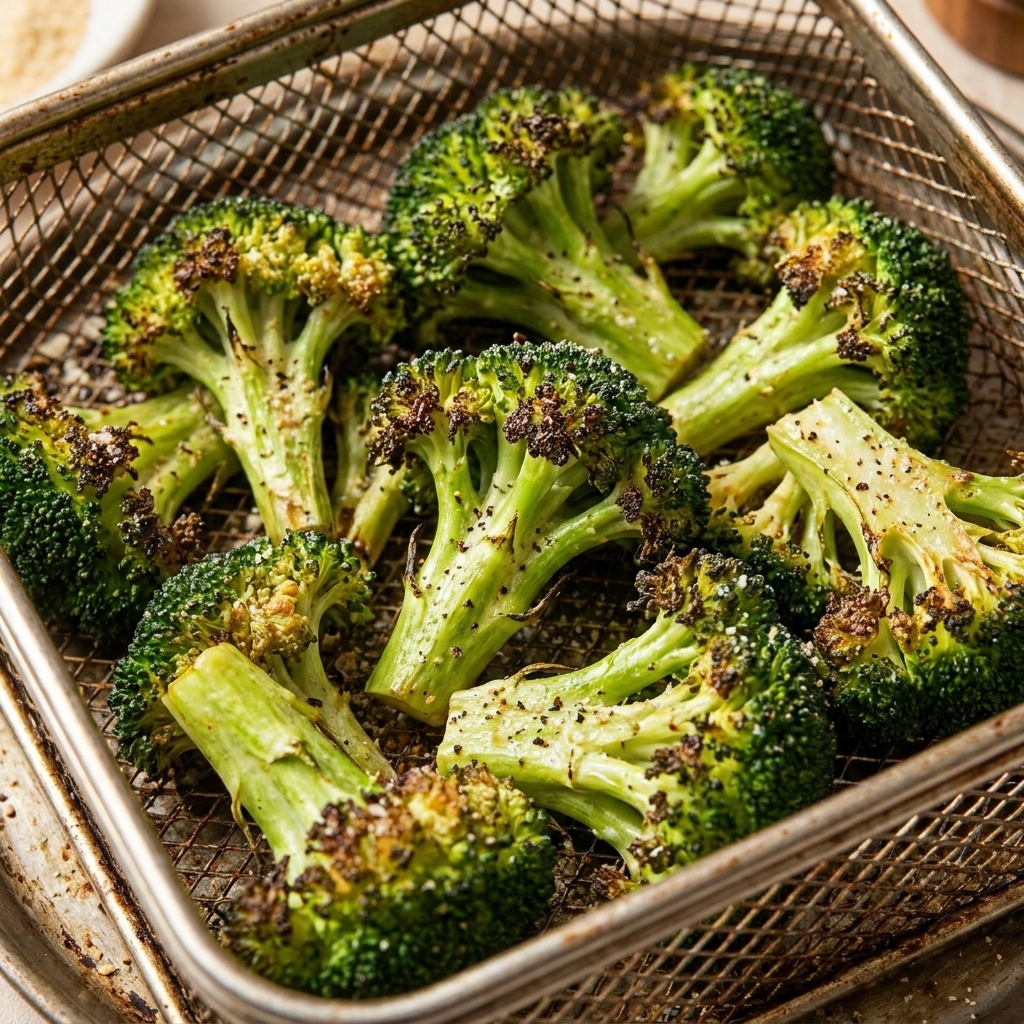
- Broccoli florets: 8 to 12 minutes at 390°F to 400°F (done when the stems are fork-tender and tips are browned)
- Cauliflower florets: 10 to 14 minutes at 390°F to 400°F (done when edges are browned and centers are tender)
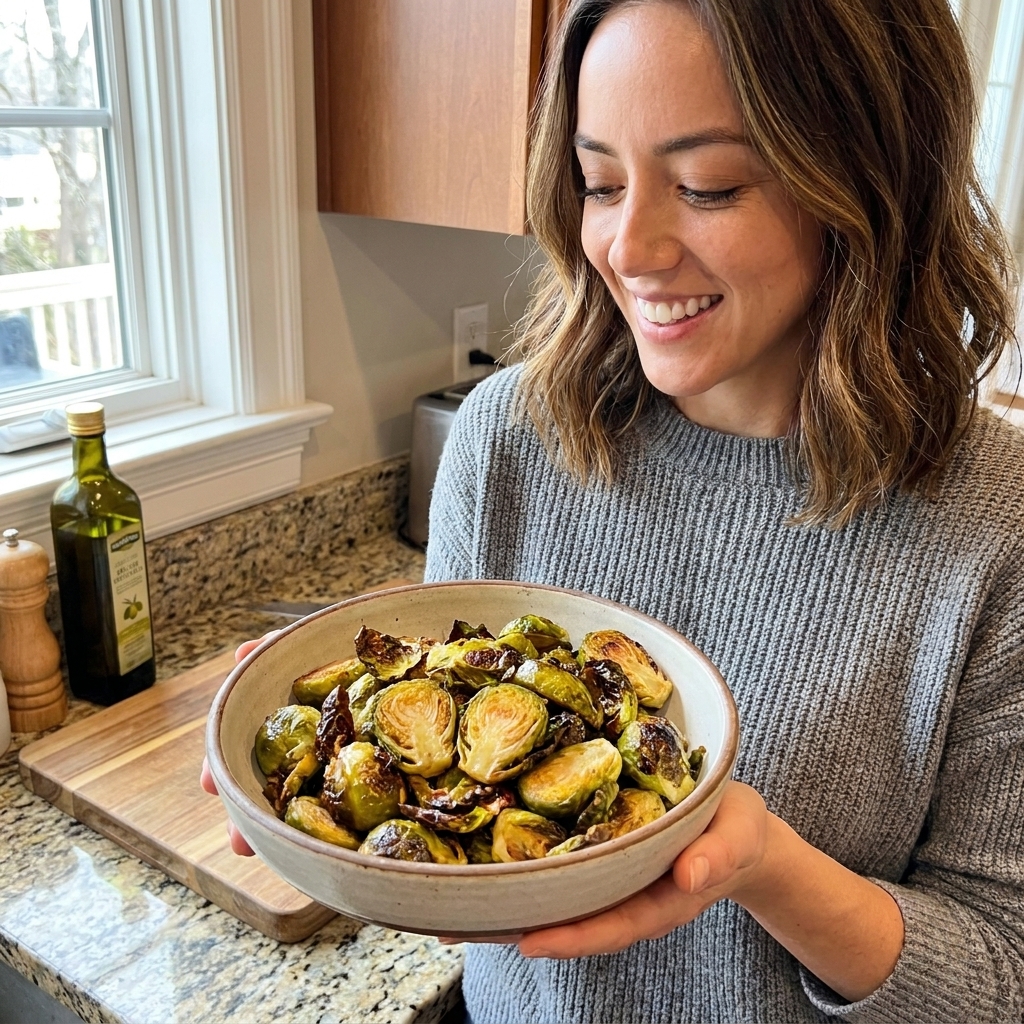
- Brussels sprouts (halved): 12 to 16 minutes at 390°F to 400°F (done when leaves are crisping and centers are tender)
- Carrots (1/4-inch coins or batons): 12 to 18 minutes at 380°F to 400°F (done when a fork slides in with a little resistance)
- Zucchini (thick half-moons): 6 to 9 minutes at 400°F (done when browned in spots but not collapsing)
- Mushrooms (halved or thick-sliced): 8 to 12 minutes at 400°F (done when moisture has cooked off and edges look browned)
Rescue plan: how to fix mushy veggies that already happened
If your vegetables are already soft, you can often save them. The trick is to drive off moisture and reintroduce high heat without adding more wet ingredients.
Do this
- Spread them out into a single layer. Yes, even if you have to do it in two rounds.
- Turn the heat up to 400°F.
- Air fry 3 to 6 minutes, shaking once halfway.
- If they look wet, blot gently with a paper towel before the re-crisp.
Avoid this
- Adding sauce mid-cook (save it for the end)
- Adding more oil “to crisp them up” if they are already greasy
- Cooking longer at the same low temperature. That usually makes them softer, not crispier.
My crispier veggie method
When I am in weeknight mode and want reliable results, this is my default.
- Preheat air fryer to 390°F for 3 minutes.
- Dry vegetables well.
- Toss with 1 to 2 teaspoons oil per pound plus seasonings (hold most of the salt until the end).
- Single layer in the basket.
- Cook at 390°F to 400°F, shaking once or twice, until the edges are browned and the thickest pieces are fork-tender.
- Finish with salt, lemon, parmesan, or a drizzle of sauce after cooking.
This sounds simple because it is. Crisp is mostly about airflow, dryness, and heat.
Quick FAQ
Why are my air fryer veggies soggy but browned?
Usually too much oil or too much moisture inside the vegetable (common with zucchini and mushrooms). Try cutting thicker, using less oil, and cooking hotter for less time.
Should I use parchment paper?
Parchment can be helpful for easy cleanup, but it can also reduce airflow and trap moisture if it covers too much surface. If you use it, choose perforated parchment and make sure the veggies are not piled on top of each other.
Do I need cornstarch to make veggies crispy?
Not always. For many veggies, dryness plus high heat plus space is enough. Cornstarch is great for extra crunch on softer vegetables (like zucchini) or for cauliflower “wings” style bites.
Why do my vegetables dry out instead of crisp?
That typically happens when the pieces are too small, the cook time is too long, or the temperature is too low for too long. Try larger cuts and a hotter, faster cook.
Bottom line
Mushy air fryer vegetables are usually caused by crowding, moisture, or not enough heat. Fix those three and you will go from steamed-and-sad to crispy-edged and caramelized. And if you still end up with a batch of limp broccoli once in a while, welcome to the club. At least it is not an exploding marshmallow.