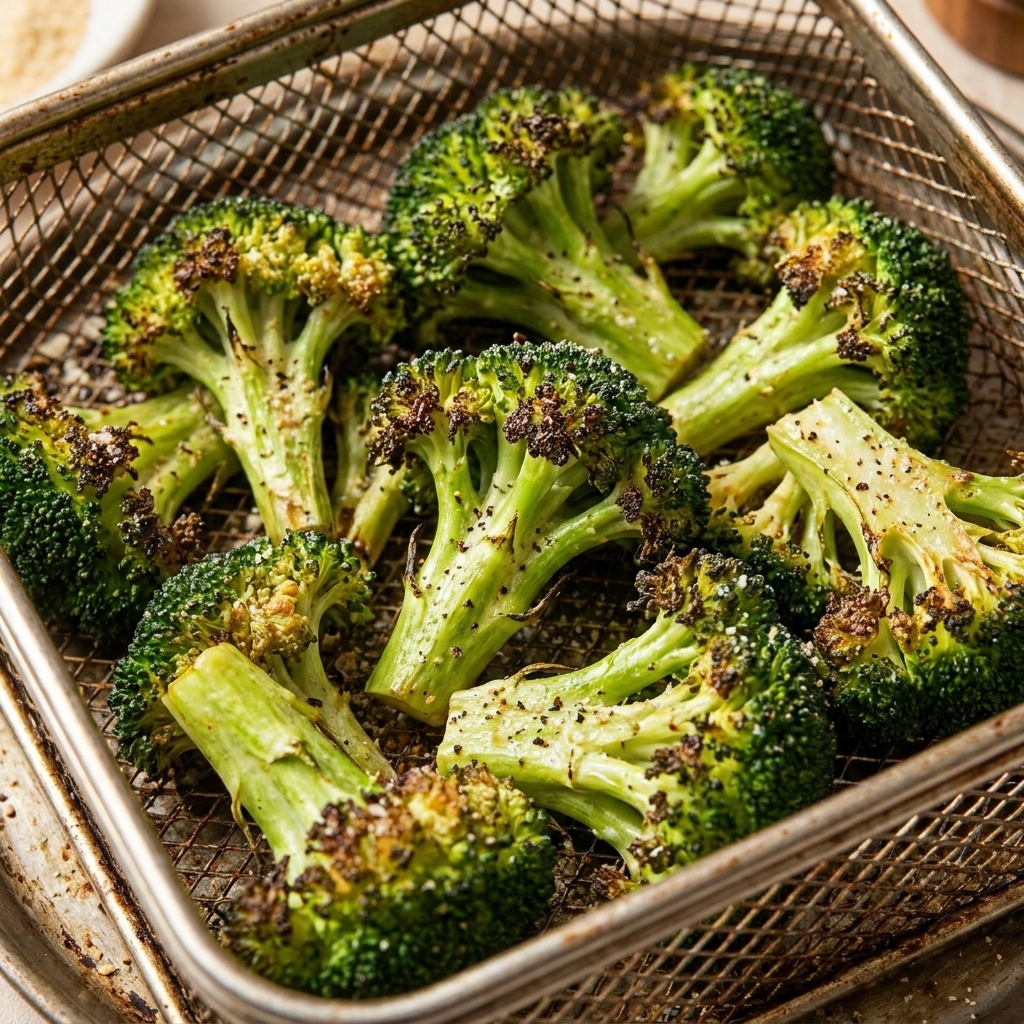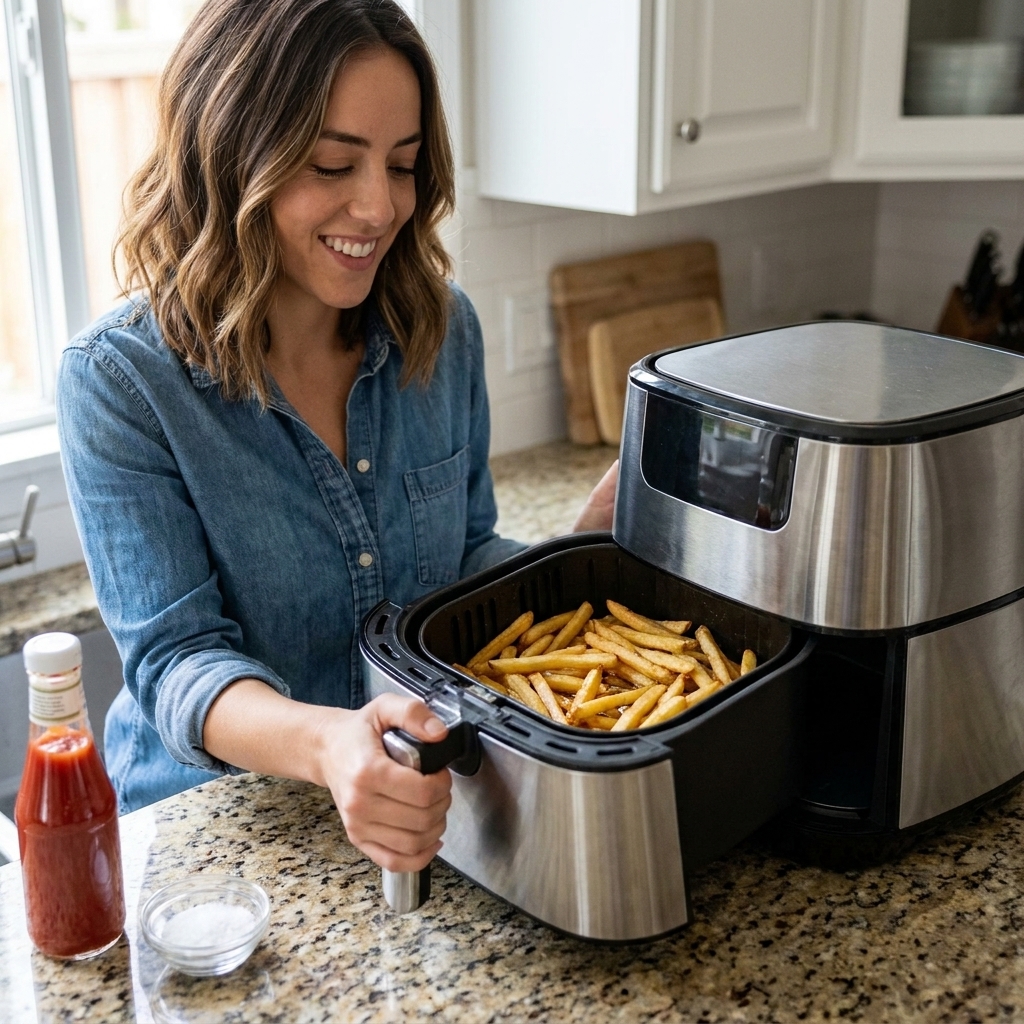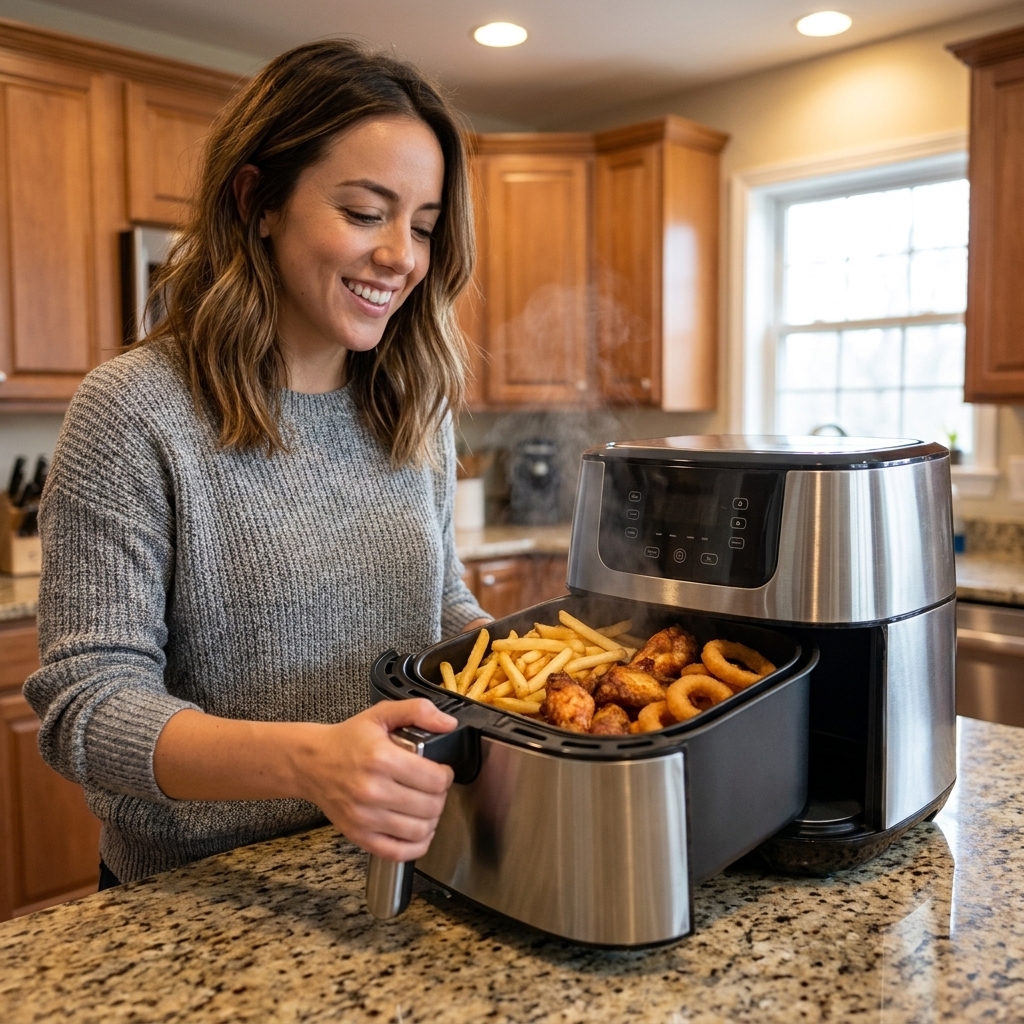
If you have ever made Brussels sprouts that were charred on the outside and stubbornly raw in the middle, welcome. I have been there, usually on a Tuesday night when everyone is hungry and I am trying to prove vegetables can, in fact, be exciting.
The good news: air fryer Brussels sprouts can taste like the restaurant version with those shatter-crispy leaves and sweet, tender centers. The secret is not a fancy ingredient. It is three things you can control every single time: temperature, oil-to-sprout ratio, and how often you shake.
Plan on 13 to 16 minutes total, depending on sprout size and your air fryer. Consider the temps below a reliable starting point, then adjust by a minute or two once you learn your model.
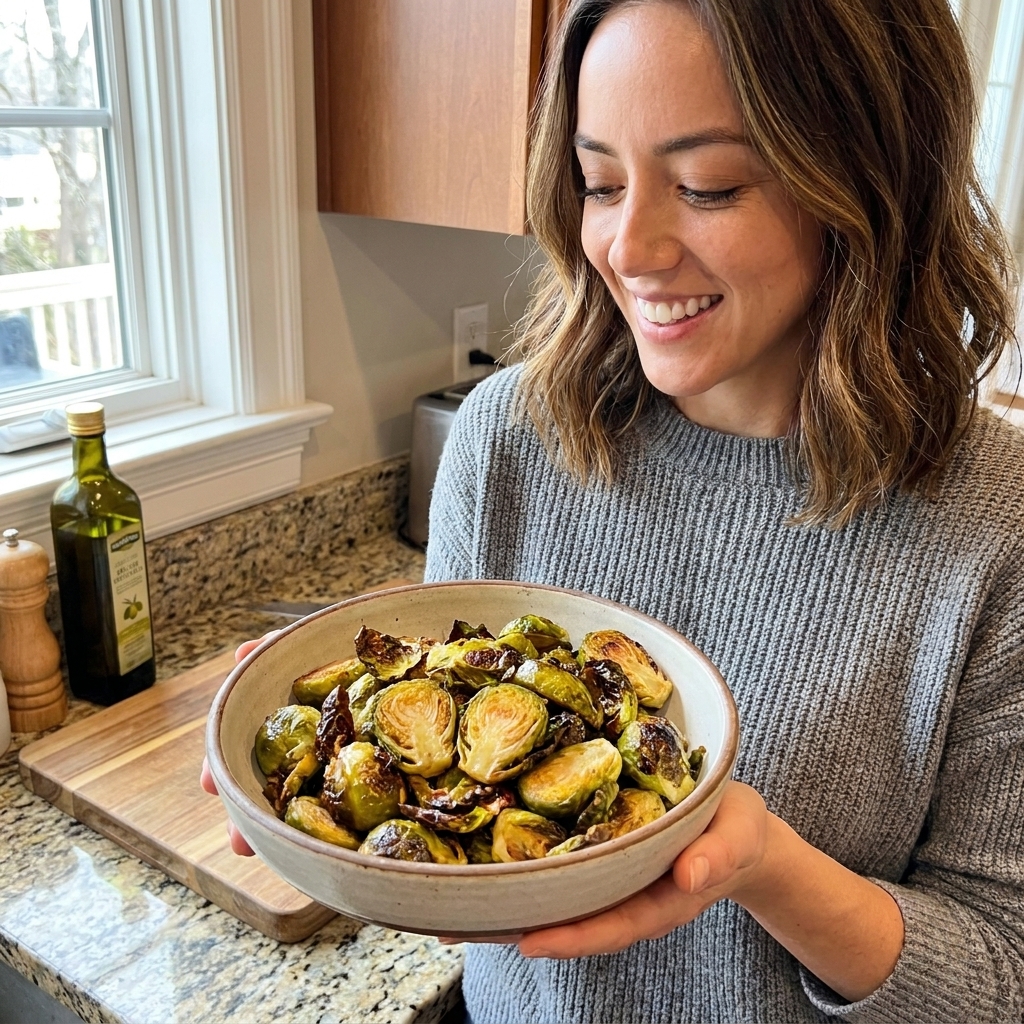
The secret formula
Best temperature
After a lot of testing (and a few batches that tasted like campfire), this is the method that works consistently across most air fryers:
- 380°F to cook through and start browning
- Then 400°F to crisp the leaves at the end
That two-step approach gives the centers time to soften before you crank the heat for crunch. If you run 400°F from the start, the outer leaves can scorch before the core is tender, especially with bigger sprouts and higher-wattage air fryers.
The oil ratio for browning
Brussels sprouts need enough oil to conduct heat and help browning, but not so much that they turn greasy and limp. Browning also makes them taste sweeter, which can lower the perceived bitterness.
Use 1 tablespoon oil per 1 pound of trimmed, halved sprouts.
If you are scaling up or down, here is the quick math:
- 1/2 pound sprouts: 1 1/2 teaspoons oil
- 1 pound sprouts: 1 tablespoon oil
- 1 1/2 pounds sprouts: 1 tablespoon + 1 1/2 teaspoons oil
My go-to oils: avocado (high heat, neutral) or olive oil (a little fruity). Both work beautifully.
How often to shake
If you want even browning and fewer burnt leaf casualties, you cannot set it and forget it.
- Shake every 4 minutes during the 380°F phase
- Shake once halfway through the final 400°F crisp
In plain terms: shake at minute 4 and 8, then again once during the finishing blast. This keeps the loose leaves from camping out on the hottest spots too long and helps the cut sides get a fair shot at browning.
Recipe: Air Fryer Brussels Sprouts
This is the base recipe I make constantly, then I dress it up depending on the main dish.
Ingredients
- 1 pound Brussels sprouts, trimmed and halved (quarter any very large ones)
- 1 tablespoon oil (avocado or olive oil)
- 3/4 teaspoon kosher salt
- 1/4 teaspoon black pepper
- Optional, to finish: lemon wedge, grated Parmesan, balsamic glaze, or flaky salt
Prep for tender centers
- Trim just the dry stem end. Do not chop a big chunk off or leaves will fall off too early.
- Halve lengthwise so each sprout has a flat side to brown.
- Dry well if you rinsed them. Moisture is the enemy of crispiness.
If your sprouts are very large, quarter them. Matching sizes is a bigger deal than people think. Tiny ones burn while big ones stay crunchy in the wrong way.
Basket note: 1 pound fits in a single layer in many 5 to 6 quart air fryers. If your basket is smaller, or if the sprouts look piled up, cook in batches for better browning.
Cook steps
Preheat the air fryer to 380°F for 3 minutes (if your model does not preheat, just run it empty).
Toss halved sprouts with 1 tablespoon oil, salt, and pepper until the cut sides look lightly glossy.
Air fry at 380°F for 10 minutes, shaking the basket every 4 minutes (shake at minute 4 and minute 8). For extra browning, start with as many sprouts cut-side down as you can, then let the shaking do the rest.
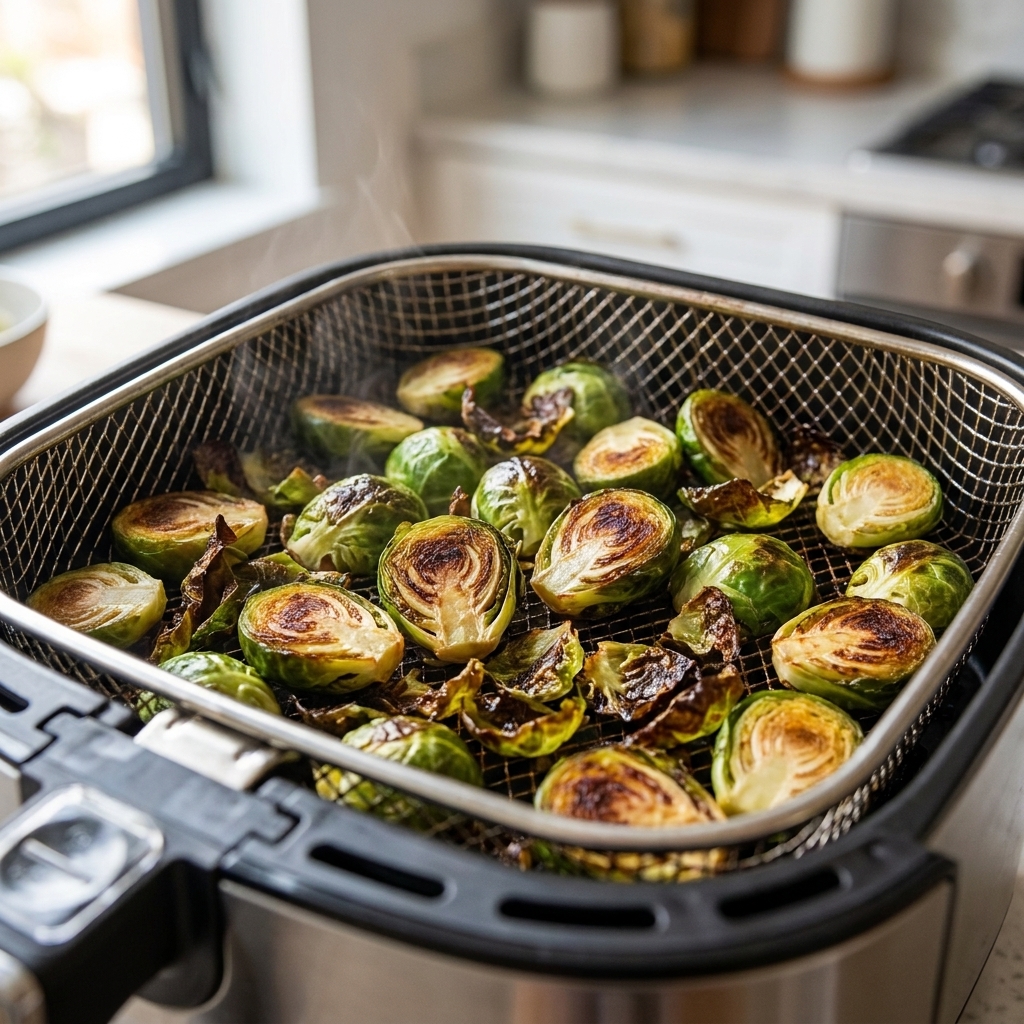
Increase to 400°F and cook 3 to 6 minutes more, shaking once halfway through, until the loose leaves are crisp and the cut sides are deeply browned.
Taste and finish with a squeeze of lemon, Parmesan, balsamic glaze, or flaky salt.
Doneness check: A fork should slide into the center with just a little resistance, like a well-roasted potato wedge. If they are browned outside but still too firm, drop back to 370°F for 2 to 4 minutes rather than blasting hotter.
How to reduce bitterness
Brussels sprouts have a reputation, and honestly, they earned it when they are under-seasoned or cooked in a way that concentrates bitterness. Some batches are also naturally more bitter depending on variety and age, so think of these as the best levers you can pull.
1) Get better browning
Bitterness reads louder when sprouts are pale and steamy. Browning adds sweetness. That is why we use the 380°F then 400°F method and a measured amount of oil.
2) Salt at the right time
Salt before cooking helps the sprouts taste evenly seasoned and draws a little surface moisture, which can support better browning once it evaporates.
If you are sensitive to bitterness, finish with flaky salt too. A little punch of salt on the crispy leaves goes a long way.
3) Add acid after cooking
Acid balances bitterness. A squeeze of lemon or a drizzle of balsamic glaze right at the end makes the sprouts taste sweeter without adding sugar.
4) Avoid overcrowding
If the basket is packed, sprouts steam. Steamed Brussels sprouts are where bitterness tends to show up.
Rule: Keep them in a mostly single layer with some breathing room. If you need to make more than your basket comfortably holds, cook in batches. (I know, annoying, but it works.)
Common mistakes
“My Brussels sprouts are burning!”
- Cause: Heat too high too early, or loose leaves sitting on hot spots.
- Fix: Start at 380°F, shake every 4 minutes, and only finish at 400°F. If your air fryer runs hot, shorten the 400°F finish by a minute.
“They are crispy outside but raw inside.”
- Cause: Sprouts too large or not cut, or skipping the lower-temp phase.
- Fix: Halve or quarter for even size, and do the 380°F cook-through before crisping. If needed, add 2 to 4 minutes at 370°F to finish tenderizing.
“They came out soggy.”
- Cause: Too much moisture (not dried) or overcrowding.
- Fix: Dry thoroughly and cook in a single layer. Also make sure you are using the 1 tablespoon oil per pound ratio. Too little oil can lead to leathery, uneven results because browning stalls.
“The leaves flew around and some turned into little charcoal chips.”
Welcome to air fryer life. Loose leaves crisp faster than the cores. Shaking helps, but here is the extra trick: do not trim too aggressively. When you cut a big chunk off the stem end, you create a pile of loose leaves that overcook.
Flavor upgrades
Once you nail the base method, the fun part is finishing flavors. These are weeknight-friendly and kid-approved in my house, which is saying something.
Parmesan garlic
Toss hot sprouts with 1 tablespoon grated Parmesan and 1 small grated garlic clove (or a tiny pinch of garlic powder). The residual heat mellows the garlic.
Honey balsamic
Drizzle with 1 to 2 teaspoons balsamic glaze. Add a small drizzle of honey if you like them more sweet than tangy.
Lemon pepper
Squeeze fresh lemon and finish with extra black pepper. Bright, simple, and great with chicken.
Spicy crispy
Finish with chili crisp or a pinch of red pepper flakes plus flaky salt.

FAQ
Should I soak Brussels sprouts before air frying?
No soaking needed. If you want a slightly softer center, you can rinse them, but then you must dry them very well. Extra surface water equals less crisp.
Can I use frozen Brussels sprouts?
You can, but expect less dramatic crisp on the leaves because frozen sprouts shed water. Air fry frozen sprouts at 380°F for 12 minutes (shaking every 4 minutes), then 400°F for 5 to 8 minutes. Start with 2 teaspoons oil per pound, then add another teaspoon if they look dry after the first shake. Because frozen sprouts vary in size and how much ice glaze they have, use the color and fork-tender center as your final guide and add time as needed.
Do I need to preheat my air fryer?
I recommend it here. Preheating helps the cut sides start browning immediately instead of slowly warming up and steaming.
How do I store and re-crisp leftovers?
Store airtight in the fridge for 3 to 4 days. Reheat in the air fryer at 375°F for 3 to 5 minutes, shaking once. They will not be exactly like fresh (nothing is), but they get impressively close.
Why do my Brussels sprouts taste bitter even when cooked?
Some sprouts are naturally more bitter, especially older ones. The best fixes are better browning and an acid finish (lemon or balsamic). Also, do not forget salt. Under-salted Brussels sprouts taste more bitter than they actually are.
One-minute checklist
- Trim lightly, halve, and dry well
- 1 tbsp oil per 1 lb sprouts
- 380°F for 10 min, shake at minute 4 and 8
- 400°F for 3 to 6 min, shake once halfway
- Finish with lemon or balsamic for a less-bitter finish
If you make these, you are going to hear that satisfying crunch when you bite into a leaf, and the center will still be creamy-tender. That is the whole goal here. Less oil, more wow.