
I grew up in the Midwest where sausage meant one thing: sizzling in a puddle of grease. These days I still want that same browned snap, but I want it on a Tuesday night without splatter on my backsplash and a pan to scrub. Enter the air fryer, my weeknight peace treaty.
This guide covers the cook times I use most often for raw breakfast links, breakfast patties, fresh Italian sausage, and fully cooked smoked sausage. The biggest keys are space, one flip, and managing the heat so you hit 160°F for raw pork without splitting the casing.
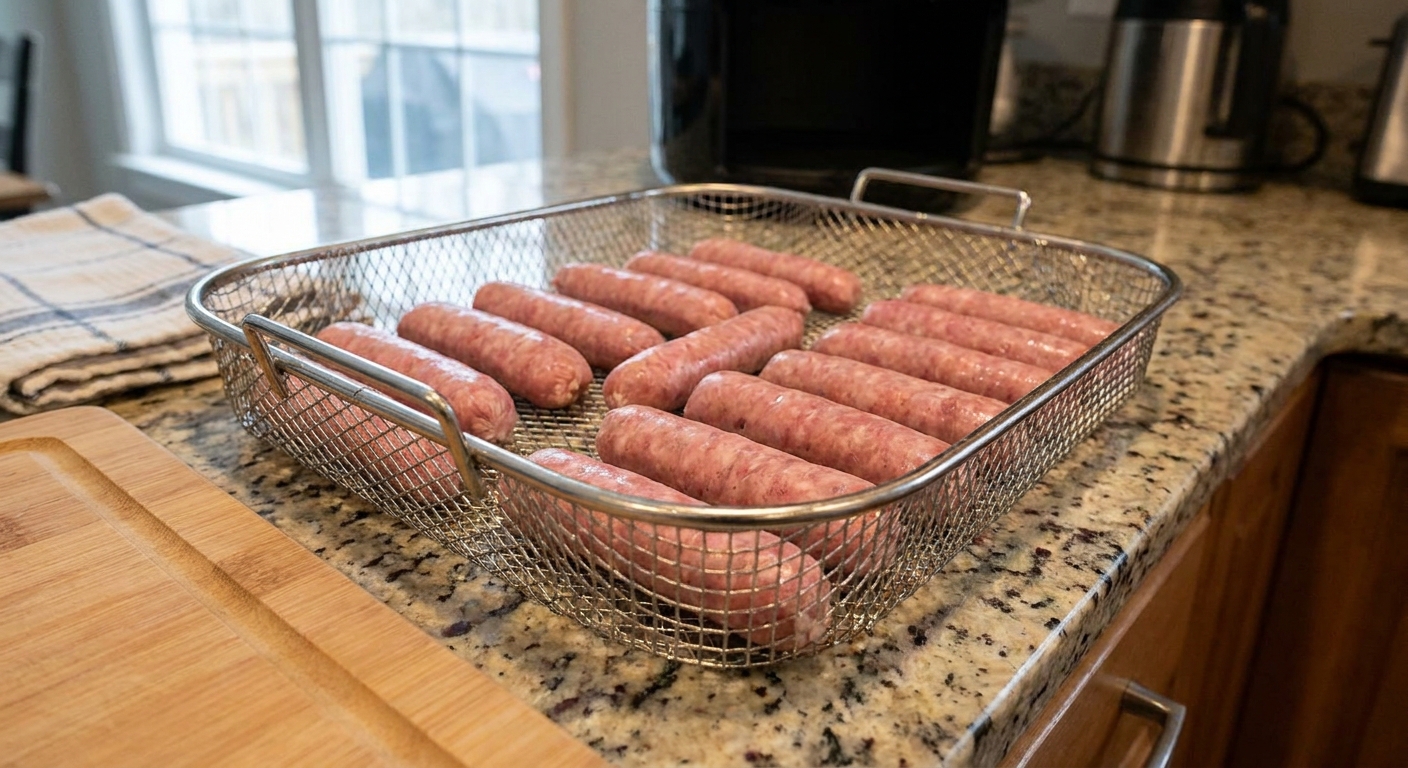
Air fryer sausage time and temperature chart
My default: if your model benefits from preheating (or calls for it), preheat about 3 minutes. Cook in a single layer and flip once halfway. Times vary by brand, thickness, and air fryer style, so use this as a reliable starting point and confirm doneness with temperature for any raw sausage.
Note on air fryer style: These times assume an average 4 to 6 quart basket air fryer. Oven-style air fryers and multi-tray models can cook a little differently, so start checking a couple minutes early and rotate trays if your unit has hot spots.
| Sausage type | Temp | Time | Flip? | Done when |
|---|---|---|---|---|
| Raw breakfast sausage links (thin, about 1 oz each) | 370°F | 8 to 10 minutes | Yes, halfway | 160°F internal, browned casing |
| Raw breakfast sausage patties (about 2 to 3 oz, 1/2-inch thick) | 375°F | 9 to 12 minutes | Yes, halfway | 160°F internal, browned on both sides |
| Fresh Italian sausage links (raw, thicker) | 360°F | 12 to 16 minutes | Yes, halfway | 160°F internal, browned casing |
| Fully cooked smoked sausage (kielbasa, andouille, smoked links) | 380°F | 6 to 8 minutes | Optional | Hot throughout, edges browned |
Quick note: If your sausage is chicken or turkey, cook to 165°F. If it is a specialty blend, follow the package if it calls for a higher final temperature.
Spacing, flipping, and how to keep casings from splitting
Give them air
The air fryer works best when hot air can circulate. Arrange sausages in a single layer with a little space between each one. If they are touching, they will steam where they meet and stay pale.
- Links: Leave a fingertip of space between each link.
- Patties: Keep them flat, not stacked, and avoid overcrowding. Cook in batches if needed.
Flip once, on purpose
One flip is the sweet spot for browning. Too much flipping cools the basket and can tear softer patties.
- Flip at the halfway mark.
- If you have a very powerful air fryer, check 2 minutes before the low end of the range.
Browned casing, not burst casing
Fresh and breakfast links can split when the casing tightens fast and the inside expands. Here is what helps most:
- Lower temp for thicker raw links: That is why I use 360°F for fresh Italian sausage.
- Do not overcook chasing color: Pull at 160°F (or 165°F for poultry) and let them rest 2 minutes. Color deepens as they rest.
- Skip poking holes: It can reduce splitting, but it also leaks juices. I would rather adjust temperature and spacing.
- Dry the casing: If links look wet, pat with a paper towel so they brown instead of blistering.
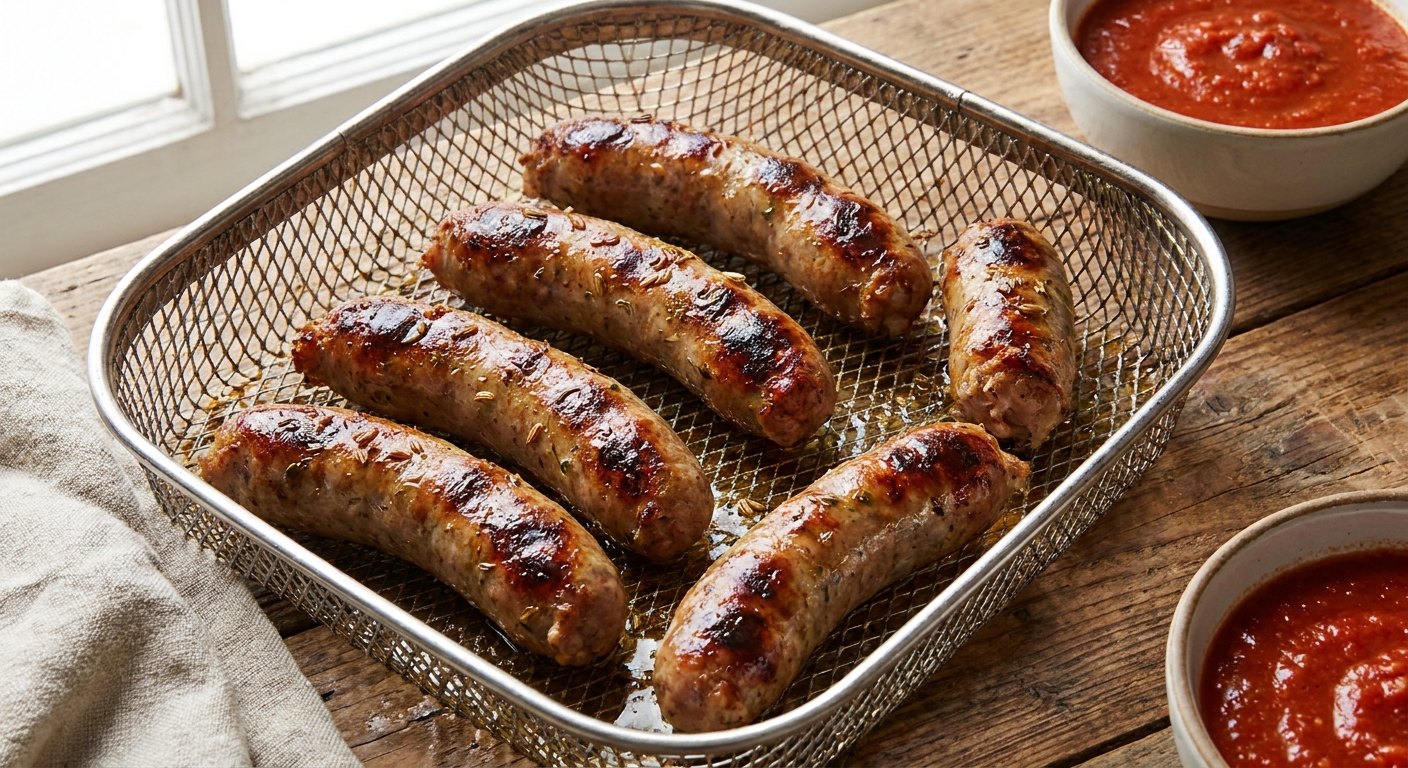
Visual doneness cues
I still use a thermometer for raw sausage. Visual cues can tell you whether you are getting close, but temperature is what determines doneness for raw pork, chicken, or turkey.
Raw breakfast links
- Color: Even browning along the curves, not just on the bottom.
- Texture: Casing looks taut and slightly blistered, but not split wide open.
- Feel: Links feel firm and springy, not squishy.
Breakfast patties
- Edges: Darker golden ring around the outside.
- Center: Firm to the touch, not soft in the middle.
- Cut test (for texture only): If you slice one open, the center should look opaque all the way through. Still temp it for safety.
Fresh Italian sausage
- Casing: Deep golden brown with darker speckles.
- Feel: Plump and springy, not soft.
- Thermometer: 160°F in the thickest part.
Fully cooked smoked sausage
- Ends: Slightly crisped edges.
- Color: Deeper browning where it contacts the basket.
- Inside: Steaming hot when sliced.
Thawed vs frozen sausage
Best results come from thawed sausage. You get better browning, more even cooking, and fewer split casings. If I remember one thing in the morning, it is moving sausage to the fridge to thaw.
If your sausage is thawed
- Use the chart times as written.
- Preheat if your air fryer benefits from it. It helps set the casing quickly so it browns.
If your sausage is frozen
You can air fry from frozen, but expect less browning and a longer cook time. Also, frozen links often stick together. If they are frozen in a clump, thaw until you can separate safely.
- Frozen breakfast links: 370°F for 10 to 14 minutes, flipping once and separating as soon as they loosen. Temp to 160°F for pork (165°F for poultry).
- Frozen patties: 375°F for 12 to 16 minutes, flipping once. Temp to 160°F for pork (165°F for poultry).
- Frozen fresh Italian sausage: I strongly prefer thawing first for even cooking. If you must cook from frozen, use 360°F and plan on 16 to 22 minutes, flipping halfway, then temp to 160°F carefully.
Safety note: Do not partially cook sausage and hold it for later. Cook to the final safe temperature in one go.
Step-by-step: my foolproof method
- Preheat the air fryer for about 3 minutes if your model benefits from preheating.
- Arrange sausage in a single layer with space between pieces.
- Cook at the recommended temperature for half the time.
- Flip once.
- Finish cooking and check temperature: 160°F for raw pork sausage, 165°F for poultry sausage.
- Rest 2 minutes before serving. This keeps juices in and helps casings stay intact.
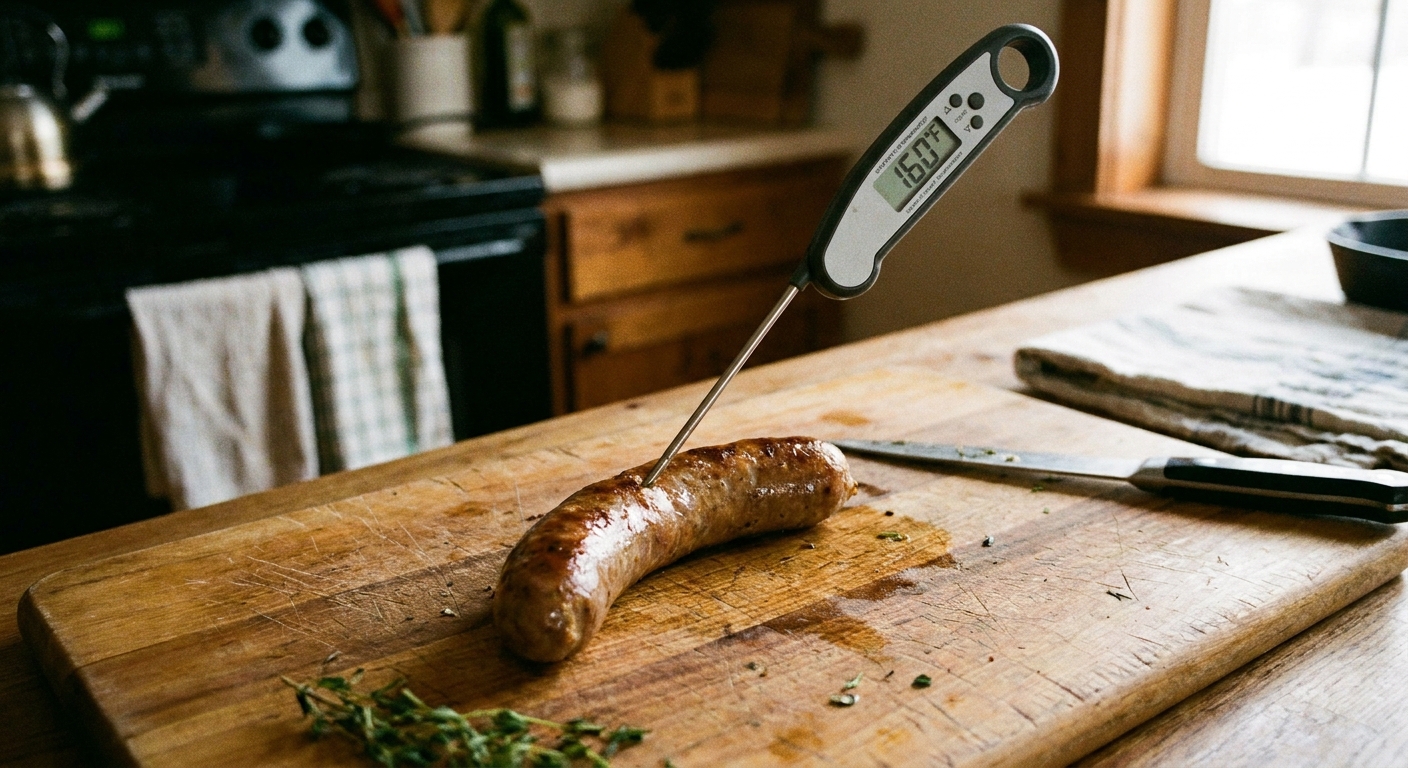
How I temp links: I aim the probe for the center of the sausage meat (not the basket), usually inserting from the end or at a slight angle lengthwise. If you hit the basket or you are only reading the casing, you can get a false high number.
Troubleshooting
My sausage is browned outside but not done inside
- Drop the temp 10 to 15 degrees and cook a few minutes longer, then temp again.
- For thick Italian sausages, 360°F is more forgiving than 390°F.
My casings keep splitting
- Cook at a slightly lower temperature, especially for thicker links.
- Make sure links are thawed and patted dry.
- Do not overcrowd the basket. Crowding raises steam, which can weaken the casing and then it bursts when it finally browns.
My patties are dry
- Start checking 2 minutes early, especially with lean turkey or chicken sausage.
- Choose thicker patties when possible. Thin patties overcook fast in convection heat.
My sausage tastes greasy in the air fryer
- It can happen with higher-fat links. Pull the basket halfway through and carefully pour off excess grease if your model allows it.
- Serve on paper towels for 30 seconds, then plate. It helps.
- If your air fryer has a drip tray, keep it in place and give it a quick wash after cooking high-fat sausage. Old grease can make the next batch taste off.
FAQ
Do I need oil spray for sausage?
Usually no. Sausage renders its own fat. If you are cooking very lean chicken or turkey sausage, a light spray on the basket can help prevent sticking, but keep it minimal.
Can I stack sausages?
I would not. Stacking blocks airflow and turns your “air fry” into “steam and hope.” Cook in batches for the best browning.
Is 160°F really necessary?
For raw pork sausage, yes. Air fryer sausage can look browned before it is safe. A quick temp check takes the guesswork out and keeps dinner moving.
How do I reheat cooked sausage in the air fryer?
For leftovers, reheat at 350°F for 3 to 5 minutes until hot. Slice smoked sausage into coins first for extra crisp edges.