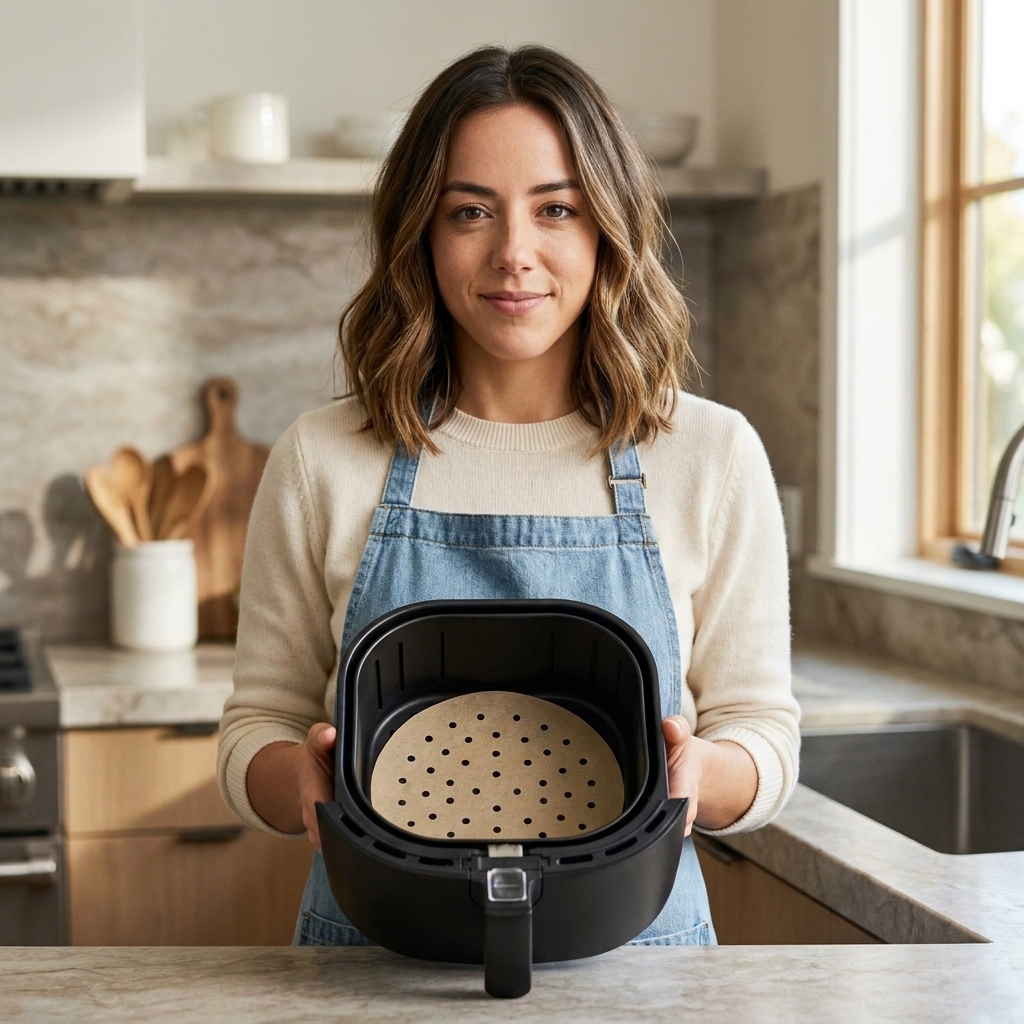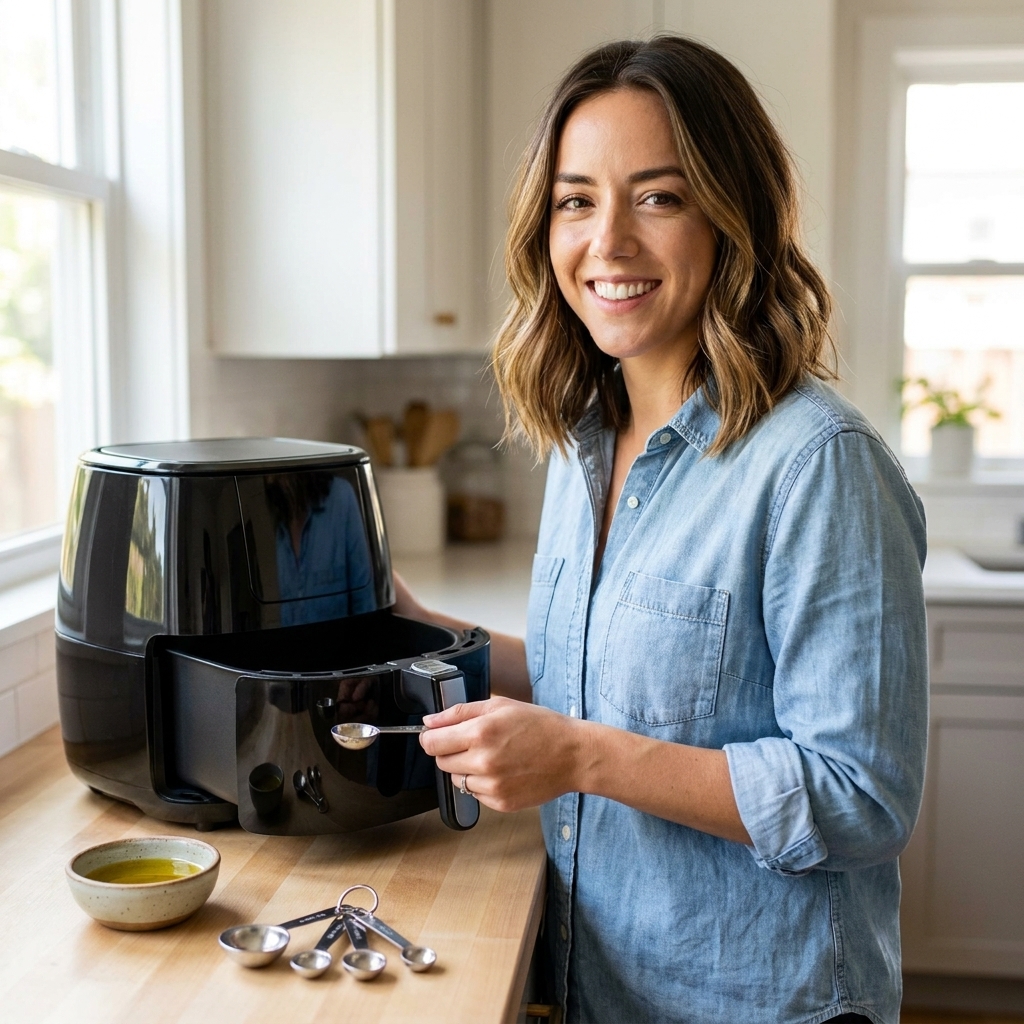

I grew up in the Midwest where “holiday ham” meant a giant spiral on a platter the size of a sled. Now I am usually cooking for a smaller crew (plus two kids who somehow only want the browned edges), and the air fryer is my secret weapon. You get that glossy, caramelized glaze without heating the whole house, and cleanup is basically just the basket and a little sticky foil.
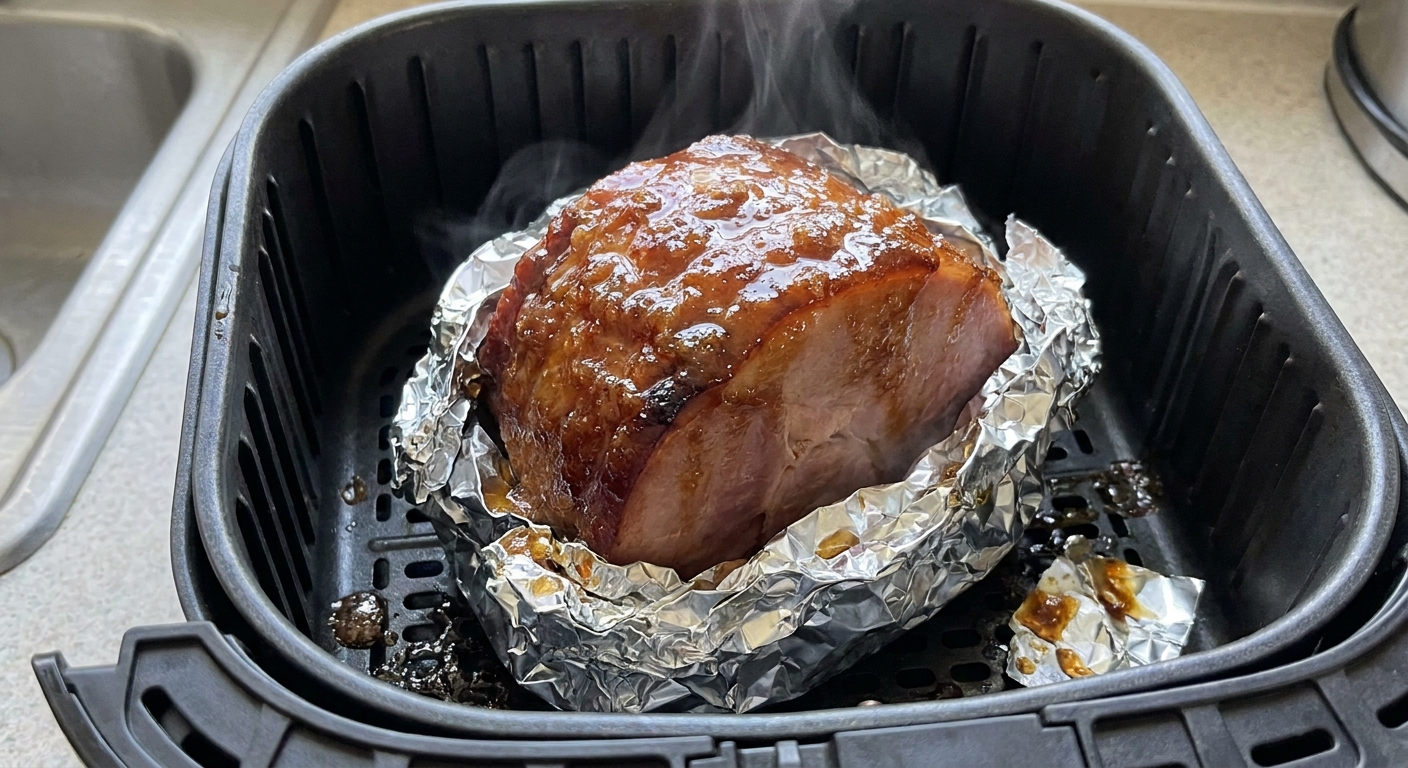
Which ham fits in a standard basket?
The goal is simple: choose a cut that sits fairly flat and still lets hot air circulate. Basket air fryers vary a lot, but a small ham is usually the sweet spot. Instead of shopping by pounds alone, do a quick fit check.
Quick fit check
- Measure first: Check your basket width and height, especially if your air fryer has a domed top or a shallow basket.
- Leave breathing room: Aim for at least 1/2 to 1 inch of space around the sides for airflow.
- Do not force it: If the basket bulges, the lid will not close cleanly, or the ham sits too close to the heating element, it is too big.
Best options for a small holiday dinner
- Small boneless ham (2 to 4 lb): My top pick. It is compact, easy to carve, and usually fits with room to spare.
- Ham half (bone-in, usually 3 to 6 lb): Sometimes doable if it is on the smaller end and the cut side can sit flat. Bone-in takes more space and can brown unevenly if it is wedged in tight.
- Thick ham steaks (1 to 1 1/2 inches): Perfect for 2 to 4 people. You can glaze them like a mini ham, and they cook fast.
What about spiral ham?
A full-size spiral ham is usually too tall and wide for a basket air fryer. A small spiral portion can work, but spirals dry out faster because all those slices expose more surface area. If you do spiral, wrapping well matters a lot (more on that below), and you will glaze near the end.
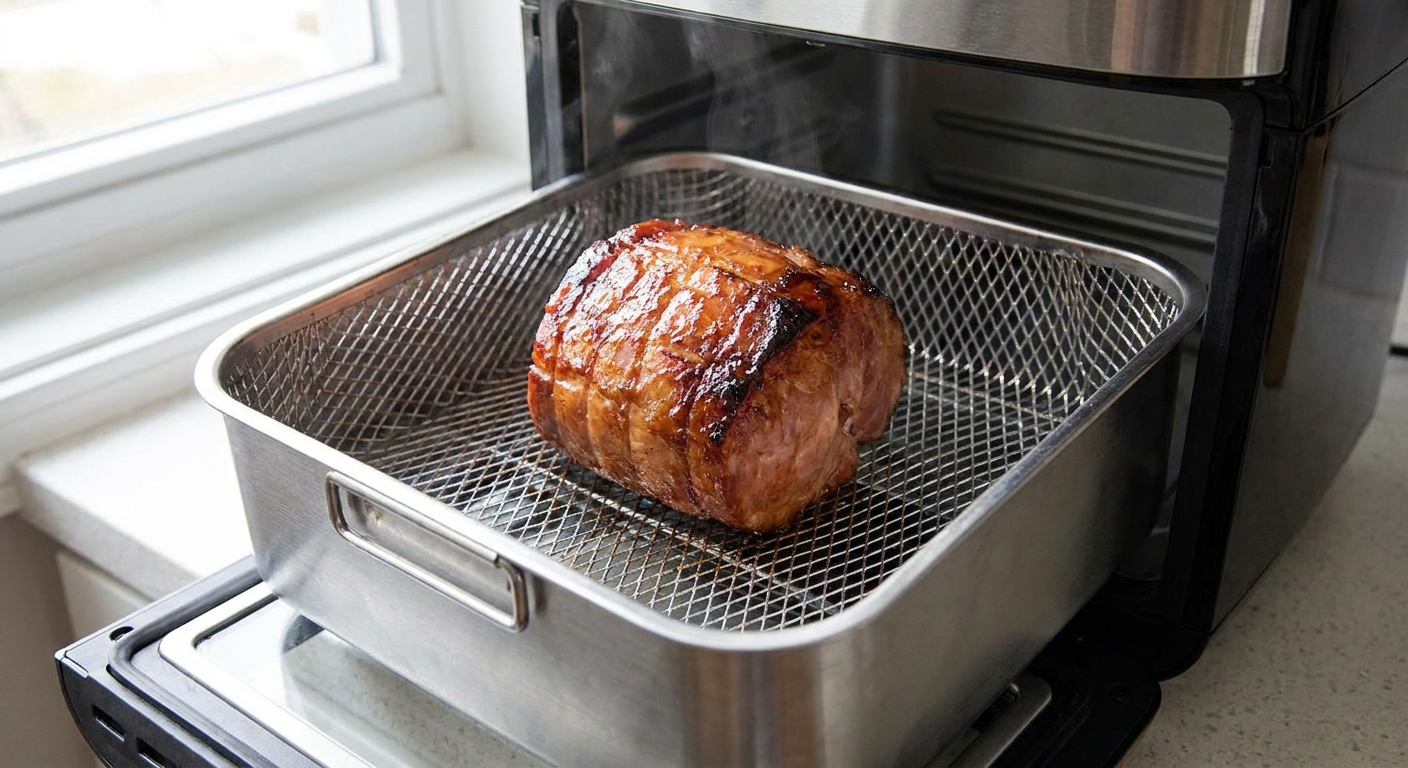
How to wrap ham so it stays juicy
Most holiday hams are already cooked. What we are really doing is reheating to 140°F and adding flavor. Dry ham is almost always a wrapping and timing problem, not an air fryer problem.
My foolproof wrapping method
- Foil boat: Tear a large piece of heavy-duty foil and shape it into a “boat” that cradles the ham. Leave the top open so it can brown later.
- Add a little moisture: Pour 2 to 4 tablespoons of water, apple juice, or pineapple juice into the foil beside the ham, at the bottom of the boat. Do not pour it over the top or you will rinse off your glaze later.
- Tent for the first phase: If your ham is lean or spiral-cut, loosely tent foil over the top for the first part of heating, then remove it to glaze.
- Protect the sugar: Glaze goes on late. Sugar plus high heat equals burnt, bitter sadness.
Extra crispy-edge trick: For the last 2 to 4 minutes, I like to pull the foil back slightly so the sides get a little more airflow. Watch closely because glaze can go from “caramel” to “campfire” fast.
Foil and liner safety
- Keep foil snug and secured so it cannot flap up toward the heating element.
- Do not cover the whole basket floor with a flat sheet of foil. It can block airflow and cook unevenly. A foil boat that cradles the ham is the safer move.
Temp and time guide (to 140°F)
For a fully cooked ham, you are aiming for an internal temperature of 140°F in the thickest part. Use an instant-read thermometer if you have one. It is the difference between “juicy and perfect” and “why is it dry already?”
One more safety note: Leftover ham should be reheated to 165°F.
Best air fryer settings
- Preheat: I usually preheat 3 to 5 minutes. If your air fryer runs hot or you are worried about scorching, you can skip preheating and just add a few minutes.
- Temperature: 300°F for reheating (then 330 to 350°F briefly for glazing if needed)
- Target internal temp (fully cooked ham): 140°F
- Resting time: 10 to 15 minutes
Starting temperature matters
If your ham is fridge-cold, it will take longer. If you have time, letting it sit out for 20 to 30 minutes while you prep the glaze can help it reheat more evenly. Do not push it past typical food safety limits, and when in doubt, keep it cold and just plan on a little extra time.
Minutes per pound at 300°F (starting estimates)
These times are starting estimates for a fully cooked ham in a foil boat, covered or tented for most of the reheat. Shape, thickness, and how cold the ham is will change the schedule. Let the thermometer make the final call.
| Ham size | Estimated time | Notes |
|---|---|---|
| 2 lb boneless | 22 to 28 min | Start checking temp at 20 min |
| 3 lb boneless | 30 to 38 min | Great “small holiday” size |
| 4 lb boneless | 40 to 50 min | May need to rotate halfway |
| Ham half, small (3 to 5 lb) | 10 to 14 min per lb | Only if it fits without crowding |
| Ham steak (1 to 1 1/2 inch) | 8 to 12 min total | Flip halfway, glaze at the end |
Why the range? Thickness and shape change everything. A squat 3-pound ham heats faster than a tall, dense 3-pound ham.
Quick label check
If your ham is labeled “cook before eating” (rare for holiday hams, but it happens), you need to follow package directions for fully cooking it, not just reheating. Many hams in the refrigerated case are fully cooked, but always verify the label.
Brown sugar glaze
This is my go-to glaze when I want that classic holiday vibe without babysitting a saucepan for 20 minutes. It turns sticky, shiny, and deeply caramelized, especially on the edges.
Ingredients
- 1/3 cup packed brown sugar
- 2 tablespoons honey
- 2 tablespoons Dijon mustard
- 1 tablespoon melted butter
- 1 teaspoon apple cider vinegar (or pineapple juice)
- 1/4 teaspoon garlic powder (optional, but really good)
- Pinch of black pepper
How to apply it
- Heat the ham first: Air fry at 300°F in a foil boat (tented if needed) until the ham is about 10 to 15°F below your final target. For most hams, that means glaze when the center hits 125 to 130°F.
- Mix the glaze: Stir everything together until smooth. If it feels too thick to brush, warm it 10 seconds in the microwave.
- First glaze layer: Brush a thin layer over the top and any exposed sides. Air fry 4 minutes at 300°F, until it looks shiny and starting to turn tacky, not wet.
- Second glaze layer: Brush again. Air fry 3 to 5 minutes more, until the ham reaches 140°F and the glaze looks sticky.
- Optional caramel boost: If you want extra browning, bump to 330°F for the last 1 to 2 minutes. Stay right there. Honey and brown sugar can scorch quickly.
Glaze guardrails: If you see dark spots forming fast, drop the temp back to 300°F and finish by internal temp, not by looks. The glaze will deepen as it rests.
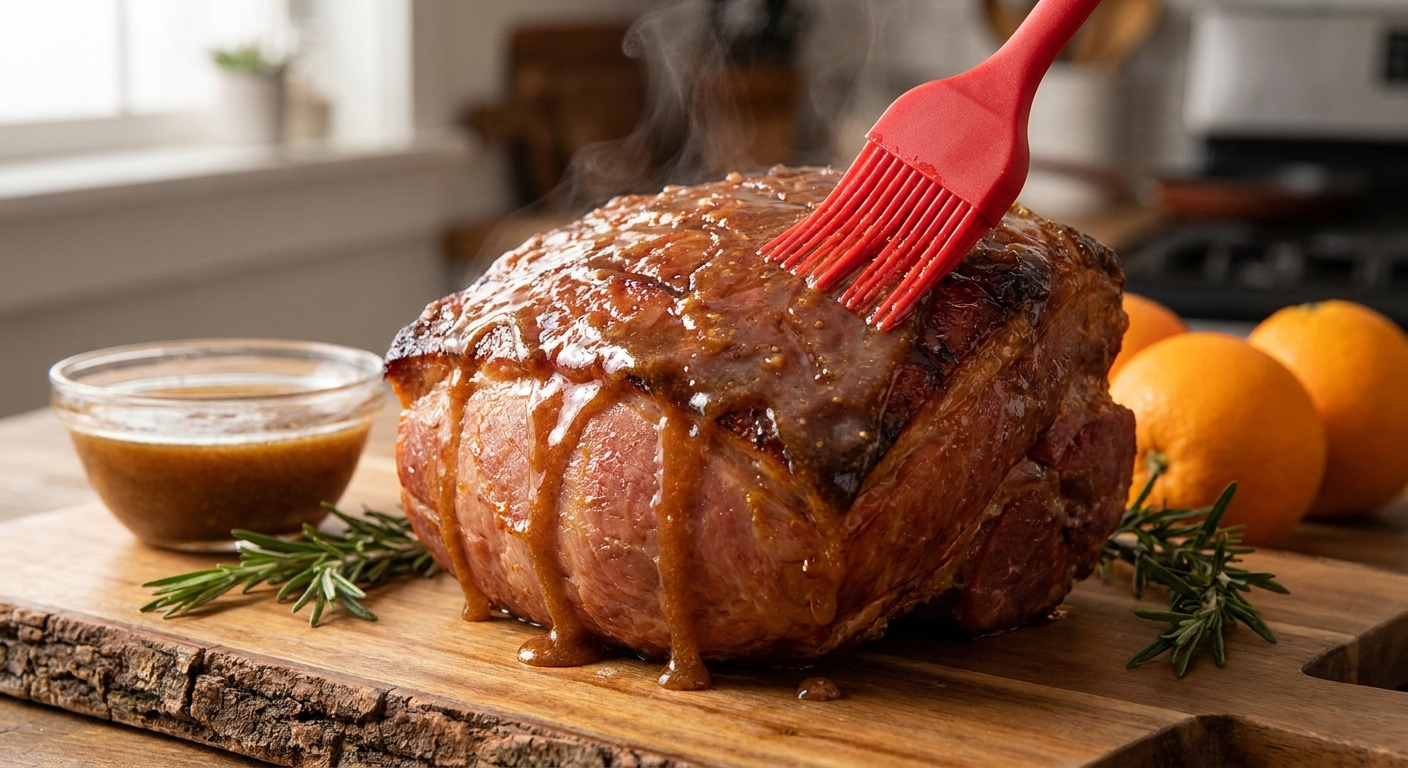
Resting and slicing tips
I know everyone wants to slice right away, but rest time is how you keep the juices in the ham instead of on the cutting board.
Rest like you mean it
- Rest 10 to 15 minutes, loosely tented with foil.
- Keep the ham in its foil boat while it rests so the glaze does not run everywhere.
- If juices collect in the foil, spoon a little over slices when serving. It is basically instant ham au jus.
Slicing for juicy pieces
- Boneless ham: Slice across the short end into 1/4 to 1/2-inch slices. For kid plates and sliders, go thinner.
- Ham half (bone-in): Start with thin slices parallel to the cut face, then run a knife along the bone to release slices as needed. If you hit resistance, rotate and slice along the natural seams. Do not fight the bone.
- Spiral ham portion: Use a sharp knife to separate slices gently, then stack and cut into serving portions. Keep it covered as much as possible so the exposed slices do not dry out.
Holiday hosting tip: If you are serving buffet-style, keep sliced ham in a warm dish with a spoonful of the foil juices mixed in. It stays glossy and tender longer.
Troubleshooting
Because ham has opinions.
My ham is drying out
- Make sure you are using a foil boat plus a splash of liquid beside the ham.
- Glaze later, not earlier.
- Pull at 140°F and rest. Going to 150°F can dry it fast.
My glaze is getting too dark
- Drop temp to 300°F and finish by internal temp.
- Brush thinner layers. Thick glaze burns on the outside before the ham warms through.
- If your air fryer runs hot, skip the higher-temp caramel step entirely.
The ham will not fit
- Choose a boneless ham or ham steaks next time.
- If it is just barely too tall, you can sometimes place it cut-side down to stabilize it, but do not force the basket closed.
My simple game plan
If you just want the simplest path, here is what I do most often:
- Ham: 3-pound boneless, in a foil boat with 3 tablespoons apple juice
- Reheat: 300°F until 125 to 130°F in the center
- Glaze: Two thin coats, 7 to 9 minutes total
- Finish: Pull at 140°F, rest 10 to 15 minutes, slice and spoon juices over the top
It tastes like the holidays, but scaled to real life and a real-sized sink full of dishes.