The air fryer baking mindset
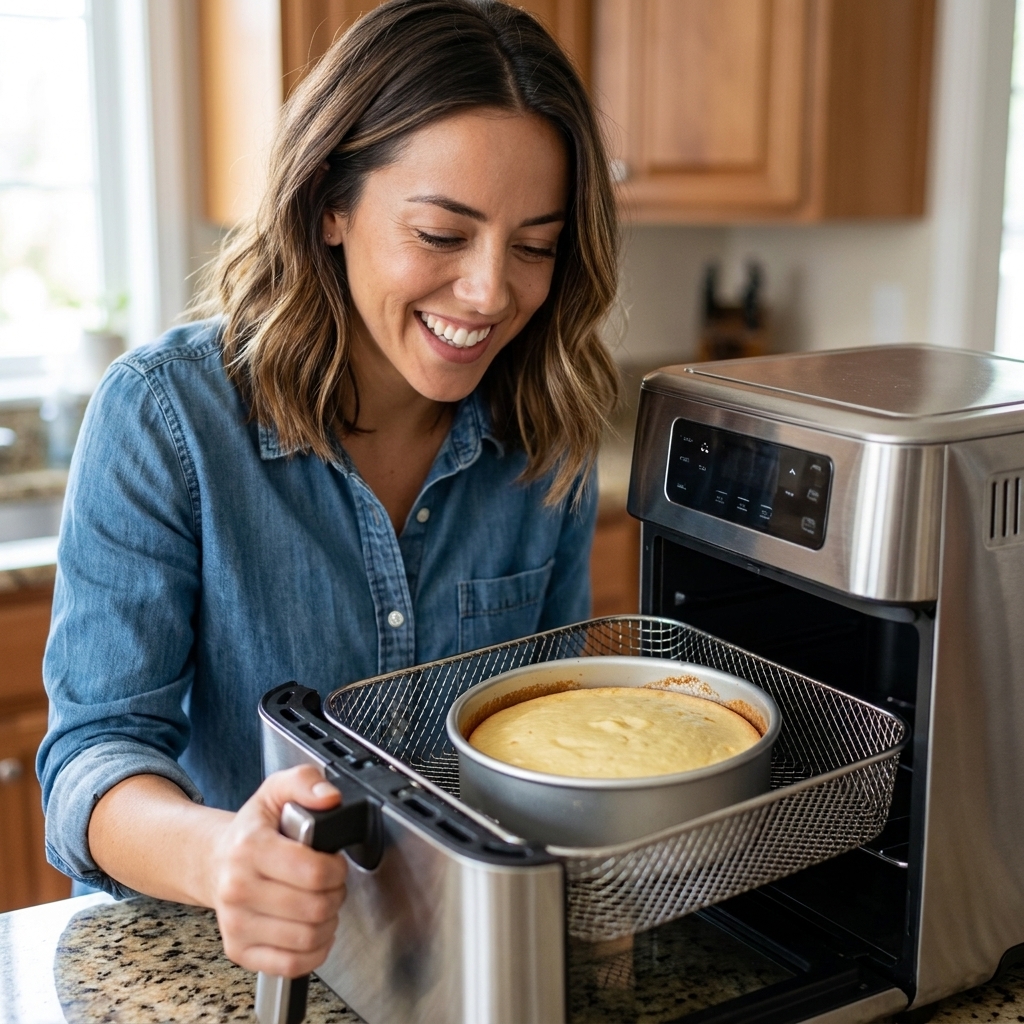
If you grew up thinking “baked” means a big oven and a big preheat, welcome to my favorite shortcut. Most air fryers function like tiny convection ovens: a heating element plus a fan moving hot air around fast. That’s why they can bake desserts and breads beautifully, and also why your banana bread can go from pale to scorched in what feels like 90 seconds.
Because the cooking chamber is small and the airflow is strong, you’ll usually see:
- Faster browning: tops and edges color quickly.
- Shorter bake times: especially for small portions.
- Potentially uneven heat: depending on your model’s fan, rack/basket design, and how tightly your pan fits.
- Different moisture behavior: quick surface drying can leave you with a browned outside and an underbaked center.
The fix is not complicated. Most air fryer baking success comes down to one thing: lower temperature, earlier checks, plus a willingness to adjust for your specific machine.
Air fryer types matter
Before you convert a recipe, take two seconds to identify what you’re working with:
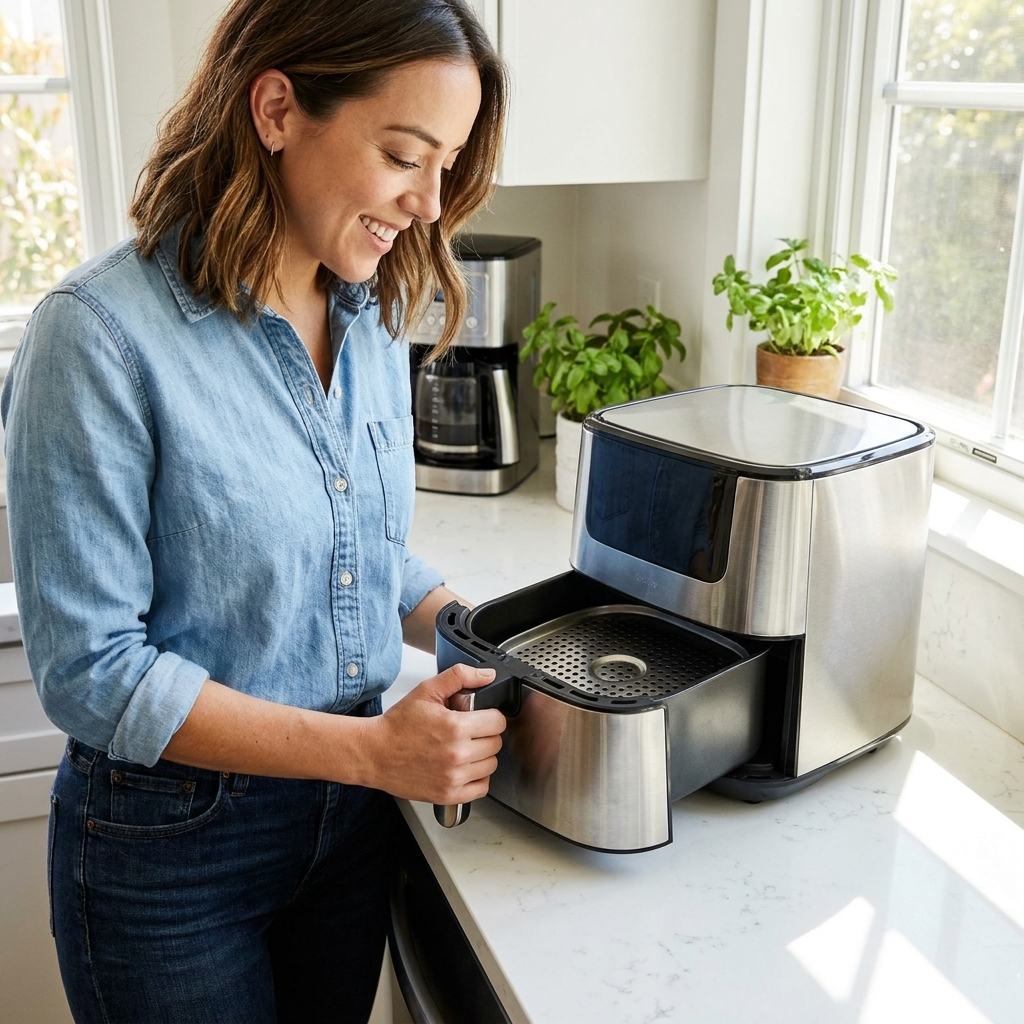
- Basket-style air fryers: usually the most intense airflow and fastest browning. They often benefit from a bigger temperature drop.
- Oven-style or toaster-oven air fryers: more space, sometimes gentler airflow, and baking can look closer to a small oven. You may need a smaller temperature drop, and times can be similar to the recipe.
Translation: the guidelines below are solid starting points, not universal laws. Wattage, pan material, and how full your basket is can nudge the results.
The core rule
When you’re converting an oven baking recipe to the air fryer, start here:
- Drop the temperature by 25°F to 50°F from the oven recipe.
- Start checking at 70% to 80% of the oven time. Use 70% for thin or small items (cookies, hand pies), and 80% for deeper batters (cakes, quick breads).
My go-to default for most desserts and quick breads is 25°F lower. If your air fryer runs hot (a lot of them do) or you are baking something sugary that browns fast (cinnamon rolls, high-sugar cakes), go 50°F lower.
Chloe’s quick conversion example: If a recipe says 350°F for 30 minutes, try 325°F and begin checking at 22 to 24 minutes. If the top is browning too fast, cover loosely with foil and keep going.
One more reality check: lowering the temperature can mean you end up baking about the same total time, or even a touch longer, to get the center cooked without torching the top. That is normal.
Time adjustments by bake
Different batters behave differently. Use this as your starting point, then trust your doneness tests (we’ll get to those).
Cakes and cupcakes
- Temperature: usually 25°F to 50°F lower than oven recipes.
- Time: often 10% to 20% shorter, but cake centers need time to set. At a lower temp, the total time may end up close to the original.
- Best tip: bake lower and steadier to avoid a domed, over-browned top with a gooey middle.
Example: A 12-cup cupcake recipe at 350°F for 18 minutes becomes 325°F, start checking at 13 to 14 minutes. Bake in small batches and rotate the pan if your model has a hot side.
Cookies
- Temperature: typically 25°F lower.
- Time: usually 20% to 30% shorter.
- Best tip: air fryer cookies continue to set after you pull them. Take them out when edges look done and centers look just slightly under.
Example: If your oven recipe is 350°F for 10 minutes, try 325°F and start checking at 7 minutes. If you are using parchment, weigh it down so it does not lift.
Quick breads (banana bread, pumpkin bread, muffins)
- Temperature: usually 25°F to 50°F lower.
- Time: can be similar to oven time for thicker loaves, but you will often need a foil cover partway through to prevent over-browning.
- Best tip: smaller pans win. A tall, thick loaf is the easiest way to get a raw center.
Example: Instead of one full loaf, split the batter into two mini loaves and bake at 300°F to 325°F, checking around 70% to 80% of the original time. Foil-tent once the top looks right.
Yeast breads and rolls
- Temperature: 25°F lower is a good starting point.
- Time: 10% to 20% shorter for rolls, closer to oven time for larger shapes.
- Best tip: for soft dinner rolls, aim for a gentler temp so the outside does not crust too hard before the inside is cooked.
Example: For dinner rolls baked at 375°F for 15 minutes in the oven, try 350°F and start checking at 11 to 12 minutes. If they are browning fast, foil-tent and keep going until done.
Pastries (crescent dough, puff pastry, hand pies)
- Temperature: 25°F lower for most, sometimes the same temp if you need lift and crisp.
- Time: 15% to 25% shorter.
- Best tip: keep them in a single layer and chill filled pastries briefly so butter and fillings stay put.
Example: For puff pastry turnovers at 400°F for 18 minutes, try 375°F and start checking at 13 to 14 minutes. If you want more lift, run the last couple minutes a little hotter if needed.
Brownies and bars
- Temperature: 25°F lower.
- Time: 10% to 20% shorter, but fudgy centers can take close to oven time at a lower temp.
- Best tip: use a smaller pan and accept that the edges will set faster. Rotate if your model has a hot spot.
Example: For brownies at 350°F for 30 minutes, try 325°F in a 6-inch pan and start checking at 22 to 24 minutes. You may finish closer to 28 to 32 minutes depending on thickness.
Which setting to use
If your air fryer has a Bake setting, try it first. If it doesn’t, Air Fry works fine for most baking as long as you lower the temperature and check early. The naming varies by brand, but here’s the practical translation:
- Bake: often a slightly gentler fan or steadier heat curve.
- Air Fry: more aggressive airflow and browning.
- Roast: can run hotter, great for crisping but risky for delicate cakes.
If you only remember one thing: use whatever mode gives you stable heat at a lower temp, and shield the top with foil if it’s browning before the middle sets.
Pans and sizes
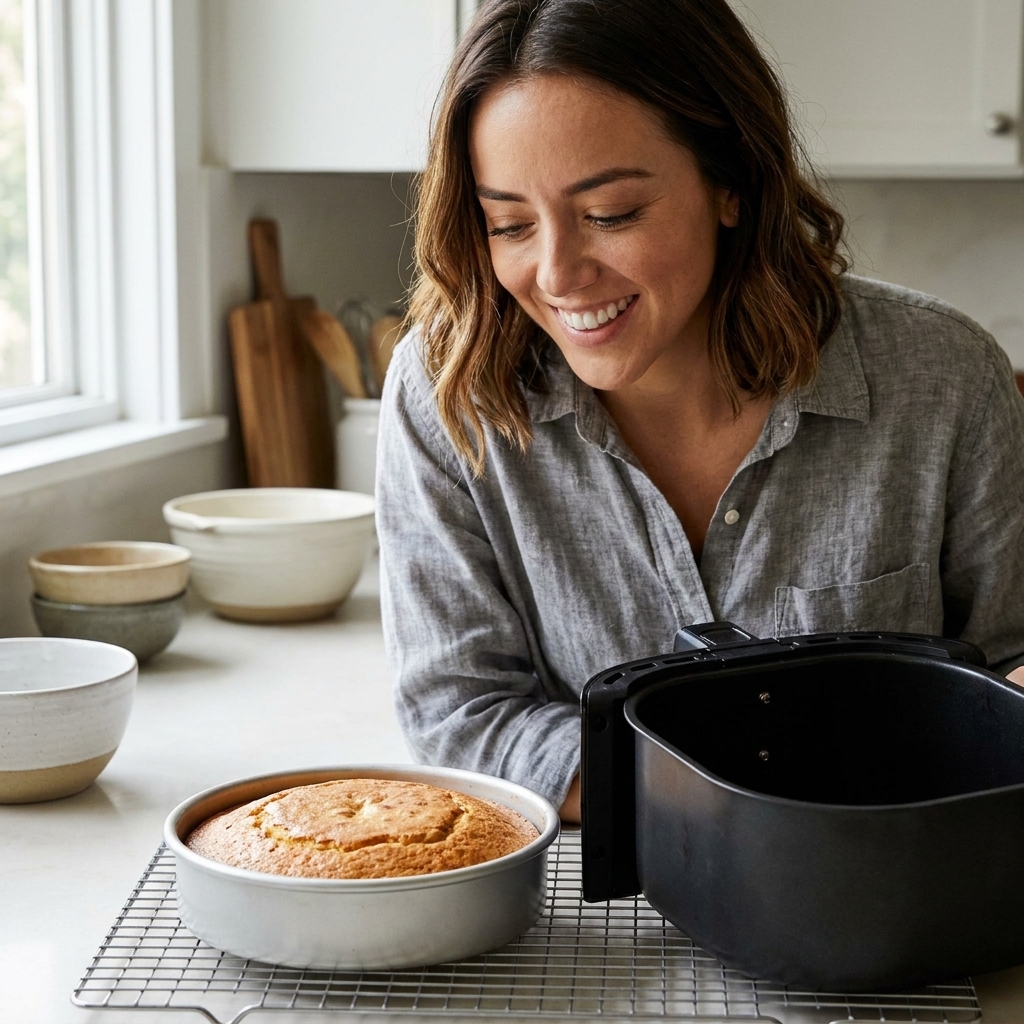
Air fryers bake best when the batter is not too deep. A thick loaf pan in a tiny convection chamber is basically asking the outside to finish long before the center catches up.
Air fryer-friendly bakeware
- 6-inch round cake pan (perfect for small cakes and brownies)
- 7-inch springform pan (great for cheesecake-style desserts)
- Mini loaf pan instead of a full-size loaf
- Ramekins for lava cakes, bread pudding, baked oats
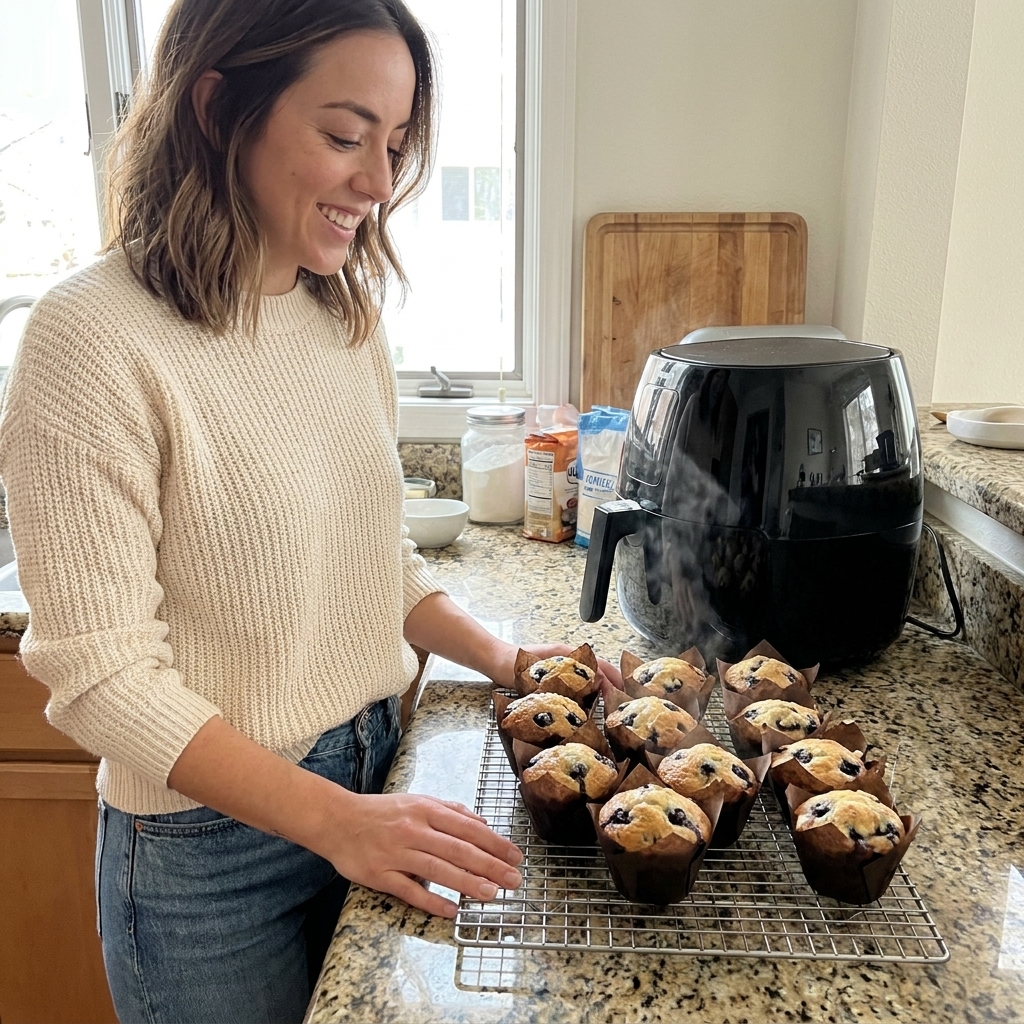
- Muffin cups in a small metal pan or silicone cups set on a tray
Metal vs. glass vs. silicone
- Metal: best browning and most predictable.
- Glass/ceramic: can take longer to heat, often needs a little extra time. Use only pieces rated for the temperatures you’re using.
- Silicone: convenient, but browns less and can slow cooking. Use it when you want soft sides, not crisp edges.
Pan placement
Where the pan sits changes everything, especially in oven-style units with racks.
- Basket-style: keep the pan centered, and avoid pans that wedge tightly against the basket walls.
- Oven-style: the middle rack is a good default for even baking. Top rack browns fast, bottom rack can lag.
- Rotate when needed: if your model browns more on one side, rotate the pan halfway through (or at your first check).
Preheating
I know preheating feels like the whole point of using an air fryer is to avoid it. But for baking, a short preheat gives you a more reliable rise and better texture.
- When to preheat: cakes, muffins, quick breads, yeast rolls, anything you want to rise evenly.
- How long: 3 to 5 minutes is plenty for most air fryers.
- When you can skip it: refrigerated doughs (biscuits, crescent rolls) and cookies if you are watching them closely.
Doneness checks
Because the top can brown early, you can’t rely on color alone. Use the right doneness test for what you’re baking:
- Cakes and quick breads: toothpick test in the center, plus a gentle press on top. It should spring back.
- Muffins: tops set and springy, no wet batter on a toothpick.
- Cookies: edges set, centers still slightly soft. Let them cool 5 to 10 minutes to finish setting.
- Yeast breads: sound hollow when tapped, or check internal temp. Enriched breads are often done around 190°F to 200°F; leaner breads are often closer to 205°F to 210°F.
- Brownies: a toothpick should come out with moist crumbs, not raw batter, unless you want cakey brownies.
If you bake often, an instant-read thermometer is your best friend. It ends the “is it raw or just fudgy?” debate fast.
Burnt top, raw center
This is the number one air fryer baking complaint in my DMs and in my own kitchen. Here are the fixes that work.
1) Lower the temperature more than you think
If you started at a 25°F reduction and the top is still racing ahead, drop another 25°F next time.
2) Tent with foil at the right time
Once the top is the color you want, loosely cover with foil and finish baking. Do not crimp it tight to the pan. You want to slow browning, not steam the surface into soggy sadness.
3) Use a shallower pan or smaller batch
Deep batter is the enemy. Split a loaf recipe into two mini loaves, or make muffins instead. Same batter, better results.
4) Rotate if your model has hot spots
Some air fryers run hotter toward the back or one side. If you notice uneven browning, rotate the pan around your halfway point or at your first doneness check.
5) Let it rest
Many baked goods keep cooking a bit from residual heat. Resting also helps set the crumb, especially in quick breads and cakes.
Quick conversion table
Use these as training wheels. Your exact air fryer model and pan choice will nudge the numbers.
| Oven recipe says | Try in air fryer | Start checking at |
|---|---|---|
| 350°F | 325°F | 70% to 80% of time |
| 375°F | 350°F (or 325°F if sugary) | 70% to 80% of time |
| 325°F | 300°F | 75% to 85% of time |
| 400°F | 375°F (or 350°F) | 70% to 80% of time |
How to pick the number: thin and small items trend toward 70%. Deeper batters trend toward 80% (and sometimes beyond).
Common problems
My cake is browned on top but jiggly in the middle
- Lower temp 25°F next time.
- Tent with foil once the top browns.
- Use a smaller pan with less batter depth, or bake as cupcakes.
My cookies blew around or curled
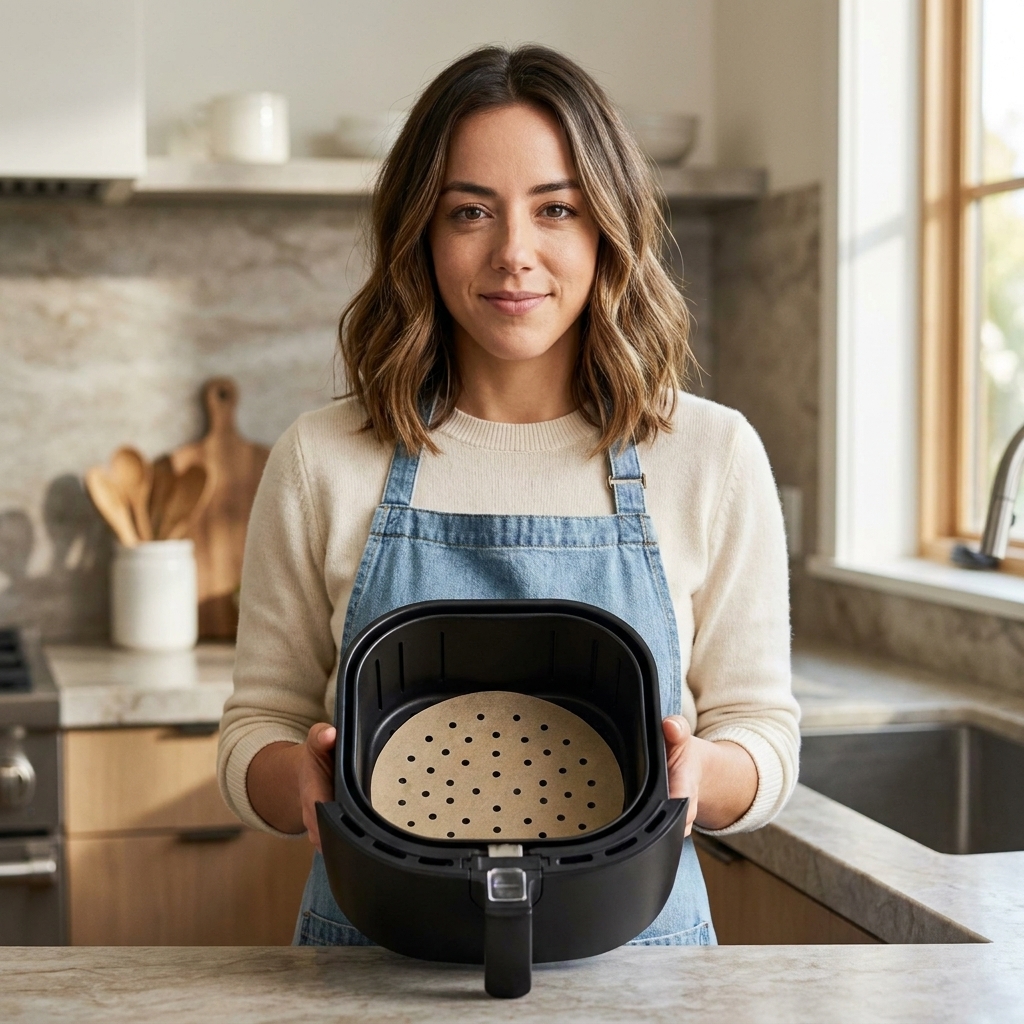
- Use parchment with holes or a small perforated liner designed for air fryers, and always weigh it down with dough.
- Chill cookie dough so it sets faster.
- Flatten dough balls slightly for more even baking.
My muffins are dry
- Check earlier. Overbaking happens fast in convection.
- Drop temp 25°F and add a couple minutes if needed, instead of baking hotter.
- Measure flour correctly. Too much flour dries everything out, air fryer or not.
My bread is crusty outside but gummy inside
- Lower temp and extend bake time.
- Shield the top with foil.
- Let it cool fully before slicing. Cutting early can make the inside seem underdone.
Safety and setup
- Never preheat with loose parchment floating in an empty basket. The fan can lift it into the heating element. If you use parchment, add it after preheat and weigh it down with the pan or food.
- Use bakeware rated for the heat. Metal is easiest. Silicone and ceramic should be clearly temperature-rated. Avoid any piece you are not sure about.
- Be cautious with glass. Not all glass is designed for rapid temperature changes. Use only oven-safe, thermal-shock-resistant pieces, and avoid moving a hot dish onto a cold surface.
- Leave airflow space around your pan when possible. If your pan fits too tightly, heat circulation suffers and bake times get weird.
- Avoid overfilling cake pans and cups. Fast crust-setting can exaggerate doming and overflow if you overfill.
FAQ
Can I use any regular oven baking recipe in an air fryer?
Most of the time, yes, but you will get the best results with recipes that are already small-format (muffins, bars in a 6-inch pan, small cakes, individual desserts). Large loaves and big sheet cakes are tougher because of batter depth and space.
Do I need to change ingredients for air fryer baking?
Usually no. Adjust temperature, time, and pan size first. If you consistently get dry results, it is more often overbaking than a recipe problem.
Why does everything brown so fast in my air fryer?
Fast-moving hot air plus a heating element close to the food equals quick browning, especially with sugar. Lower the temperature and use foil once the top is the color you want.
What is the best temperature for baking in an air fryer?
For many desserts and breads, 300°F to 330°F is the sweet spot. Cookies and pastries often do well around 325°F to 350°F, depending on how quickly your model browns.
My weeknight routine
If you want the simplest way to get consistent results, here’s the routine I use when I’m baking in a hurry (which is basically always):
- Preheat 3 to 5 minutes.
- Drop oven temp by 25°F (50°F if it’s very sugary, delicate, or your air fryer runs hot).
- Set your first check for 70% to 80% of the bake time (70% for small or thin items, 80% for deeper batters).
- Foil-tent when the top looks right.
- Rest and cool before slicing, especially quick breads.
Once you bake a couple batches, you’ll learn your air fryer’s personality. Mine runs a bit hot and browns like it’s getting paid by the golden edge, so I’m a proud member of the “325°F and foil” club.