
If you have ever stared at a lonely boneless turkey breast and thought, “I do not need a whole holiday situation, I just need dinner,” you are my people. Air frying a small turkey breast is one of my favorite ways to get that classic turkey vibe with crisp edges and less mess than the oven and far less fuss than stovetop splatter patrol.
This is the method I use when I want juicy slices for dinner and leftovers that actually get eaten.
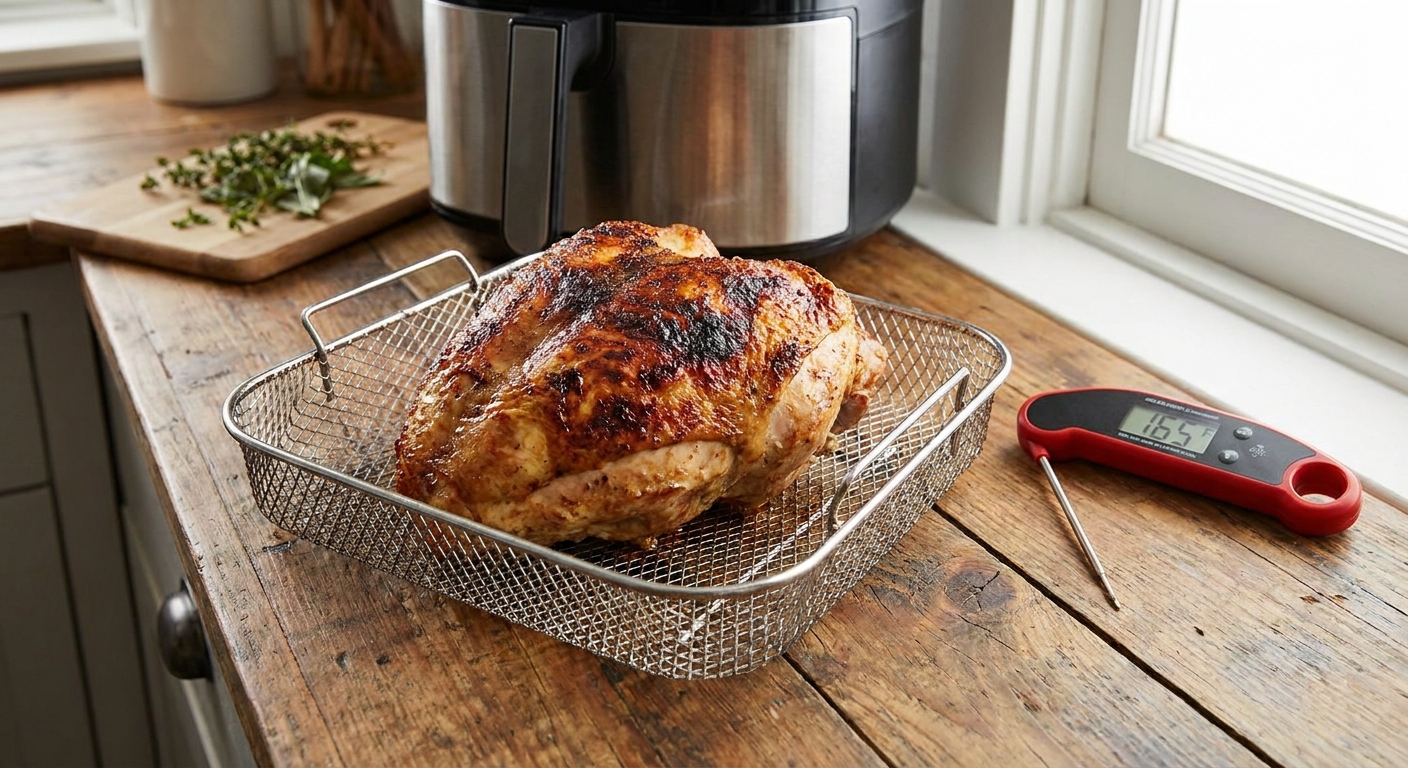
Quick answer: time, temp, pull, rest
For a small boneless turkey breast that fits comfortably in a standard air fryer basket (usually 2 to 3 pounds):
- Air fryer temperature: 360°F
- Cook time: 35 to 55 minutes (can swing a bit wider if it is very thick, tightly netted, or your air fryer runs cool or hot)
- Flip: Optional, but I like to flip at the halfway point for more even browning
- Internal temp: Cook until the thickest part reaches 165°F, or pull earlier only if you know your roast reliably carries over
- Rest time: 10 to 15 minutes (still important even if you cook to 165°F)
Food safety note: Turkey is considered done at 165°F internal. Some turkey breasts will climb a few degrees while resting, but not all of them do. If you regularly see your air fryer turkey rise from 160°F to 165°F during the rest, you can pull at 160°F. If you do not see that carryover happen, cook to 165°F in the air fryer and then rest.
Best turkey breast to use
You are looking for a boneless turkey breast roast or boneless half breast that sits flat and leaves airflow around it. If it is tied or netted, that is fine. Just make sure it is not pressed up against the basket walls.
About the netting: Most boneless roasts come wrapped in netting to hold their shape. Leave it on for cooking. Remove it after cooking, right before or after the rest, then slice. Use kitchen shears and snip carefully so you do not tear off your beautifully browned surface.
Not for a whole turkey: Most whole turkeys do not fit in a standard basket air fryer, and wedging one in blocks airflow and can cook unevenly. This method is for the smaller boneless roasts that can breathe.
My crisp prep (dry, oil, salt)
If you want turkey that tastes like turkey and not steamed deli meat, the prep matters. The air fryer is powerful, but moisture is the enemy of browning.
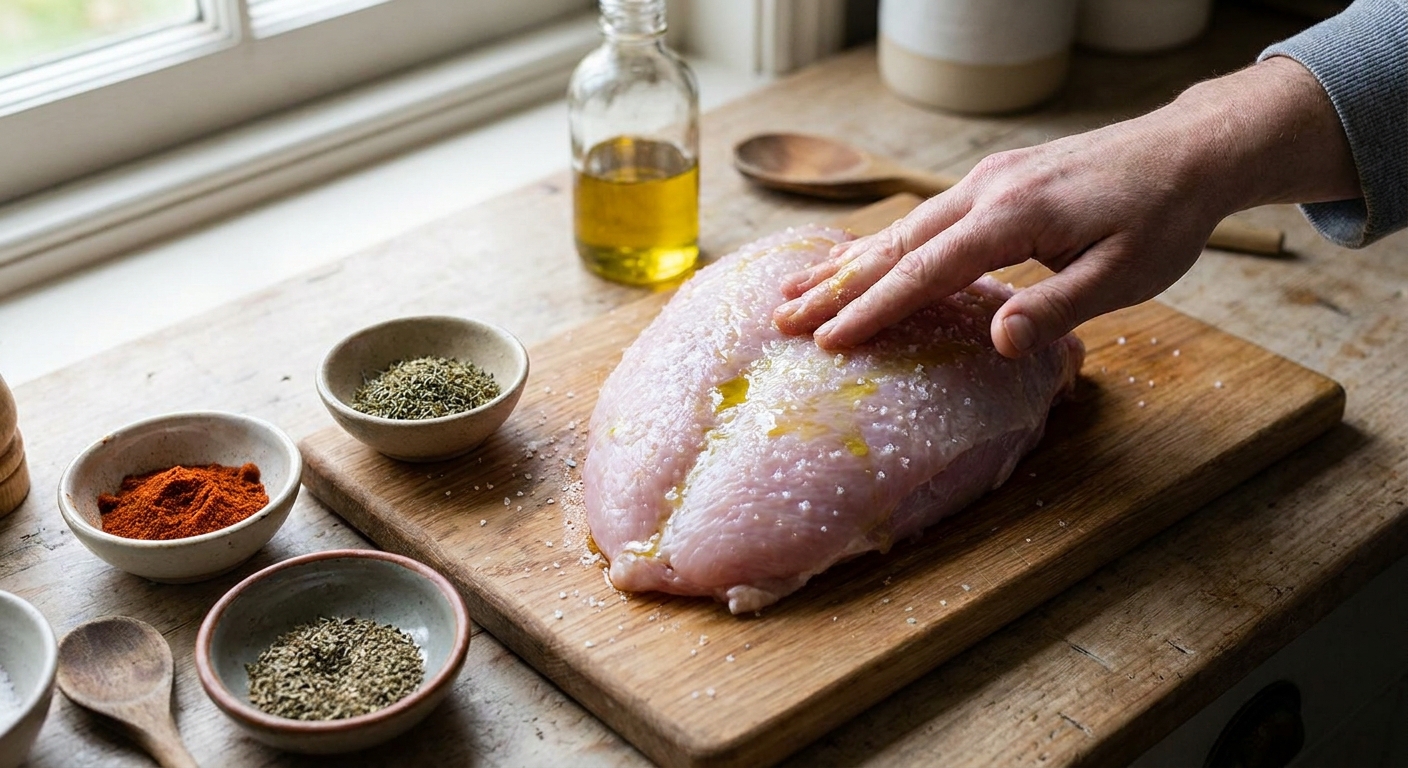
1) Dry it well
Pat the turkey breast dry with paper towels. If it has skin, dry the skin especially well. If you have 30 extra minutes, pop it uncovered in the fridge to air-dry. That little step pays off in crispness.
2) Light oil rub
Rub with 1 to 2 teaspoons oil (avocado, canola, or olive oil all work). You are not trying to drown it, just help seasoning stick and encourage browning.
3) Salt, plus whatever else you love
At minimum, use salt. For a 2 to 3 pound boneless breast, I typically start with 1 to 1 1/2 teaspoons kosher salt. Add black pepper, garlic powder, paprika, or poultry seasoning if you want, but salt is the non-negotiable.
How to cook it
Preheat the air fryer to 360°F for about 3 to 5 minutes if your model preheats.
Place turkey in the basket with a little space around it. If it has skin, start skin-side up.
Air fry at 360°F for 35 to 55 minutes. Start checking the internal temperature in the thickest part around the 30 to 35 minute mark for smaller roasts or very efficient air fryers.
Optional flip at halfway for even color. If the skin is already beautifully browned, I keep it skin-side up and skip flipping.
Cook to 165°F in the thickest part, unless you know from experience your roast reliably carries over to 165°F during the rest.
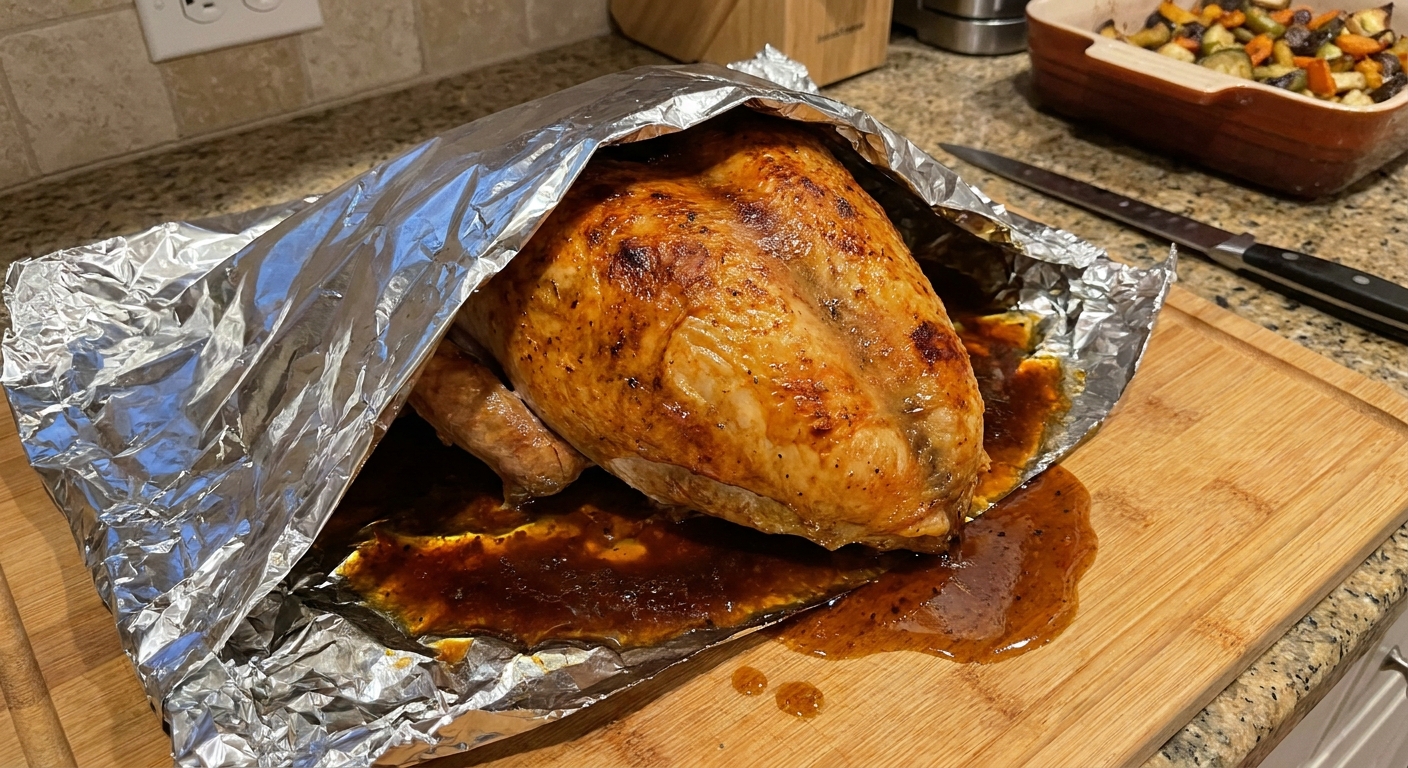
Rest 10 to 15 minutes on a plate or cutting board, loosely tented with foil. Then remove netting (if present) and slice against the grain.
Thermometer tip from my testing days: Take a couple readings. Turkey breasts can have hot spots and cool spots, especially if one end is thicker.
If the top browns too fast
This is the most common air fryer turkey breast panic moment, and it is fixable.
What to do
- Loosely tent with foil: Drape a small piece of foil over the top to shield the skin. Do not wrap it tightly. You want airflow to keep cooking the center.
- Lower the temperature: Drop to 330°F to 340°F and continue cooking until the center hits your target temp.
- If your model allows repositioning: Some air fryers let you lower the food with a rack accessory. If yours does, moving the roast a bit farther from the top element can help. For most basket models, foil tenting plus a small temp drop is the simplest fix.
I usually do foil + keep 360°F if the center is still far from done. If it is only 5 to 10 degrees away, I will often lower to 340°F and cruise to the finish.
Resting: do not skip it
I know, everyone wants to slice right away. But resting is where juicy turkey happens.
When you rest the turkey breast for 10 to 15 minutes:
- The temperature settles and may climb a little.
- The juices redistribute so they stay in the meat instead of flooding your cutting board.
- Slices come out cleaner and more tender.
If you skip the rest, you will still have turkey, but it will be noticeably drier. Ask me how I know.
Timing cheatsheet
Cook time depends more on thickness than weight, but this will get you in the right neighborhood for a boneless roast that fits in the basket:
- About 2 lb: 35 to 45 minutes at 360°F
- About 3 lb: 45 to 55 minutes at 360°F
If your roast is extra thick or very tightly netted, do not be surprised if it creeps past 55 minutes. The thermometer is the boss.
Start checking early. You can always add time, but you cannot un-cook an overdone turkey breast.
Common questions
Do I need to brine it?
No, but it helps. If you have time, a simple dry brine is easy: salt it and leave it uncovered in the fridge for a few hours or overnight. For weeknights, I usually skip brining and just focus on not overcooking.
Can I cook it from frozen?
I do not recommend it for a whole boneless breast roast. The outside tends to overbrown while the center struggles to thaw and cook evenly. Thaw in the fridge first for best texture and safer timing.
How do I keep it from drying out?
Three things: use a thermometer (for doneness), rest (for juiciness), and do not cook it to 170°F “just to be sure.” That is where turkey breast goes from tender to chalky.
Should I add a glaze?
You can, but save anything sugary (honey, maple, brown sugar glazes) for the end so it does not burn. Brush it on for the last 5 to 10 minutes, and watch closely.
What if it is done early?
Pull it, rest it, then slice what you need. If you are serving later, keep slices covered with a splash of broth or pan juices to prevent drying.
How do I store leftovers and reheat?
Refrigerate leftovers within 2 hours and use within about 3 to 4 days. For reheating, I like the air fryer at 300°F to 320°F just until warmed through. Add a spoonful of broth and cover loosely with foil if you want extra insurance against drying.
Wrap-up
For everyday meals, this small boneless turkey breast method is the sweet spot: crisp edges, juicy slices, and no giant roasting pan to scrub. Keep an eye on browning, trust your thermometer over the clock, and let it rest so those leftovers stay worth fighting over.