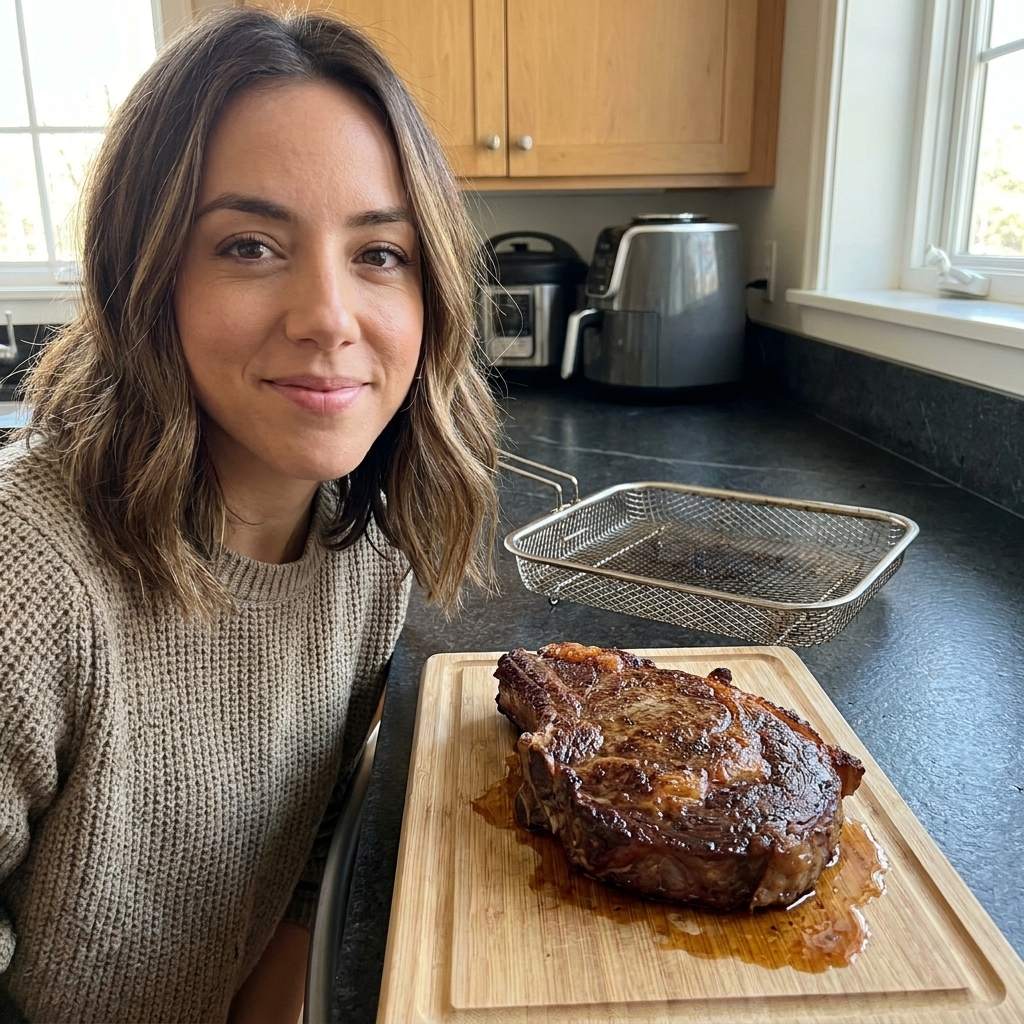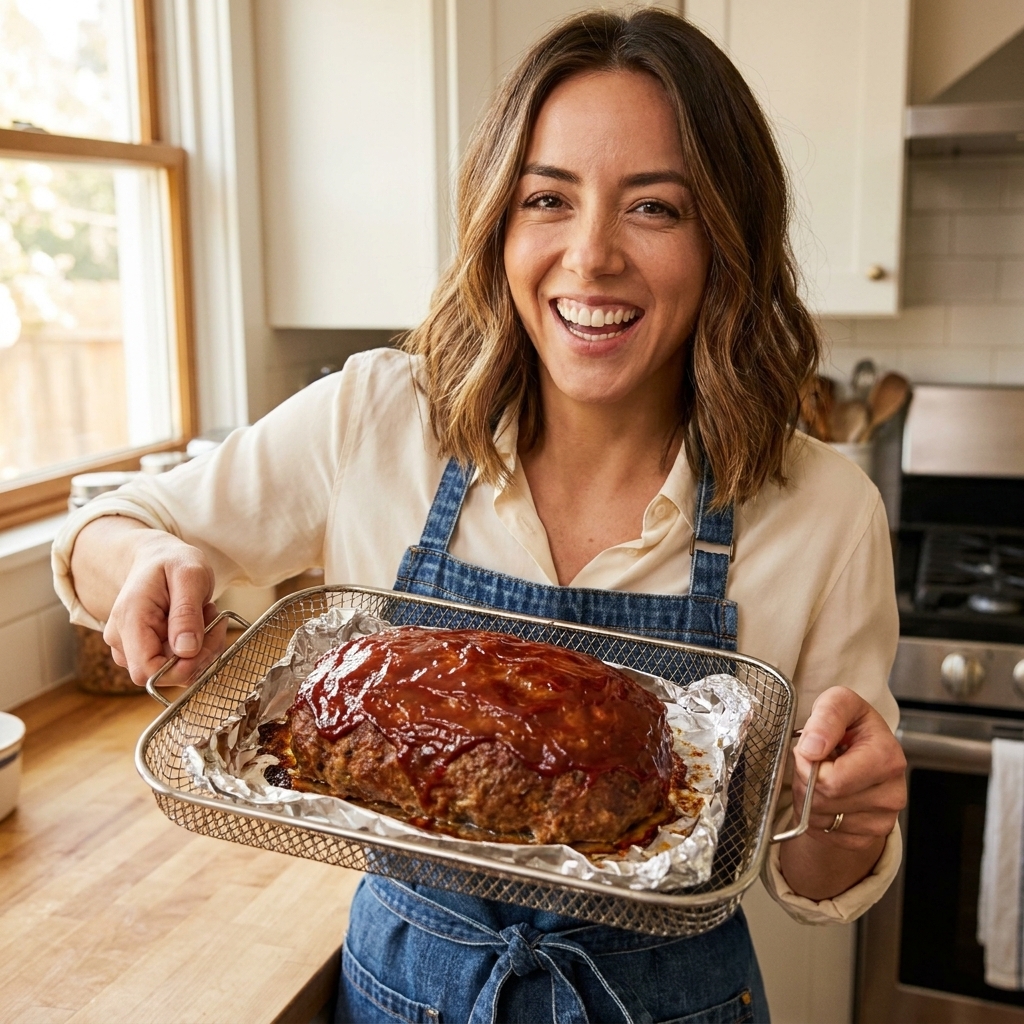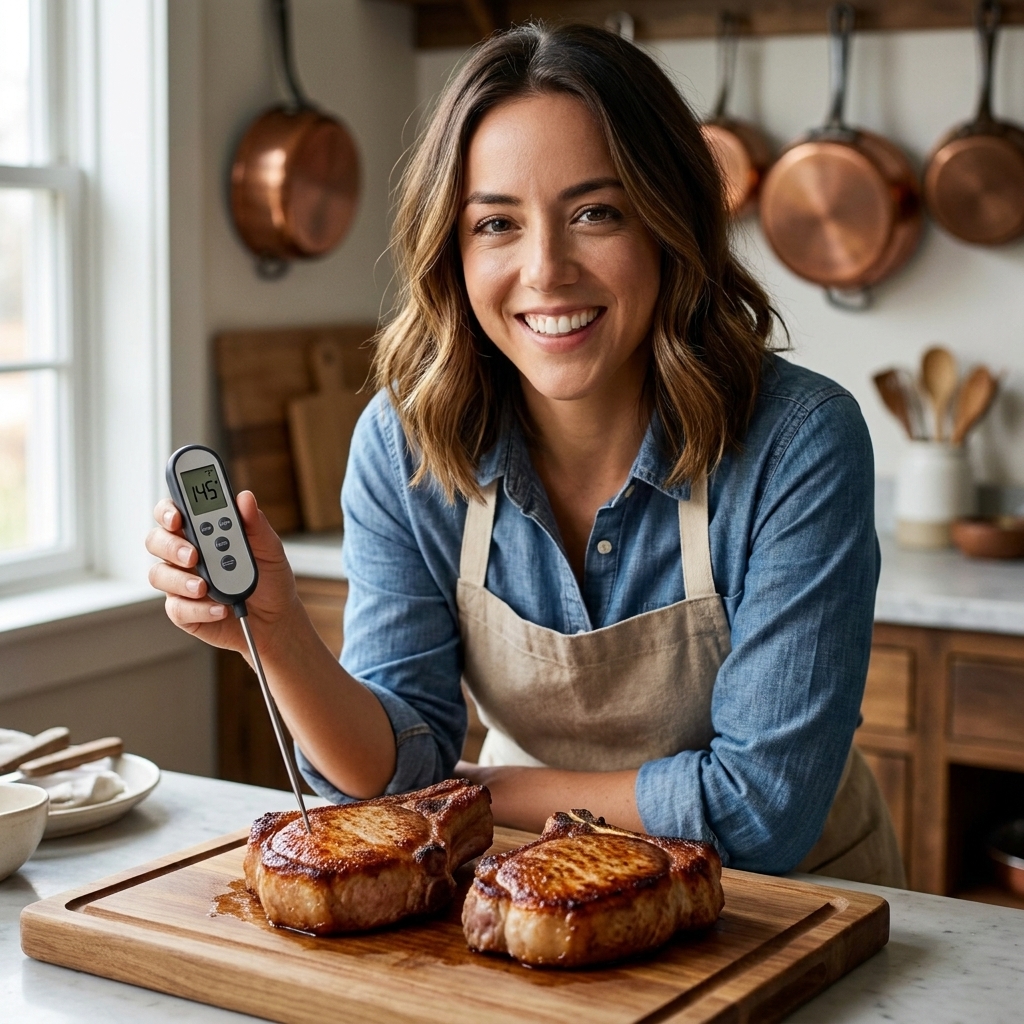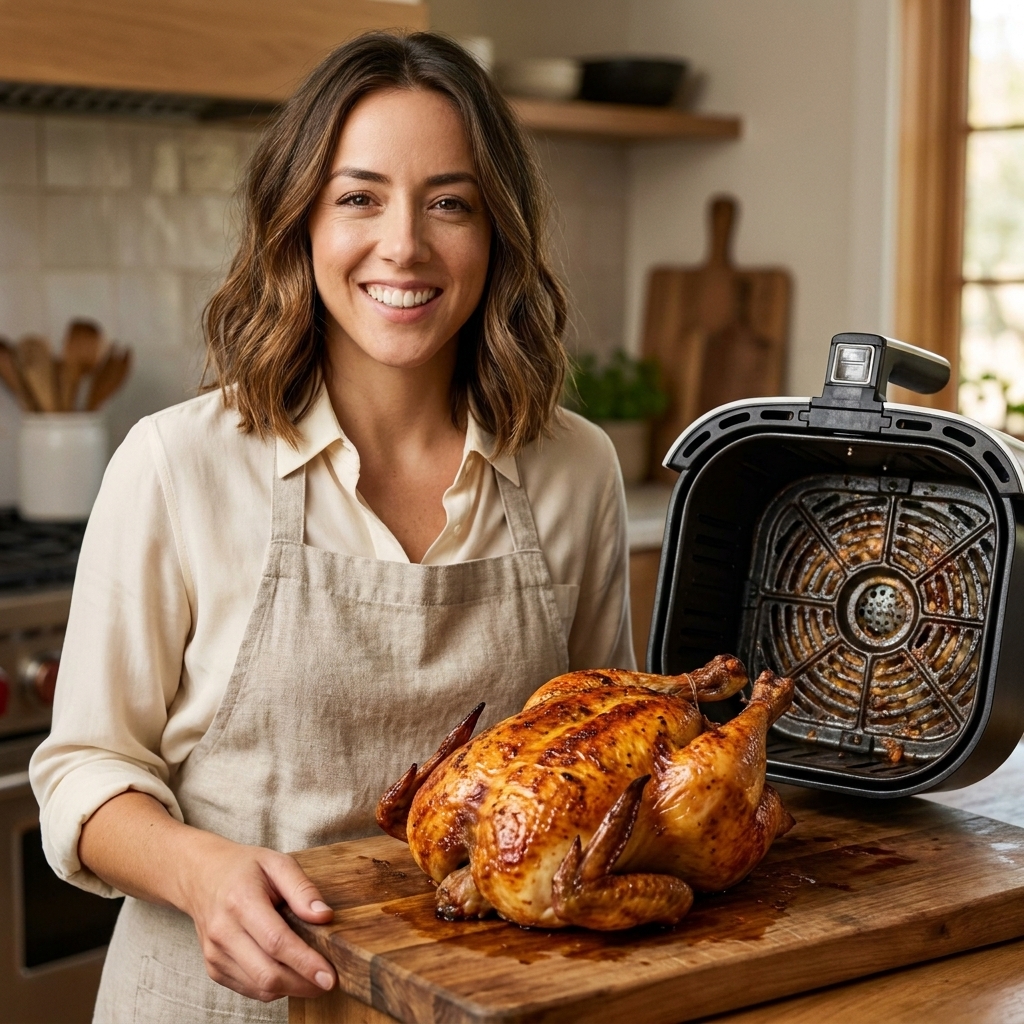
If you grew up like me in the Midwest, “roast beef” meant a big Sunday situation, a hot oven, and someone inevitably opening the door every seven minutes “just to check.” The air fryer is my favorite way to get that same weekend-worthy vibe with way less babysitting and a seriously impressive crust.
This recipe is built for a small roast (about 1.5 to 2.5 pounds), which is the sweet spot for most basket-style air fryers. You will get a browned, herby exterior and a tender center that actually stays juicy, as long as you tie it right, dry it well, and rest it like you mean it.
Best roast to buy
For air frying, you want a roast that is tender enough to cook to medium-rare or medium and slice, not one that needs hours of braising.
- Top sirloin roast: My top pick for flavor, tenderness, and price. Look for “top sirloin” specifically, not “sirloin tip,” which is leaner and can eat tougher if cooked past medium-rare.
- Tri-tip (2 to 3 pounds): Great beefy flavor. Shape can be uneven, so tying helps a lot.
- Eye of round: Lean and affordable, but it can dry out. Aim for rare to medium-rare and slice thin.
- Tenderloin roast: Very tender and pricey. Cooks fast, so watch temp closely.
Size note: If your roast is bigger than 2.5 to 3 pounds, it may cook unevenly or sit too close to the heating element. Consider cutting it into two smaller roasts and tying each one.
Quick fit check: Place the roast in the basket before seasoning. You want a little breathing room on the sides and at least about 1 inch of clearance from the top heating element (more is better). If it is cramped, go smaller.
What you need
Ingredients
- 1 small beef roast (1.5 to 2.5 lb), patted very dry
- 1 to 1 1/2 tsp kosher salt (use 1 tsp if your roast is under 2 lb)
- 1/2 tsp black pepper
- 1 tsp garlic powder
- 1 tsp onion powder (optional but great)
- 1 tbsp Dijon mustard (acts like glue for the crust)
- 1 tbsp olive oil (or avocado oil)
- 1 tbsp chopped fresh rosemary (or 1 tsp dried)
- 1 tbsp chopped fresh thyme (or 1 tsp dried)
- 1 tbsp chopped parsley (optional)
Tools
- Kitchen twine
- Instant-read thermometer (this is how you win roast beef)
- Air fryer (basket or oven style)
- Small rack insert if your air fryer has one (helps airflow)
Before you cook
1) Dry brine (optional)
If you have time, salt the roast and refrigerate it uncovered for 2 to 24 hours. This dries the surface so the air fryer can actually crisp it, instead of steaming it.
No time? Salt it now and keep going. Just be extra serious about patting it dry.
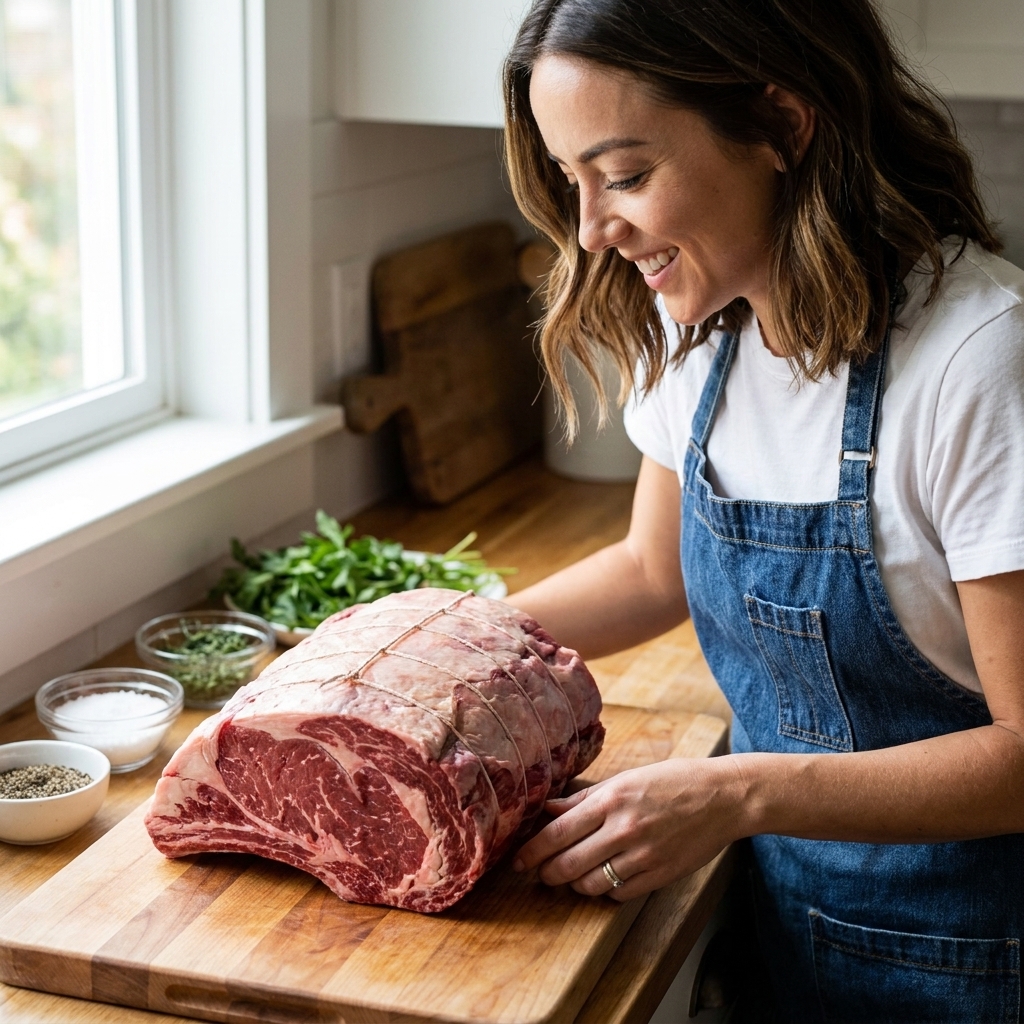
2) Tie the roast
Tying makes the roast more even in thickness, which means the center cooks evenly and you do not end up with one end perfect and the other end… well done and sad.
- Cut 3 to 5 pieces of twine, about 10 to 12 inches each.
- Slide one piece under the roast near one end and tie snugly (not strangling, just supportive).
- Add another tie every 1 to 1 1/2 inches down the roast.
- If the roast is very uneven, add one long piece lengthwise and knot it at the end to help hold the shape.
Herb crust
I learned this the hard way after creating an herb “crust” that immediately launched itself into the air fryer like confetti. The fix is a two-step binder: mustard + oil.
- Mix pepper, garlic powder, onion powder, rosemary, thyme, and parsley in a small bowl.
- Salt check: If you dry brined, skip adding extra salt to the rub. If you did not dry brine, mix the salt in now.
- Rub the roast all over with Dijon mustard.
- Drizzle with oil and rub again.
- Press the seasoning mix firmly onto all sides.
Tip: If your herbs are fresh and damp, pat them dry or spread them on a paper towel for a minute. Excess moisture softens the crust.
Air fryer roast beef
Goal: A crusty outside and tender center without overcooking the edges.
1) Preheat
Preheat the air fryer to 400°F for 3 to 5 minutes. Preheating helps the exterior start browning immediately.
2) Sear
Place the roast in the basket, ideally on a rack insert. Cook at 400°F for 10 minutes.
3) Flip and finish
Flip the roast, then reduce to 325°F and continue cooking until it hits your target internal temperature (see chart below). Start checking early. Air fryers vary a lot, and small roasts can jump temperature fast near the end.
Temperature guide
These temperatures are pull temperatures, meaning when you take the roast out of the air fryer. Most roasts rise about 5 to 10°F as they rest. Final temperature depends on roast size and shape, so treat this as guidance and let your thermometer be the boss.
| Doneness | Pull from air fryer at | Expected after rest | Typical finish time at 325°F |
|---|---|---|---|
| Rare | 120 to 125°F | 125 to 130°F | 18 to 25 minutes |
| Medium-rare | 125 to 130°F | 130 to 135°F | 22 to 30 minutes |
| Medium | 135 to 140°F | 140 to 145°F | 28 to 38 minutes |
| Medium-well | 145°F | 150°F+ | 35 to 45 minutes |
Time note: The times above are minutes at 325°F after the 10-minute sear. Thickness matters more than weight.
4) Rest
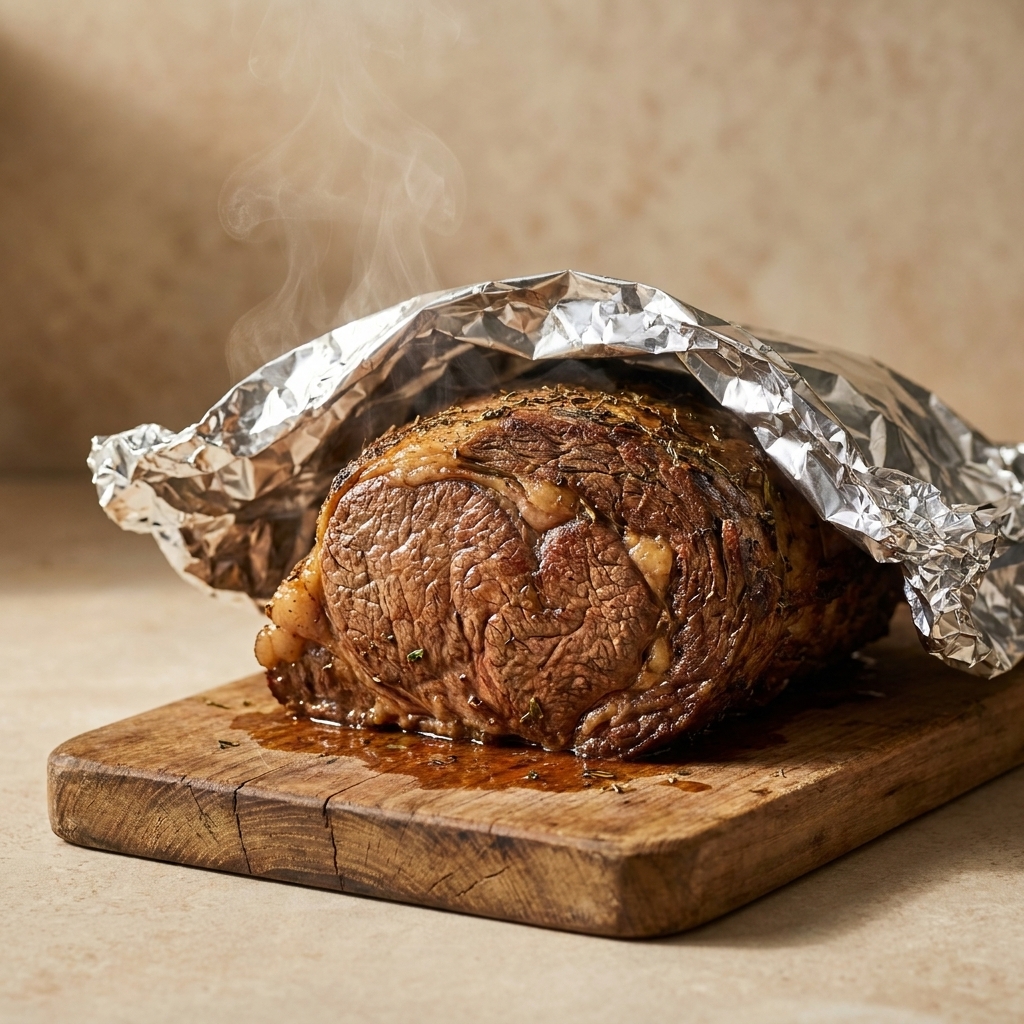
Transfer to a cutting board and tent loosely with foil. Rest for 15 to 20 minutes. This is non-negotiable if you want slices that stay juicy instead of dumping all their moisture onto the board.
How to slice it
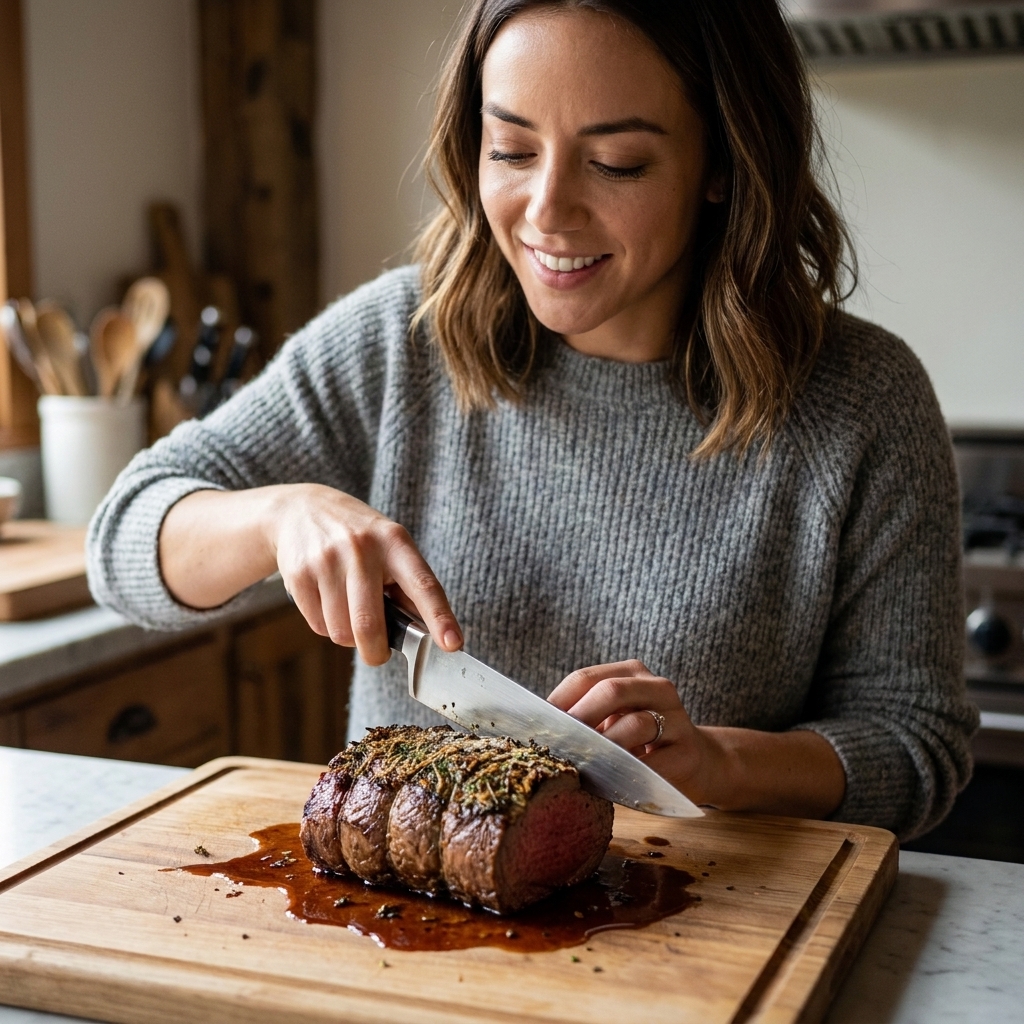
First, snip off and remove the twine. Then slice across the grain. If you are not sure which direction the grain runs, look for the lines of muscle fibers and cut perpendicular to them.
- For sandwiches: slice as thin as you can.
- For dinner plates: 1/4-inch slices are perfect.
Pro move: If your roast is leaning toward medium-well (it happens), slicing thinner will make it seem more tender.
Crust and tenderness tips
- Dry surface = better crust. Pat dry aggressively. Moisture is the enemy of browning.
- Do not overcrowd. Give the roast breathing room so hot air can circulate.
- Use a rack if you have one. Airflow underneath helps prevent a pale contact side.
- Flip once. Flip right when you drop the temp to 325°F for more even browning.
- Thermometer placement matters. Insert into the thickest center, avoiding twine knots and fat pockets.
- Limit room-temp time. If the roast is fridge-cold, let it sit out just long enough to take the edge off, about 20 to 30 minutes. Do not leave it out longer than necessary.
Serving ideas
- Classic: mashed potatoes + green beans
- Roast beef sandwiches: toasted rolls + horseradish mayo + arugula
- Quick au jus: warm beef broth with a splash of Worcestershire and a pinch of garlic powder
- Weekend salad: sliced roast over romaine with blue cheese and thin red onion
Drippings note: Air fryers do not always leave you with much in the basket. If you do have drippings, pour them through a fine strainer into a cup, skim the fat, and stir a spoonful into warm broth for instant upgrade.
Storage and reheating
Store
Refrigerate sliced or whole roast in an airtight container for up to 4 days.
Reheat
- Best for tenderness: Wrap slices in foil with a teaspoon of broth. Air fry at 300°F for 3 to 6 minutes.
- Best for crispy edges: Air fry slices uncovered at 350°F for 2 to 4 minutes. Watch closely.
Leftover win: Thin slices reheat better than thick slabs. If you know you will have leftovers, slice what you need now and slice the rest later.
Troubleshooting
My roast is tough
Most often: it was sliced with the grain, cooked past medium, or it was a cut that prefers low-and-slow (like chuck). Next time, choose top sirloin or tri-tip, pull earlier, and slice thinner across the grain.
Why is the outside not crusty?
Surface moisture or not preheating. Also, if your roast sits flat on the basket, the underside can look pale. Use a rack insert and pat the roast very dry.
The herbs burned
Fresh herbs can burn at high heat. That is why we do a short blast at 400°F, then finish at 325°F. If your air fryer runs hot, use 390°F for the first 10 minutes instead.
Can I cook roast beef from frozen?
I do not recommend it for this recipe. You will struggle to get an evenly cooked center with a good crust. Thaw in the fridge first for best results.
Quick recap
Air Fryer Roast Beef (1.5 to 2.5 lb): Preheat 400°F. Cook 10 minutes at 400°F. Flip, reduce to 325°F and cook until 125 to 130°F for medium-rare (depending on carryover and your preferred final temp). Rest 15 to 20 minutes. Remove twine. Slice across the grain.