If you told Midwest-kid me that burgers could be weeknight-easy without a splattery pan or a smoky grill, I would have laughed with ketchup on my chin. But here we are. The air fryer makes hamburgers fast, hands-off, and reliably juicy. The only catch is this: fresh patties and frozen patties cook differently.
This guide walks you through both, with the exact timing tweaks, what to season (and when), and how to avoid the two big burger heartbreaks: dry centers and pale, sad exteriors.
Fresh vs. frozen: what changes
The air fryer is convection cooking, meaning hot air circulates fast around your food. That helps with browning, but burgers still will not look exactly like a hard-seared skillet burger because there is no direct hot metal contact. Fresh and frozen patties behave differently in three key ways:
- Heat transfer: Frozen patties spend several minutes thawing and warming before they really start browning.
- Moisture: Frozen burgers often release more water as ice melts, which can steam the surface and delay browning.
- Seasoning: Fresh patties can be seasoned throughout or on the outside. Frozen patties need a different approach because salt does not stick well to a frozen surface at first.
Bottom line: fresh patties cook faster and brown more easily, while frozen patties need more time and a little strategy for better color and flavor.
The burger basics I follow
One quick note before we get into times: the timings below assume raw beef patties (not pre-cooked). Air fryer wattage, patty thickness, and how cold your patties start will all change the clock, so use the minutes as a starting point and let your thermometer make the final call.
Pick the right beef
For classic juicy burgers, I like 80/20 ground beef. Leaner blends (like 90/10) can work, but they dry out faster in the air fryer.
Do not smash in the air fryer
Smash burgers are amazing, but they need hard contact with a hot griddle for that crisp lace edge. In the air fryer, smashing tends to squeeze out juices and can make the patty dense. If you want smashburger vibes, do them on a skillet.
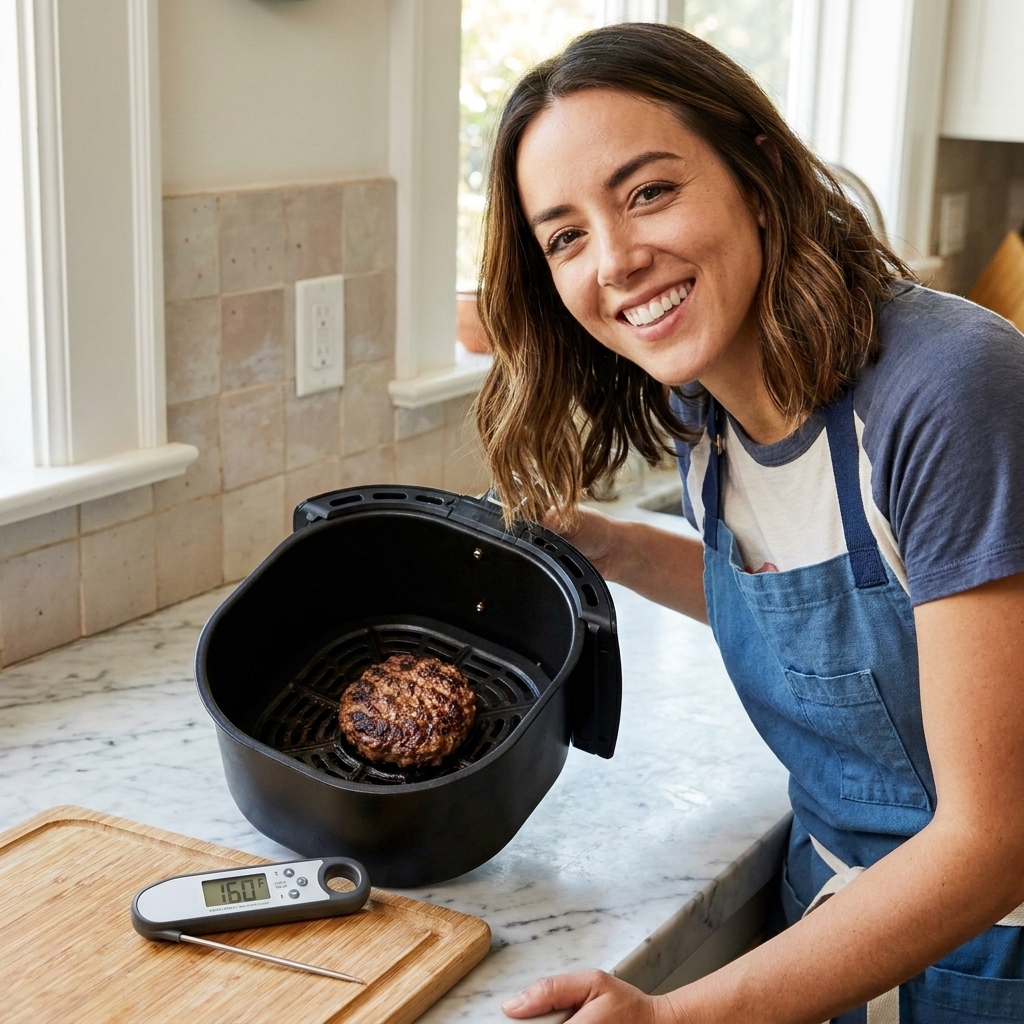
Use a thermometer, not vibes
Burgers go from juicy to overcooked quickly. The safest way to nail it is checking the center temperature.
- USDA safe temp for ground beef: 160°F (71°C)
- My juicy sweet spot: pull at 155°F to 158°F and rest 3 to 5 minutes. It often carries over closer to 160°F, but re-check after resting and add another minute or two if needed.
Flip once
Flipping helps both sides brown and keeps the burger cooking evenly. I flip halfway through almost every time.
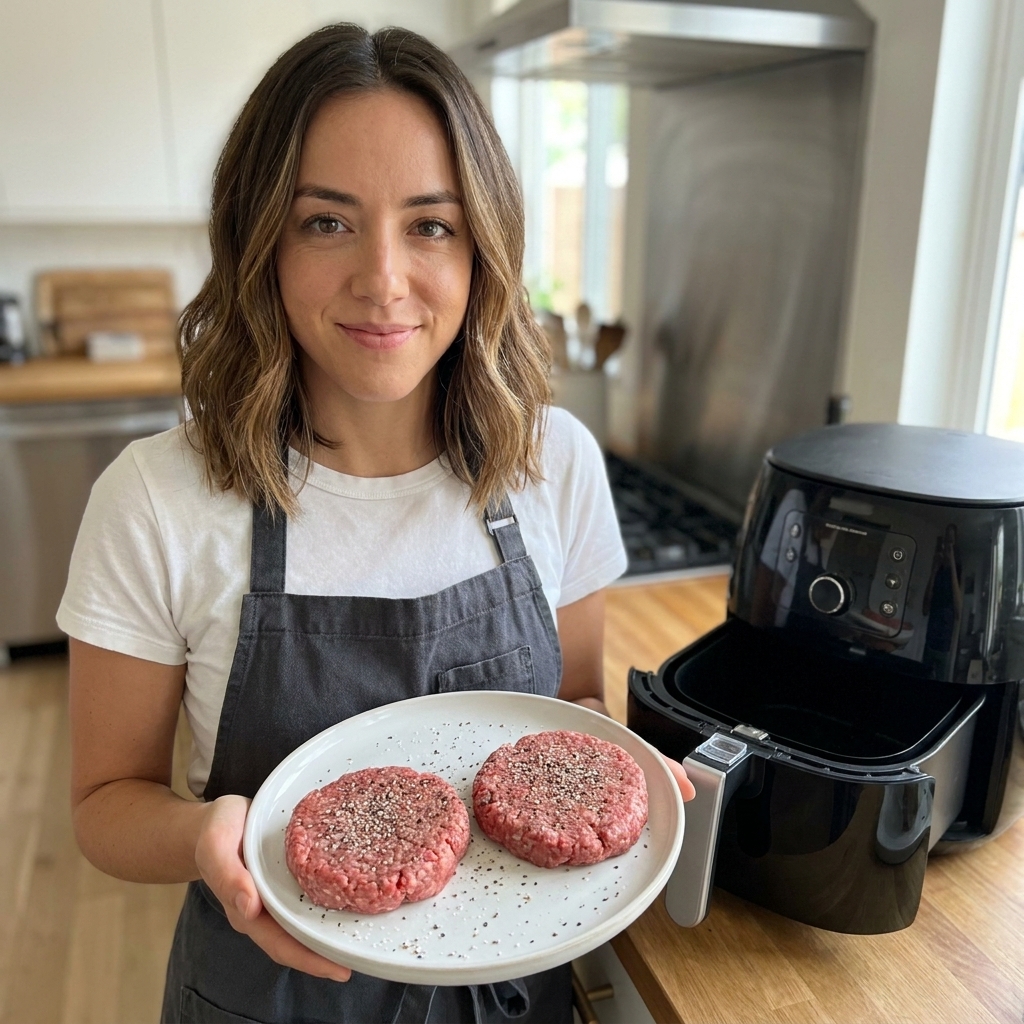
Fresh patties: air fryer method
If you have fresh ground beef, you are in the easiest lane. Fresh patties brown faster, take seasoning beautifully, and tend to stay juicier.
Best temperature
375°F is my go-to for fresh patties. It cooks through without over-browning the outside before the center is done.
Timing guide (fresh)
Cook times vary by thickness and air fryer model, but these are reliable starting points for 4 to 6 oz patties that are about 3/4-inch thick:
- Juicy and safe (with a temp check): 9 to 11 minutes at 375°F, flip at 5 minutes (aim to hit 160°F after a short rest)
- Well done: 11 to 13 minutes at 375°F, flip at 6 minutes
If your patties are thin (closer to 1/2-inch), start checking at 7 to 8 minutes. If they are thick (1 inch), expect 12 to 15 minutes.
My fresh patty steps
- Preheat air fryer for 3 minutes at 375°F (even if your model claims it does not need it, it helps with color).
- Form patties gently. Make a small dimple in the center to prevent puffing.
- Season both sides generously with salt and pepper, plus garlic powder if you like.
- Air fry at 375°F, flipping halfway.
- Add cheese in the last 1 to 2 minutes so it melts without sliding off into the basket.
- Rest 3 to 5 minutes, then re-check center temp if you pulled early.
Frozen patties: air fryer method
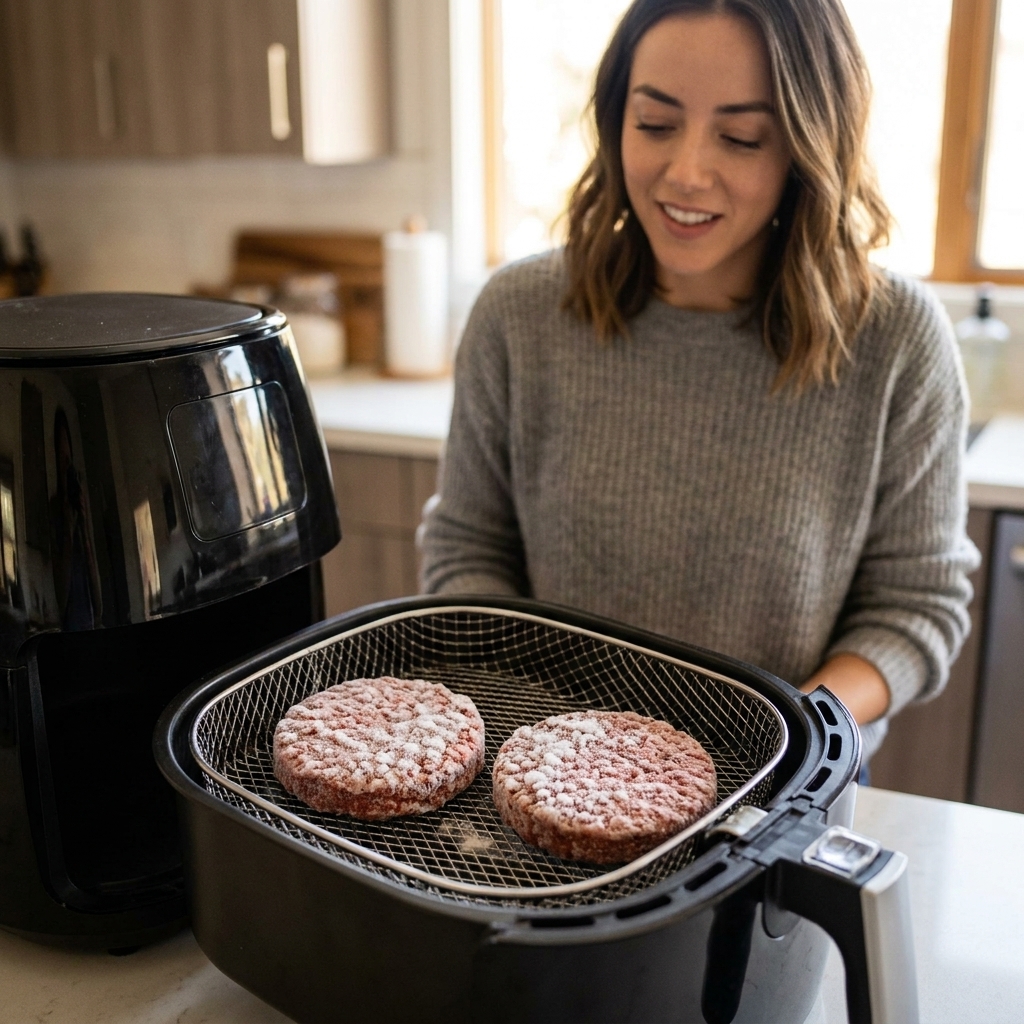
Frozen patties are the ultimate “I forgot to thaw anything” dinner win. They also tend to cook very evenly, but you have to work a little harder for browning and flavor.
One more label check: some frozen patties are pre-seasoned or thinner than the standard 1/4 lb puck. Taste and salt accordingly, and always cook to temperature.
Best temperature
380°F is my favorite for frozen burgers. The slight bump helps drive off surface moisture and encourages better color.
Timing guide (frozen)
For standard frozen patties (about 1/2- to 3/4-inch thick):
- Frozen 1/4 lb patty: 12 to 15 minutes at 380°F, flip at 7 minutes
- Frozen 1/3 lb patty: 14 to 17 minutes at 380°F, flip at 8 minutes
Always check temp in the center. Frozen patties can look done on the outside while still lagging inside.
The seasoning trick for frozen burgers
Salt does not adhere well to an icy surface. Here’s what works:
- Air fry the frozen patty for 3 minutes to thaw the exterior.
- Pull the basket, pat the top quickly with a paper towel if it looks wet.
- Season the top, flip, season the second side.
- Finish cooking, flipping again halfway through the remaining time if you want more even browning.
This tiny mid-cook seasoning step makes frozen patties taste way less “cafeteria” and way more “you made these on purpose.”
Fresh vs. frozen: results
Fresh patties: more burgerhouse vibes
- Better beefy flavor, especially if you season before cooking
- More tender bite when formed gently
- Prettier browning because there is less surface moisture
Frozen patties: consistent and convenient
- Very even cooking because the patty is uniform
- Slightly firmer texture (common with pre-formed patties)
- Can be a bit milder, so season mid-cook and consider adding sauce or cheese
If I’m trying to impress, I reach for fresh. If I’m trying to survive Tuesday, frozen gets the job done.
Better browning tips
The number one complaint I hear is “my burger cooked but it looks pale.” Here are my fix-it moves:
- Preheat for 3 minutes. Yes, even if your air fryer says it does not need it.
- Pat dry any obvious moisture (especially on frozen patties after a few minutes of cooking).
- Do not overcrowd. Leave space around patties so air can circulate.
- Light oil helps. For very lean fresh patties, a quick spritz of oil can improve browning.
- Use 380°F for frozen. Slightly higher heat helps evaporate surface water.
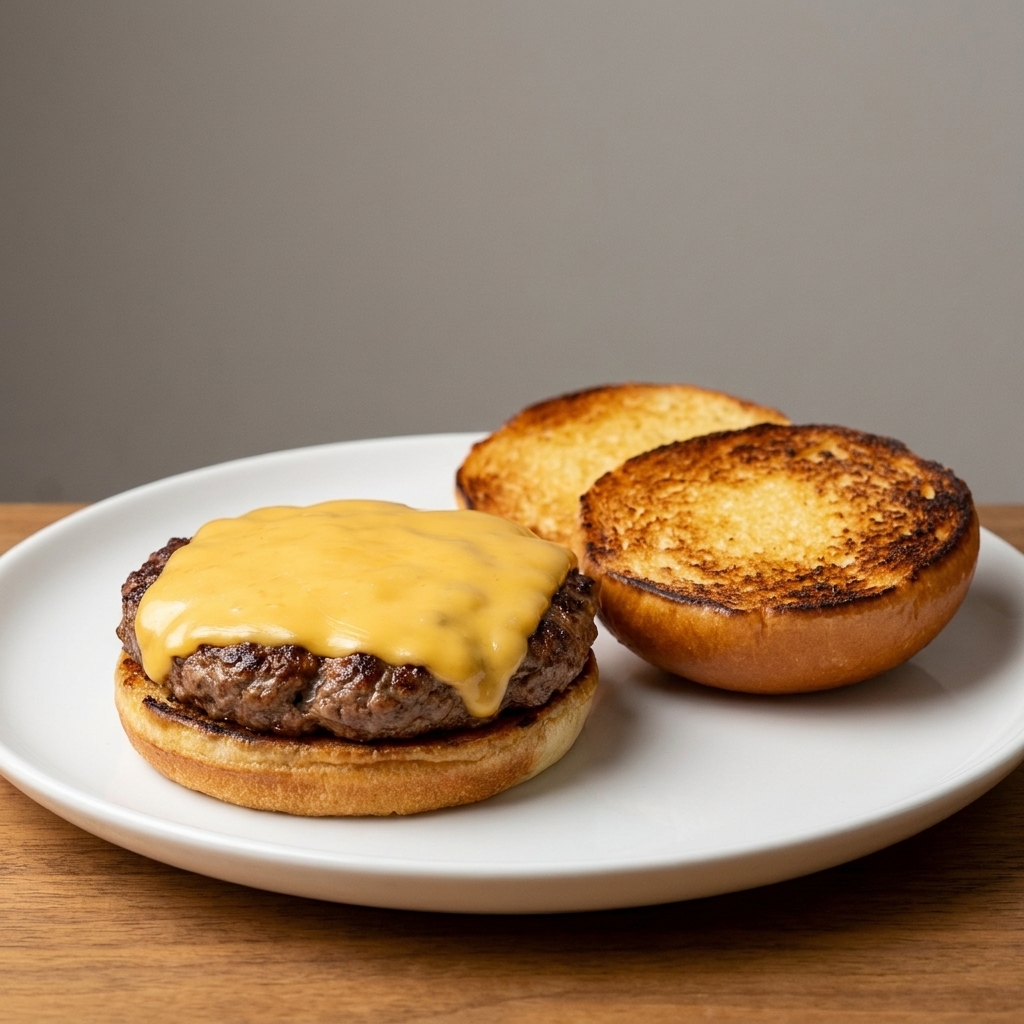
Cheeseburgers: clean melts
I love cheese. I do not love scraping molten cheddar off the bottom of the basket. Add cheese near the end:
- Fresh patties: add cheese with 1 to 2 minutes left
- Frozen patties: add cheese with 1 to 2 minutes left, after you confirm the burger is close to temp
If you like super-melty cheese, place the slice on, then turn off the air fryer and let it sit in the closed basket for 1 minute.
Doneness temps
Ground beef is different from steak, because bacteria can be mixed throughout the meat during grinding. That’s why the standard recommendation is 160°F.
| Doneness goal | Pull temp | After rest |
|---|---|---|
| Safest standard | 160°F | 160°F+ |
| Juicy but still safe (my method) | 155 to 158°F | May reach ~160°F after 3 to 5 minutes, re-check to confirm |
If you are cooking for kids, pregnant folks, or anyone with a higher-risk immune system, I stick to 160°F in the center.
Common problems and fixes
My burgers puffed up
Add a small dimple in the center of each patty before cooking. Also make sure your patties are evenly thick.
My burgers are dry
- Use 80/20 if you can.
- Do not overcook. Start checking 2 minutes early.
- Rest the burgers before biting in.
My burgers are smoking
A little smoke can happen as fat drips and hits a hot surface. Try:
- If your model allows it, add 1 to 2 tablespoons of water to the bottom drawer (not the basket) to reduce smoking. Check your manual first.
- Clean old grease from the basket and drawer.
- Cook at 375°F instead of 400°F for fresh burgers.
My burger is cooked but pale
Preheat, do not crowd, pat off surface moisture, and consider a tiny oil spritz.
My go-to seasoning
If you want classic diner flavor without thinking too hard:
- 1 tsp kosher salt (or 1/2 tsp fine salt) per pound of beef
- 1/2 tsp black pepper per pound
- 1/2 tsp garlic powder per pound
- Optional: 1/2 tsp onion powder per pound
For fresh patties, season right before cooking. For frozen patties, season after that first 3-minute thaw step.
FAQ
Do I need to thaw frozen burger patties first?
Nope. Cook from frozen. Just plan for a longer cook time and season after a few minutes so it actually sticks.
Can I stack burger patties?
I would not. Stacking blocks airflow, and you will get steamed spots. Cook in a single layer with space around each patty, even if it means doing two batches.
Should I use parchment paper?
For burgers, I usually skip it because it can reduce airflow and browning. If you do use perforated parchment, make sure it is weighed down by the patties so it does not lift into the heating element.
What about turkey burgers?
They work well, but they are leaner. I recommend a light oil spritz and cooking to 165°F in the center.
Any food safety basics I should not skip?
Keep raw meat and ready-to-eat foods separate, wash hands and tools after handling raw patties, and do not partially cook burgers and let them sit around. Cook them through, then serve.
The quick takeaway
If you want the best flavor and browning, go fresh at 375°F and start checking around 9 minutes. If you want the easiest dinner win, go frozen at 380°F, season after 3 minutes, and expect 12 to 17 minutes depending on thickness. Either way, flip once, use a thermometer, and let them rest. Your future self, and your burger bun, will thank you.